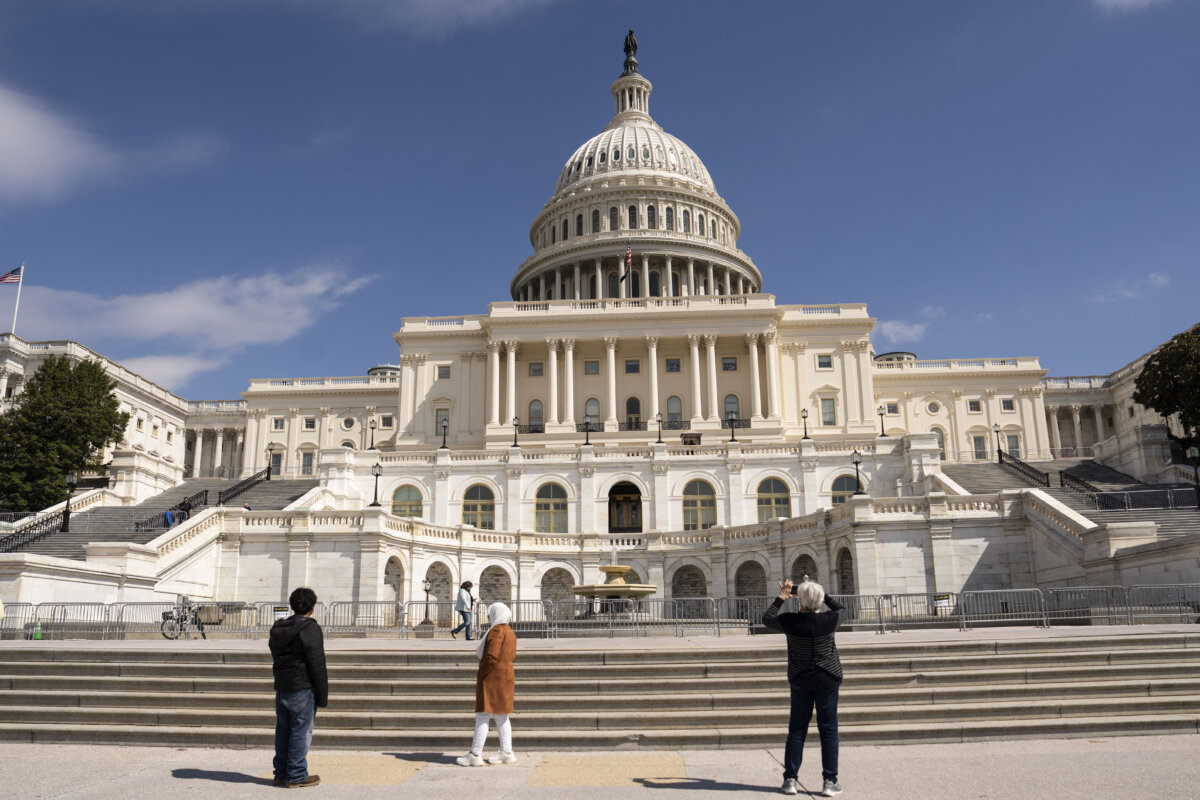

The Senate Budget Committee will move forward with drafting a second budget reconciliation bill focused on homeland security, defense, and election integrity, Chairman Lindsey Graham (R-S.C.) announced on March 25.
Graham said the effort follows discussions with President Donald Trump and Senate Majority Leader John Thune (R-S.D.). He emphasized that national security remains the federal government’s top responsibility, arguing that even a relatively small share of the budget devoted to law enforcement can have an outsized impact.
“The number one priority of the federal government has always been keeping our homeland safe and keeping our enemies at bay over there so they can’t hit us here,” he said in a statement. “While federal law enforcement spending represents about only one percent of the federal budget, what these men and women can accomplish with it is incredible.”
Graham also said that more funding will allow law enforcement to better carry out Trump’s public safety agenda.
“More funding will mean they can complete the task assigned and keep America safe—which is money well spent,” he said.
“During President Trump’s second term, the murder rate marked the largest single-year drop in recorded history, and illegal border crossings are at the lowest level since the 1970s. Imagine what will happen when we fully invest in President Trump’s public safety mission.”
The proposed legislation comes as Senate Republicans are attempting to break an impasse with Democrats over funding for the Department of Homeland Security, which has been largely shut down since mid-February. Democrats have rejected the proposal and have sent a counteroffer. Although most of the department is shut down, Immigration and Customs Enforcement and Customs and Border Protection remain funded through 2029 under Trump’s tax-and-spend package from last year.
At the same time, the Trump administration is requesting roughly $200 billion in supplemental defense funding amid the ongoing conflict with Iran. The request would come on top of increased military funding approved last year as part of a broader tax and spending bill.
Trump described the funding as necessary in an increasingly unstable global environment, calling it a modest cost to ensure that the U.S. military remains prepared.
The proposal faces political hurdles despite Republican control of both chambers of Congress. Fiscal conservatives within the party have expressed skepticism about large spending increases, while many Democrats are expected to oppose the request without clearer details on military strategy and objectives.
In the House, Rep. Ken Calvert (R-Calif.), who chairs the Appropriations Defense Subcommittee, said additional funding is needed to replenish military supplies, particularly in light of the Iran conflict. He stressed the urgency of acting quickly in the interest of national security.
However, Rep. Betty McCollum (D-Minn.), the panel’s top Democrat, pushed back, arguing that Congress has not been adequately consulted. She said lawmakers still lack details on how previously approved defense funds are being spent and warned that Congress would not approve the administration’s request without scrutiny.
The Senate is also dealing with the proposed Safeguard American Voter Eligibility (SAVE) America Act, which would require photo IDs for voting and proof of citizenship for new voter registrations. Whether an election integrity bill can be addressed through reconciliation is unclear, since reconciliation can only deal with legislation related to taxing, spending, and the national debt.
It is unlikely that the SAVE America Act, which Trump and Republicans have been pushing, would be able to meet the requirements under the mechanism, which allows for these bills to go around the 60-vote filibuster threshold in the Senate that applies to most legislation.
The Associated Press contributed to this report.
 Friends Read Free
Copy
Facebook
Tweet
Friends Read Free
Copy
Facebook
Tweet