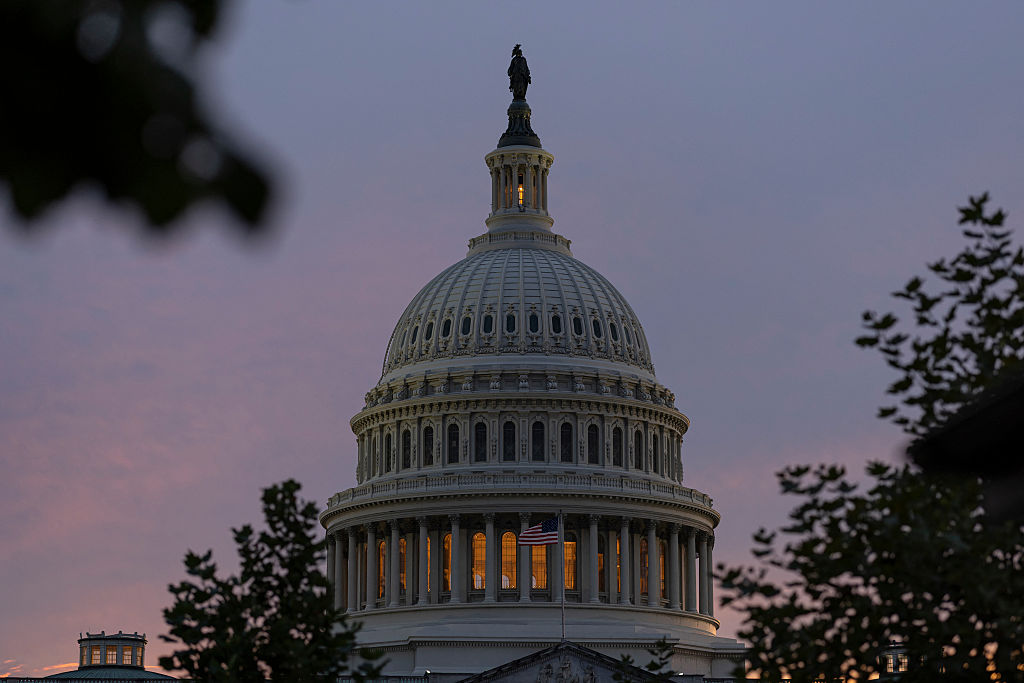

The Republican-controlled Senate on Oct. 28 passed a bipartisan bill to repeal President Donald Trump’s tariffs on Brazil.
The bill seeks to end the national emergency that Trump declared in July, which imposed 50 percent duties on most Brazilian imports in response to the prosecution of former President Jair Bolsonaro.
The bill will now be voted on by the GOP-led House, where it is expected to be shelved, as Republicans have stopped similar efforts.
The resolution, approved 52-48 with five GOP senators voting with Democrats, represents a rare reproach of Trump’s trade policies over concerns of rising prices for American consumers.
Sponsored by Sens. Tim Kaine (D-Va.) and Rand Paul (R-Ky.), S.J. Res. 88 concerns Trump’s Executive Order 14323, issued on July 30, which designated Brazil’s actions as a threat to U.S. national security, foreign policy, and the economy.
“Congress, which has constitutional authority over trade and tariffs, must rein in this executive overreach,” part of the one-page summary of the bill reads.
Democrats, led by Sen. Chuck Schumer (D-N.Y.), plan to hold future votes on tariffs against Canada and globally, citing rising costs on goods such as coffee and beef. In April, the Senate passed a bill to repeal Canada tariffs, but it was shot down in the House.
Bolsonaro, a Trump ally, was convicted in September by Brazil’s Supreme Court of plotting a coup, subverting democracy, and other related crimes. He received a 27-year sentence, which he is appealing.
Trump called Bolsonaro’s trial a “witch hunt.”
“Due in part to Brazil’s insidious attacks on Free Elections, and the fundamental Free Speech Rights of Americans … starting on August 1, 2025, we will charge Brazil a Tariff of 50% on any and all Brazilian products sent into the United States,” Trump wrote in a July 9 letter to Brazilian President Luiz Inácio Lula da Silva.
He also cited Brazil’s nontariff trade barriers in his decision to impose the new tariff rate.
Crossing the Aisle
Sens. Susan Collins (R-Maine), Mitch McConnell (R-Ky.), Lisa Murkowski (R-Alaska), Rand Paul (R-Ky.), and Thom Tillis (R-N.C.) all crossed the aisle and supported the bill, agreeing with the Democrats that Trump’s executive order oversteps his authority and hurts U.S. interests.
Trump has argued that limiting his tariff authority could undermine his leverage in global trade talks. He has an upcoming meeting with Chinese leader Xi Jinping during his current Asia trip, which has already included visits to Malaysia and Japan, where he signed multiple trade deals. He landed in South Korea on Oct. 29 local time.
Brazil has rejected Trump’s claims, pointing toward a $410 billion U.S. trade surplus over 15 years. The tariffs, which went into effect in August, also sanctioned the Brazilian judge who presided over the Bolsonaro case and who had alleged that Bolsonaro had sought U.S. intervention in his case.
Trump recently suggested that he could reach an agreement with Brazil’s president on tariffs.
“I think we should be able to make some pretty good deals for both countries,” he said on Oct. 26 while in Malaysia.
Silva said on Oct. 27 at a briefing on the sidelines of the Association of Southeast Asian Nations, or ASEAN, summit in Malaysia that Trump had “guaranteed” that the two countries would reach a trade deal. He said an agreement would be reached “faster than anyone thinks.”
Jacob Burg and Reuters contributed to this report.
 Friends Read Free
Copy
Facebook
Tweet
Friends Read Free
Copy
Facebook
Tweet