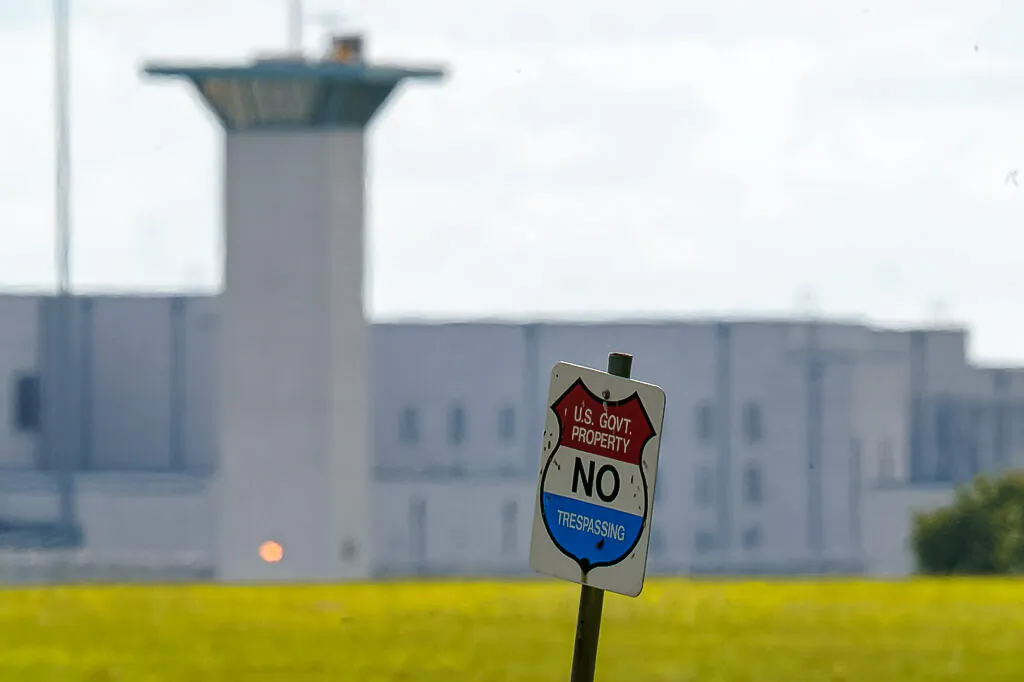

Federal prison can be deadly. In the seven years between 2014 and 2021, a total of 344 inmates died while in the custody of the Federal Bureau of Prisons (BOP), an average of 49 deaths per year, a report released this week states.
The report, prepared by the Office of Inspector General (OIG), found serious job performance and management failures that created unsafe conditions related to some deaths and recurring issues after an inmate’s death that limited the BOP’s ability to identify ways to minimize future risks.
More than half of the 344 inmate deaths were by suicide. Although the BOP has policies in place to prevent suicide, the report notes that a combination of recurring policy violations and operational failures contributed to inmate suicides. Often, inmate assessments were not completed to identify and address suicide risks.
“We also found numerous instances of potentially inappropriate Mental Health Care Level assignments for some inmates who later died by suicide,” the report reads.
More than half the inmates who died by suicide were alone in a cell. Almost half were in a restrictive housing setting.
BOP policies call for staff training on identifying signs of suicide, for staff to make referrals when they identify suicidal inmates, and for appropriate counseling and treatment to be offered. But the OIG stated that some prison staff failed to communicate across departments to get necessary treatment or follow up with inmates in distress.
About a third of the suicides were connected to a lack of staff making regular rounds to check on inmates.
And although the BOP requires prisons and detention centers to conduct mock drills to prepare staff to respond to a potential suicide, the OIG “found that the BOP was unable to provide evidence that most of its facilities met this requirement.”
Homicide
After suicide, the most prevalent means of death in federal prison is homicide, followed by deaths by accident and deaths resulting from unknown factors, often relating to drugs.
During an attempted suicide or homicide, seconds of difference in response time can be the difference between life or death, but the report found a lack of urgency in responding, failure to bring or use appropriate emergency equipment, unclear radio communications, and issues with naloxone administration in opioid overdose cases.
In many cases, the OIG was unable to review the deaths because the BOP was unable to produce documents related to the deaths.
“The BOP requires in-depth After-Action Reviews only following inmate suicides; it does not require them for inmate homicides or deaths resulting from accidents and unknown factors,” the report reads. “Together, these factors limit the BOP’s ability to fully understand the circumstances that led to inmate deaths and to identify steps that may help prevent future deaths.”
Contraband drugs or weapons appeared to contribute to nearly one-third of the deaths; 70 inmates died from drug overdoses.
Federal prisons also have operational challenges with staffing shortages, an outdated security camera system, staff failure to follow BOP policies, and an ineffective, untimely staff disciplinary process, the report states. These problems contributed to many of the inmate deaths in the study.
High-Profile Inmate Deaths
The system-wide report comes in response to two high-profile inmate deaths within BOP institutions, the homicide of James “Whitey” Bulger in 2018 and the death of Jeffrey Epstein, labeled a suicide, in 2019.
A December 2022 OIG report on the circumstances surrounding the transfer and homicide of Mr. Bulger found serious job performance and management failures, including single-cell confinement in restrictive housing, the transfer of Mr. Bulger to a facility with a lower level of medical care than his prior facility without adequate consideration of his medical records, and shortcomings in communication among BOP personnel regarding the transfer process.
In June 2023, OIG issued an investigative report on the custody, care, and supervision of Mr. Epstein, which identified numerous and serious failures by Metropolitan Correctional Center New York staff.
It found that staff did not assign Mr. Epstein a cellmate as directed by the institution’s Psychology Services Department, and staff failed to undertake the required measures to ensure that Mr. Epstein and other inmates in restrictive housing were accounted for and safe, such as conducting inmate counts and 30-minute rounds; searching inmate cells; and ensuring adequate supervision of the housing unit. It also found that staff did not ensure the functionality of the security camera system.
Recommendations and Response
The Federal Bureau of Prisons told The Epoch Times in an email that it values the OIG’s report and views the 12 recommendations it made as an opportunity to enhance its ongoing efforts in addressing the health and well-being of adults in BOP custody.
“We appreciate the thorough evaluation conducted by the OIG and acknowledge the tragic nature of unexpected deaths among those in our care,” the bureau stated, noting that it has already taken steps “as outlined in the OIG’s report, to mitigate [adult in custody] deaths.”
“Our priority is addressing the unique health challenges, including mental health, faced by individuals in custody, particularly those with a higher incidence of substance use disorders.”
The BOP attached a more detailed response to the report, and the OIG attached a response to the BOP response to the report.
The OIG made 12 recommendations for the BOP to make improvements.
- Develop strategies to ensure that staff assign accurate, consistent, and timely “mental health care level” designations to inmates.
- Ensure that all institutions conduct mock suicide drills and increase staff participation in those drills.
- Ensure that all appropriate staff are trained in automated external defibrillator (AED) use and that AEDs are strategically placed and in working order.
- Ensure that tools to respond to suicide attempts are available and staff is trained on use.
- Ensure that each institution has a sufficient number of maneuverable gurneys in strategic locations.
- Issue standard training to staff on using the radio to communicate clearly.
- Ensure that staff receive both the initial and refresher naloxone training and are fully prepared to administer naloxone to an unresponsive inmate suspected of having had a drug overdose.
- Ensure that all evidence recovery teams are properly trained on post-incident evidence recovery protocols.
- Develop procedures to ensure that all required death-related records are completed and collected consistently by established deadlines.
- Assess the benefit and feasibility of expanding its BOP policy requiring After Action Reviews to include reviews of all inmate homicides and deaths by accidental and unknown factors, not just inmate suicides.
- Clarify responsibility for tracking the reports and recommendations required in the wake of an inmate death and use it to prevent future deaths.
- Evaluate existing electronic devices used for inmate screening to identify whether they are functioning as intended and, if necessary, implement any needed adjustments or upgrades.
 Friends Read Free
Copy
Facebook
Tweet
Friends Read Free
Copy
Facebook
Tweet