
Farmers who have worked for decades in Vermont say environmental policies are threatening to make farming impossible.
Neil Ryan is a third-generation cattle farmer living in Corinth. Since 1981, his family has raised beef cattle, dairy goats, and Christmas trees, and produced maple syrup on farms in Starksboro, Roxbury, and Corinth.
Ryan’s grandparents, Jim and Joy MacIsaac, began with just one dairy cow and a tent on a hill farm in Starksboro abandoned in the 1940s, eventually building the land into a 256-acre farm. On that same farm, his aunt and uncle pioneered specialty bottles for maple syrup at Highland Sugarworks, a maple syrup packer and producer.
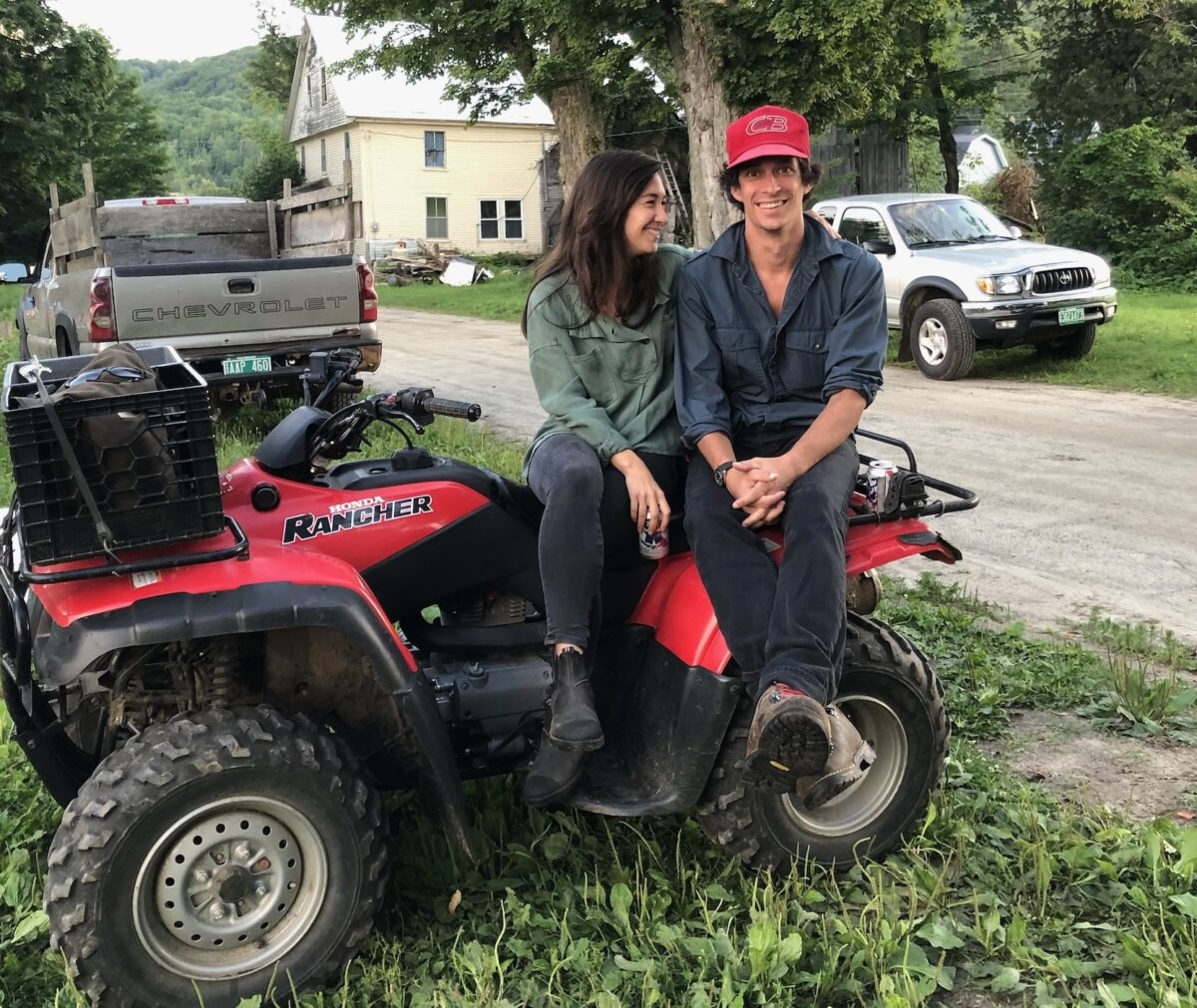
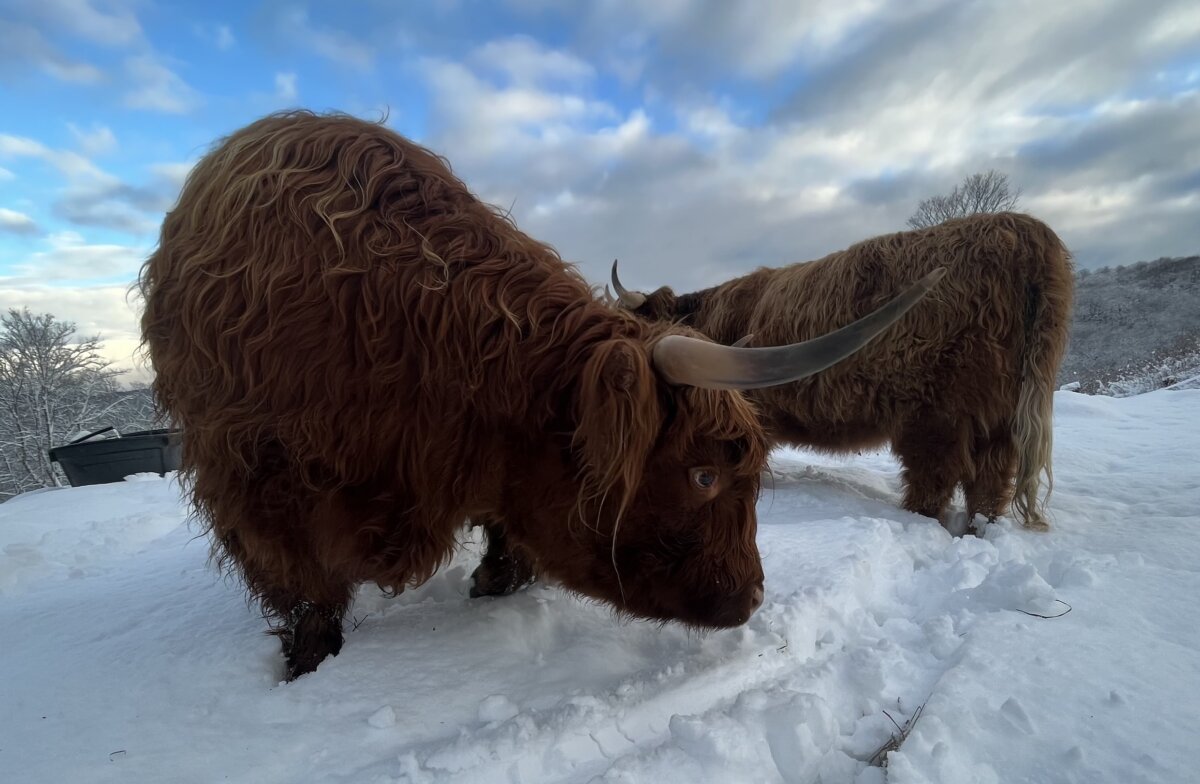
Today, the 45-year-old farmer raises registered Highland beef cattle on a 200-acre farm he built in 2015 with his wife, Ahn Ryan. The couple also raise chickens and vegetables.
But new land-use regulations in the Green Mountain State could saddle him with burdensome costs and prevent many rural Vermonters from developing on land they own.
“My family has farmed in Vermont for over 45 years across three towns. Under Act 181, none of the farms my family has created would be possible today,” Ryan told The Epoch Times.
Act 181, passed into law over Vermont Governor Phil Scott’s veto in 2024, was designed to reform Vermont’s land use Act 250 to benefit housing while preserving natural resources. But according to Ryan, it contains compliance fees and related costs that most rural Vermonters can’t afford.
“It was framed as a pro-housing bill, but it became a mechanism for really locking up large swaths of the state within this regulatory regime that impacts people that Act 250 was never designed to regulate,” he said. “They get kind of thrown into the pile.”
The regulatory costs of the new legislation include permit fees, legal representation, environmental engineers, storm water studies, traffic studies, and more. While most Act 250 permit applications eventually get approved, the process can take years, and Ryan said the cost of compliance ranges from $40,000 to $200,000.
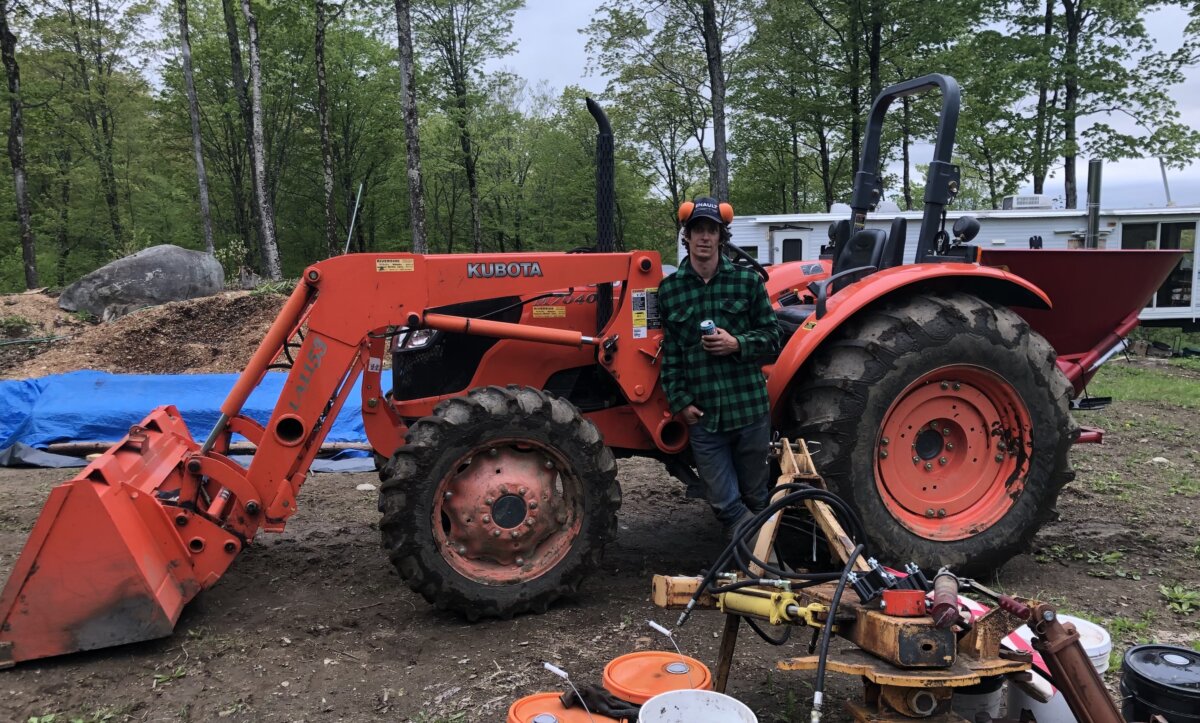
“You have to hire a fleet of consultants to get through the process,” he said. “Somebody that’s spending $1 million on an architect can swallow the $50,000, $100,000, $150,000, $200,000 permitting process. People that are buying land that’s $500 or $1,000 bucks an acre, and it’s everything they’ve got put into that land, cannot bear that cost.”
Ryan began farming by homesteading in Roxbury. He built a road and a barn, and drew water from a pre-existing stone-lined well. His farm in Corinth was Vermont Gov. Deane C. Davis’s boyhood farm. Roads going through the farm once connected to a Norwegian commune, a brick kiln, and the early 20th century Maplewood Hotel.
Today, Ryan raises his cattle on land the regional planning commission recently set aside to protect natural resources.
New Regulations
Under Act 181, many rural Vermont farms are being redefined into “highest-priority conservation lands” by planners using maps and rulemaking. Ryan said the act allows “distant planners with computer models” to place farmers in “bureaucratic mazes” that will put them out of business.
The act has a three-tier system.
Tier 1 is a streamlined, permit-by-rule process aimed primarily at development in downtowns and village centers. Tier 2 applies to moderate-impact development outside those zones, requiring standard Act 250 review. It applies to about 95 percent of the state. Tier 3, the category most consequential to rural landowners, regulates areas with headwater stream areas, “habitat connectors of statewide significance,” and “significant natural communities.”
Then there’s the 800-foot rule. The rule says there can be no new roads in Tier 2 built more than 800 feet from an existing town road. If any property owner wants something farther away, that triggers a full 10-criteria review under Act 250. This applies to about 95 percent of the land in the state, Ryan said.
“Eight hundred feet is not a long distance at all off a town road in Vermont—it’s commonplace,” Ryan said. “And because that 800-foot [rule] is a trigger, you’re taking vast swaths of the state out of circulation.”
He added Act 181 will affect farms that have accessory businesses such as farm stays, value-added processing, events, as well as any rural Vermonters that want to add dwellings on lots.
“Tier 2 is going to impact a ton of people who just want a home for their kids, farmers included. Even clearly agricultural activities like putting a sugar house on the land may trigger the act,” Ryan said. “If there’s going to be an accessory use for an agricultural building down that road, if that road’s not going to be used purely for taking hay bales out of the field, and it’s going to be used for something else, you’re up against it.”
Tier 2 and the 800-foot rule of Act 181 are scheduled to go into effect July 1. Tier 3 goes into effect in December.
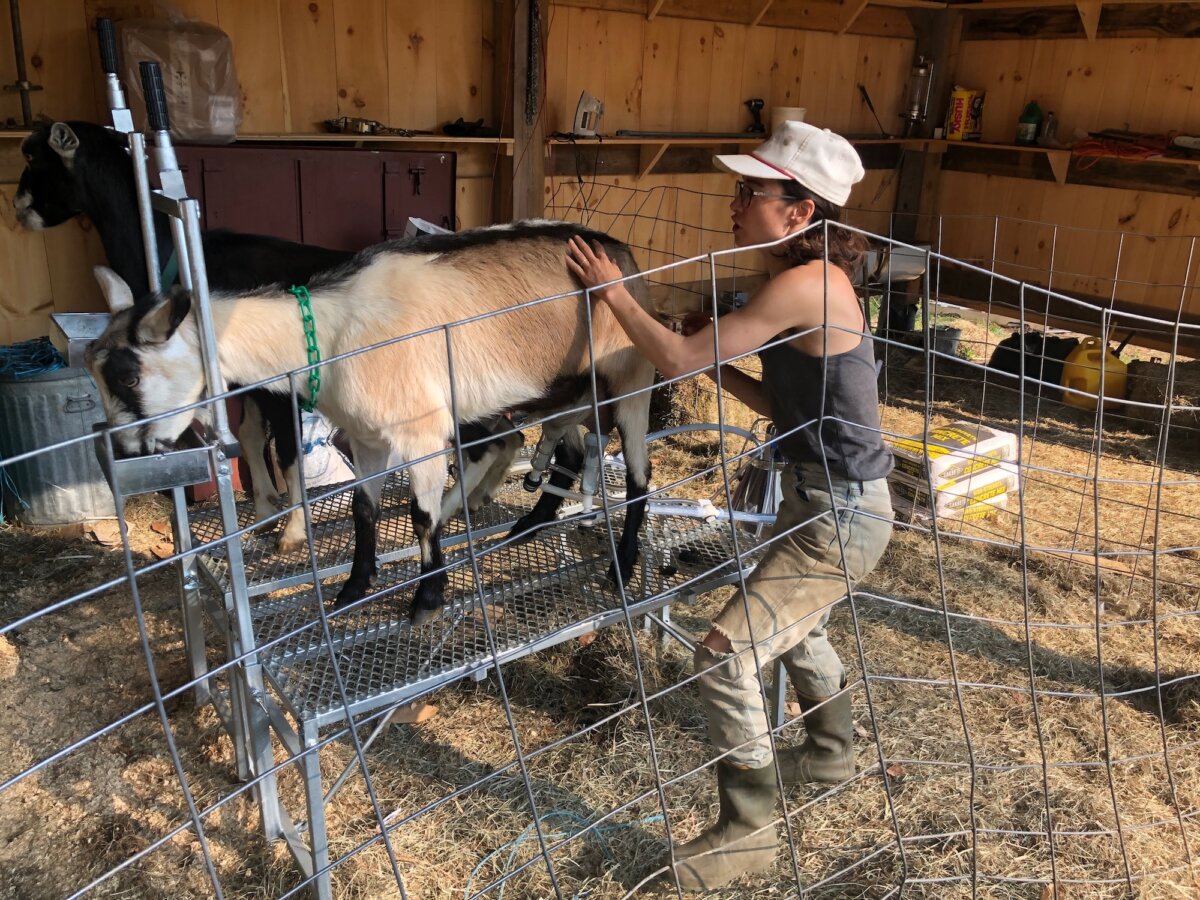
According to Ryan, the new regulations won’t only affect farmers. Other rural Vermonters face these costs if they want to build on their properties or sell land.
“For the auto mechanic, the teacher, or the nurse, or the whatever in rural Vermont, what it’s saying is you can’t sell six acres if you have a medical crisis, because the cost of permitting is greater than the value of the lot you would sell,” he said. “It’s saying you can’t subdivide your property and keep your kids here [by building] them a home.”
Balancing Environment and Development
Criticizing the legislation in 2024, Vermont’s governor said it did not sufficiently address the state’s housing crisis and would make it harder to build, particularly in rural communities.
“[It] would take four years to implement, doing nothing to address the housing shortage we are facing today. … It will deepen the disparity between the ‘haves and have-nots’ in our state, especially for rural Vermont, where expanded regulatory requirements will fall on the shoulders of communities with the least capacity,” Scott said in a statement.
Scott vetoed the legislation. But the House voted 107–38, and the Senate voted 21–8, to override the veto.
Democratic State Sen. Seth Bongartz, one of the two lawmakers who introduced the legislation, said it made it easier to build housing in Vermont’s downtown areas while preventing flooding caused by development in forested, rural areas.
“Forests are critical for dissipating and slowing water, as are wetlands, floodplains and so-called river meander zones. We are losing all of this at an alarming rate,” he wrote in a 2024 commentary for the Manchester Journal about the reform. “By way of example, we are losing the equivalent of 15,000 football fields of forest to development every year. By definition, this makes each episode of flooding worse. We must stop this and we must restore our river corridors and floodplains.”
Bongartz added that reform “makes changes to Act 250 to better protect natural resources on the one hand while, on the other, providing another round of regulatory relief for downtowns.”
Bongartz did not immediately return a request for comment.
Decline in Vermont Farmland
In 1925, Vermont had 3.9 million acres of farmland and 27,786 farms, according to USDA census data. As of 2022, the state had 604,396 acres of farmland—including cropland, pastureland, and other, but excluding woodland—and 6,537 farms. About 480 of those farms are dairy farms. The data show a steep decline in the state’s agricultural footprint.
“This state sucks for farmers,” John Klar, a seventh-generation cattle farmer from Brookfield, Vermont, told The Epoch Times.
Klar, 62, said his Shepherd’s Spring farm was handed down from his grandmother in the 1970s. His family has lived in Vermont for more than two centuries.
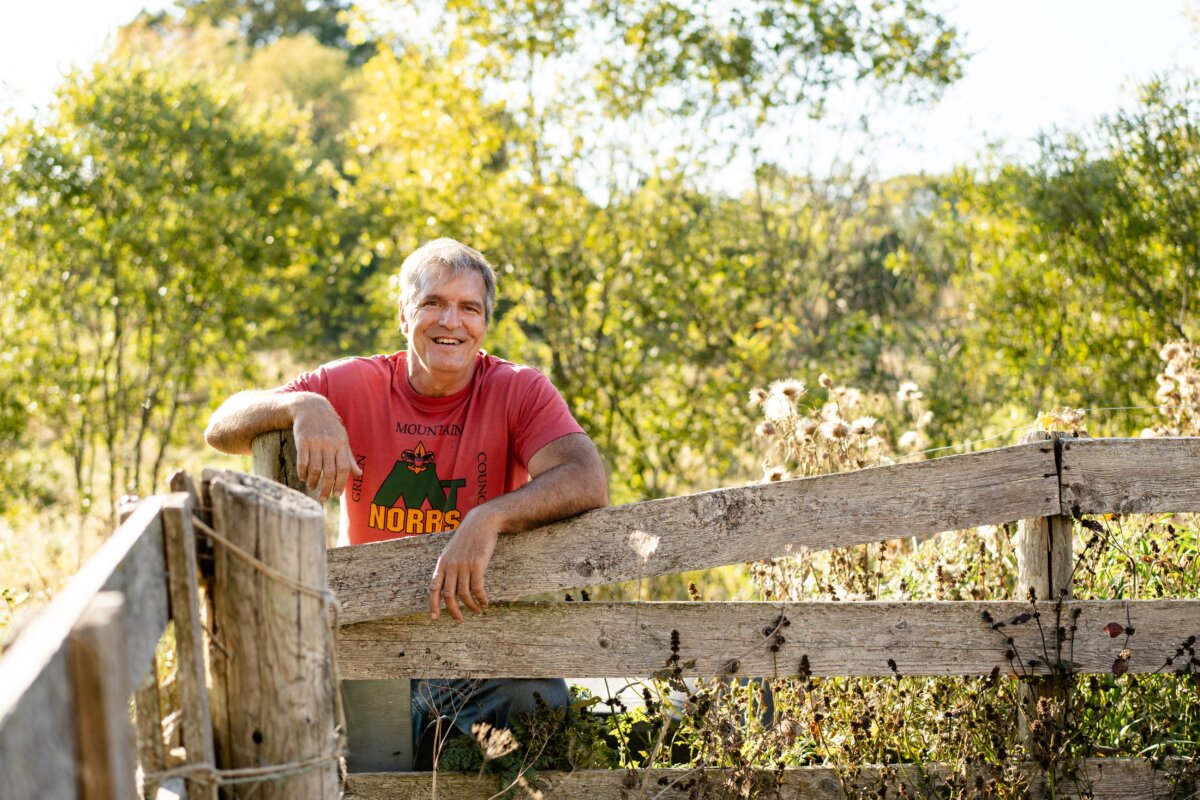
“My family’s been here in Brookfield, Vermont, since about 1798,” Klar said. “My great, great, great, great grandfather, Solomon Stoddard, is buried about 300 or 400 yards away from me, along with everybody in between. I’m still surrounded with cousins, but nobody else farms here.”
For about 25 years, he has raised grass-fed organic beef continuously, with a focus on regenerative farming practices. These include rotational grazing, less reliance on conventional feed methods for livestock, and using manure instead of synthetic fertilizer. Klar said he recently sold off all his sheep and many of his cattle to downsize.
“America has been destroying its small family farms for about a century now, and it’s by design,” he said. “You may remember [former U.S. Agricultural Secretary] Earl Butz famously saying in the 1980s ‘get big or get out.’ Well, there were about 27,000 dairy farms in Vermont in 1929, and now there are about 500. They’ve consolidated.”
“That shows a decline in the number of farms, but an increasing acreage. This was the modern industrial consolidation of agriculture that destroyed small family farms and hollowed out rural communities.”
The Next Generation
According to both Klar and Ryan, these pressures have big implications for the future of farming, and for young farmers in particular.
“A lot of young people want a farm, they want to take over,” Klar said. “My kids would love to farm, but they know the reality of it financially—that they’ll end up homeless. So what we need to do is make it profitable again.”
Ryan, who will be testifying before the Vermont Legislature and giving a press conference in the month ahead, said he’s doing so out of concern for ordinary Vermonters, especially the younger generation.
“This legislation precludes future young farmers from starting from scratch and creating their own farms,” he said. “Young people are leaving the state. So this goes way beyond its imposition on agriculture and forestry; it’s a really regressive system that is pushing out moderate-income and low-income Vermonters.”
“I spent $120,000 for a little over 200 acres, or something like that. The idea that I could pony up $50,000 to $150,000 to permit the driveway is ridiculous. It just never would have happened. I wouldn’t have purchased land.”
 Friends Read Free
Copy
Facebook
Tweet
Friends Read Free
Copy
Facebook
Tweet