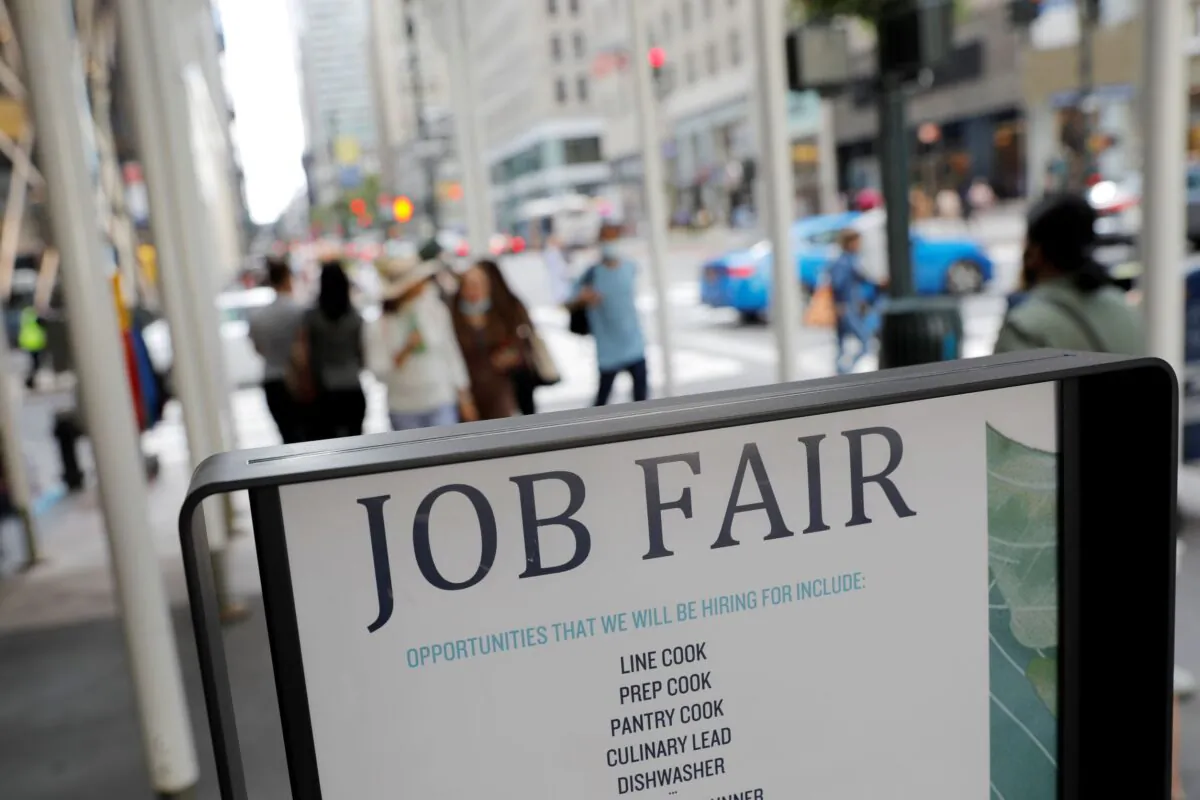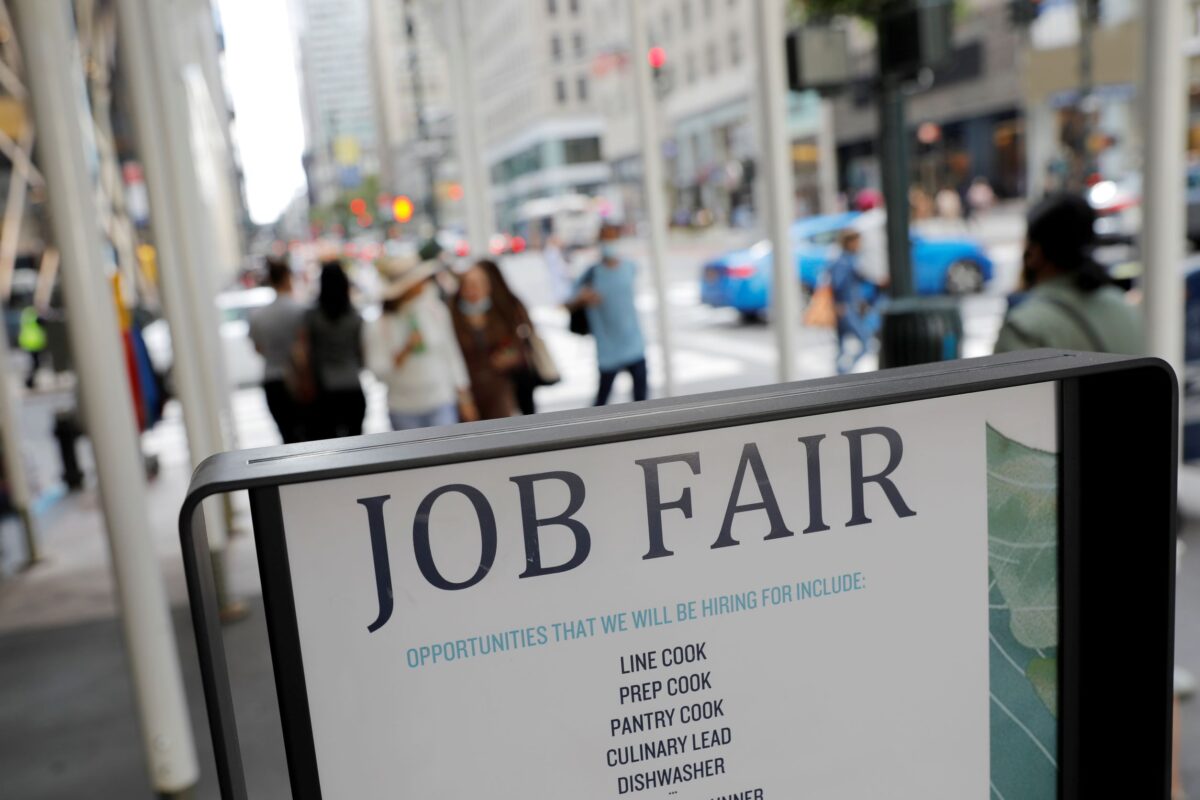

A growing number of employers are shifting their focus to skills-based hiring from degree-based hiring. Three employment experts told The Epoch Times their thoughts on the emerging skills-based hiring trend and the new career opportunities it presents in the United States’ evolving job market.
In 2017, a Harvard Business School survey said: “Jobs do not require four-year college degrees. Employers do.”
Christi Tasker, the CEO of social media marketing agency Puttin’ Out, agrees.
“I hire people from all over the world for digital marketing, branding, and public relations and I’ve never hired someone based on a degree,” Ms. Tasker told The Epoch Times. “I’ve always hired based on the content of their work.”
Puttin’ Out is a social media marketing agency based in Miami. Ms. Tasker is also a 2024 candidate for commissioner in the city’s 2nd District.
“I always recommend that [job seekers] get a portfolio ready as soon as they have an opportunity to market their own skills for the job they want, not a job that’s already listed,” Ms. Tasker said. “I encourage young entrepreneurs and potential employees to approach the employer with a sense that the employer needs them more than they need the job.
“If their skills are good enough, the employer will craft a job for them for what they’re good at.”
‘It’s Really About the Skill Set’
Good employers should be more interested in learning about potential employees’ talents than making them fit into specified roles, according to Ms. Tasker.
“It’s really about the skill set, the desire, the motivation of the person, and not their degrees,” she said.

Ms. Tasker also teaches at the Miami Ad School, which offers a two-year program for advertising students. Most of the students, she said, already have a four-year degree that didn’t help them land a job.
“There are people coming out of that school who didn’t arrive with a four-year degree but who leave with more skills than the ones who have one,” she said. “I’ve built my business on what my employees are good at, and I don’t have a degree.”
“People can do anything they want to do,” she said, adding that successful people are self-starters with a drive that shows at an early age.
By the age of 8, she was making her own jewelry and selling it at craft shows. She learned to manage cash flow from her grandmother, who was a banker.
“There are many ways to learn skills without a degree,” she noted. “I would suggest a trade school.”
Trade schools are an alternative to college, offering benefits from lower costs and faster graduation time to “real-world experience” and “preparation for in-demand skills,” according to Best Colleges.
“Jobs in the trades are booming in general, whereas many other industries are oversaturated with new graduates looking for work,” Forbes noted in February 2022.
Through her own clients, Ms. Tasker sees a shortage of plumbers and electricians. She suggested that high school students “shadow an electrician or a plumber and learn how these things are done.”
“We’re in a society where we are breeding a group of people who just want to be social media influencers,” she said, “and the reality is, this is going to put us in a massive hole when it comes to the basics in life when there are no longer any construction workers.
“In Miami, I’m already seeing construction companies from foreign countries. These could have been American companies.”
Degrees of Risk
A Sept. 8, 2022, report titled “Degrees of Risk,” a collaborative effort by American Student Assistance (ASA) and Jobs for the Future, showed that “fewer employers are seeing a meaningful relationship between a college degree and competency.”
In an interview with The Epoch Times, Julie Lammers, senior vice president of advocacy and corporate social responsibility at ASA, explained the significance of the study and what employers and prospective employees can learn from it.

“That survey really highlighted the fact that some employers are struggling to meet talent needs. But they continue to hire in the same way they always have, largely because they don’t have good resources or the ability to evaluate new types of skills and new types of credentials,” Ms. Lammers said.
“At the same time, young people are continuing to go down the path of post-secondary education because they think that’s what employers want. So there’s this cycle that has been perpetuated and what we are seeing is that employers are beginning to understand that they need to change the way they are evaluating employees and hiring them.”
Specifically, the study showed that 81 percent of employers believe in prioritizing skills over degrees and 72 percent said that a degree isn’t a reliable way to determine the quality of a candidate.
Still, while 81 percent of employers believe they should hire based on skills rather than degrees, only 68 percent said they want to hire “non-degree candidates.” Although 52 percent of employers still gravitate toward employment candidates with degrees, 72 percent said they don’t see a degree as “reliable.”
Although 65 percent of prospective employees from Generation Z are afraid they might take “the wrong post-secondary path,” nearly 40 percent still believe that most employers won’t hire them without a degree.
Durable Skills
ASA is trying to help employers shift focus toward skills in their hiring practices, particularly the larger employers who are screening hundreds of applications at a time, Ms. Lammers said. The organization is also trying to help young people build the skills that employers are saying they need, help them understand what opportunities are really available in the job market, and also how to find the appropriate post-high school education experience to obtain it.
She advised that students should start thinking about “the world of work and understand their place in it no later than middle school.”
They should then start building a skill set through work-based learning, internships, and entrepreneurial experiences in high school so they gain an understanding of their personal workplace identity. Building good “social capital,” an ability to work well with others, is something you can’t learn in a textbook, but it’s something that most employers are looking for.
Citing a study released by America Succeeds in 2022 titled “The High Demand for Durable Skills,” Ms. Lammers noted that “about 70 percent of all job applications required skills like teamwork, communications, and the ability to analyze information.”
“Those are the things employers are really looking for. Yet we still see employers screening people based on degrees,” she said.
Ultimately, she said, until the 52 percent of employers stop limiting their hiring to a hunt for degreed candidates, they’re going to keep getting the same limited-skills result.
While “necessary,” the study concluded that academic skills are “not sufficient.”
“Degrees, over time, have become a proxy for things like persistence and the ability to complete a task,” she said. “But it doesn’t necessarily mean you have the expertise and skills an employer would want.”
Asked whether she had more recent data on the skills versus degree job market, Ms. Lammers said they are in the process of conducting an additional survey, “but those results have not been published yet.”
The new survey, she said, will focus on the disconnect between the 81 percent of employers who prefer skills-based hires and the 52 percent who still require degrees.
Tech Bridge
Marci McCarthy is president and CEO of T.E.N., a marketing and events company in the cyber security industry. She also sits on the corporate boards in a cyber security capacity for the University of Alabama’s Culverhouse College of Business and Georgia State University.
She said she believes that a two-year and four-year degree are important but that the decision of whether to obtain a degree depends on what kind of job a person is seeking.

A July 26 report by LinkedIn showed that two of the 10 jobs in most demand are computer-based: Research and Development Engineer and Artificial Intelligence Engineer. An April 17 report by Tech Target revealed a list of eight “in-demand” jobs in the cybersecurity field. All require a bachelor’s degree and a host of certifications.
If you want to be a business cyber security major and you want to be a chief information security officer, Ms. McCarthy said, “you’re going to need a four-year degree.”
But if you are going more on a technical track, working on software application development and cloud technology, she said employers are looking more for people with skills and hands-on experience.
“For many of the hires, the need for skills overtakes the need for a degree,” she said, adding that some skill requirements are “so specific and so new that you won’t learn them in college.”
Ms. McCarthy then spoke of a new workforce development program she’s involved in called Tech Bridge.
It’s a program for high school grads who didn’t have the opportunity to go to college. But they have the “right attitude and aptitude across the board.”
“Some are single parents,” she said. “We put them in boot camps for several weeks and teach them the necessary skills, and they’re coming out certified.”
The program, free to students, is covered by scholarships and corporate sponsorship.
“It’s changing their lives,” she said. “They go from a minimum wage job with no real future to a salaried position with upward mobility.”
The Degrees-to-Skills Shift
In September 2020, the World Economic Forum predicted that “the right skills will be prized over academic qualifications alone.”
On Jan. 11, 2021, a memorandum from the White House reminded the chief acquisition officers for senior procurement executives that Executive Order 13932, issued by President Donald Trump on June 26, 2020, “calls on agencies to increase the use of skills and competency-based hiring for employment with the Federal Government instead of overly relying on educational achievements.”
That same year, Forbes reported that LinkedIn had a 21 percent increase in skills-based job postings.
In April 2022, Indeed published the results of a survey on how the COVID-19 pandemic reshaped recruiting practices. Of the 502 U.S. employers surveyed, 75 percent required an undergraduate degree. However, nearly 60 percent said they would consider eliminating the requirement, and 30 percent said the elimination of degree requirements would facilitate the onboarding of more diverse talent.
A 2022 survey by the Society for Human Resource Management showed that 79 percent of employers say skills assessments are at least as important as other hiring criteria.
TestGorilla’s 2022 report “The State of Skills-Based Hiring” showed that 76 percent of employers used at least some skills-based hiring, with almost 55 percent using role-specific skills tests to find new talent.
A June 29 LinkedIn report showed that the average cost a company experiences for a bad hire is about $15,000. That expense is exacerbated by the potential loss of clients and good employees.
However, the TestGorilla survey showed that 92.5 percent of companies that used skills-based hiring saw a 44 percent reduction in the number of bad hires.
A 2022 report by McKinsey and Company said that “hiring for skills is five times more predictive of job performance than hiring for education and more than two times more predictive than hiring for work experience.”
Skills-based hires also stay on the job an average of 34 percent longer than those hired for degrees.
Degrees: Cost Versus Return
The latest data from the Bureau of Labor Statistics show that the median annual salary of someone with an associate’s degree is $52,260, and for those with a bachelor’s degree, it’s $74,464.
A June 2023 analysis by Campus shows that an associate’s degree at a two-year public institution costs about $11,600 per year, including room and board, for a full-time student. That’s $23,200 for a two-year degree.
The National Center for Education Statistics shows a similar cost of attending a two-year public college or university in the 2019-2020 school year.
The average yearly cost to attend an undergraduate four-year public college or university with room and board was $21,035. That’s $84,140 for a bachelor’s degree.
And the average cost to attend a four-year private college or university was $48,965 annually, or a total of $195,860.
According to Bankrate, the current interest rate for federal student loans for undergraduates is 4.99 percent. Graduate students pay 6.54 percent or 7.54 percent for unsubsidized loans.
According to the student loan calculator by Smart Asset, the average debt for a student loan is $28,400. At the current interest rate, monthly payments for a 10-year payoff period are $301. Monthly payments are $323 at 6.65 percent and $338 at 7.54 percent.
Monthly payments on the $22,138 associate’s degree at 4.99 percent would run $235. Monthly payments on the $84,140 bachelor’s degree from a public institution would run $892. And for the $195,860 bachelor’s degree from a private school, the payments would be $2,076 per month.
Then there is the dropout rate.
Bankrate reported in July that according to college graduation rates in 2022, which are the most recently available data, 32.9 percent of college students who enrolled in undergraduate programs dropped out.
Only 62.3 percent of students completed their degree program within six years.
The dropout rate for first-generation college students is 92.2 percent higher than for students whose parents earned a degree.
In May 2022, 7 percent of the students who enrolled in college dropped out during the first semester, and 31 percent of those students did so to get a job.
Another problem with the degree path is that many of the students who get a degree don’t have the knowledge the degree suggests they do.
On Aug. 9, The Daily Wire reported that college professors are complaining that incoming students are struggling with basic math skills, saying they are “stuck” at a ninth-grade level. Although some educators blame today’s academic setbacks on the COVID-19 pandemic, Education Week reported the same issue in 2009.
 Friends Read Free
Copy
Facebook
Tweet
Friends Read Free
Copy
Facebook
Tweet