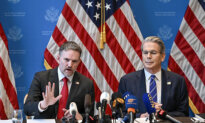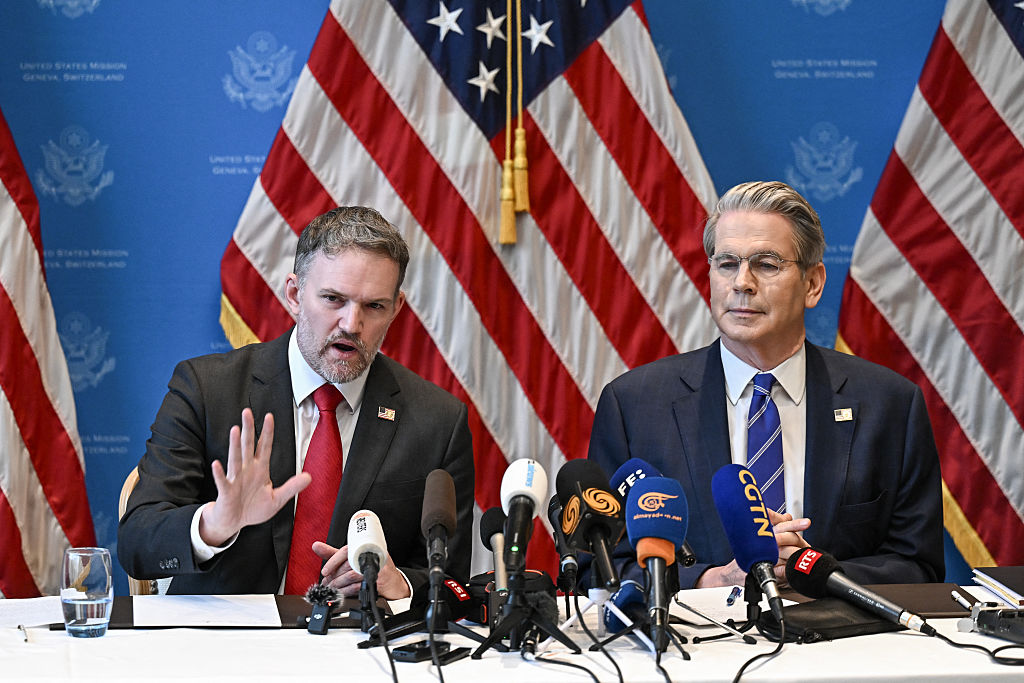

Swiss Economy Minister Guy Parmelin is set to meet U.S. Trade Representative Jamieson Greer on Nov. 13, as Bern seeks progress in negotiations aimed at reducing tariffs imposed by Washington in August.
Washington imposed a 39 percent tariff on Swiss goods on Aug. 1, one of the highest rates enacted by the Trump administration and significantly higher than the 15 percent applied to European Union members.
Parmelin flew to Washington with Helene Budliger Artieda, head of the State Secretariat for Economic Affairs.
The U.S. goods trade deficit with Switzerland reached $38.3 billion in 2024, a 56.1 percent jump from the previous year, according to the Office of the U.S. Trade Representative.
U.S. President Donald Trump has repeatedly cited trade deficits with other nations as a key reason for his tariff policy.
“We have a $40 billion deficit with Switzerland,” he told reporters in August, describing it as “a big deficit.”
Switzerland’s export-oriented economy relies heavily on U.S. demand for pharmaceuticals, precision machinery, and its globally renowned watches.
Tariffs Deal
The United States is working on a lower tariff rate for Switzerland, but the final number has not been set yet.
“We’re working on a deal to get their tariffs a little bit lower,” Trump told reporters in the Oval Office on Nov. 10. “I haven’t set any number, but we’re going to be working on something to help Switzerland.”
His comments followed a meeting with senior Swiss representatives last week. Trump said in a Nov. 4 post on Truth Social that the discussions focused on “many subjects including, and most importantly, Trade and Trade Imbalance.”
Last week, Parmelin said in a post on X that he had a “very constructive conversation” with Greer, adding that he was encouraged by what he called a “great new dynamic” in bilateral ties. He publicly thanked Trump for creating momentum toward a possible agreement.
Commenting on the prospects of a deal, Greer told Fox News last week that it would open an “opportunity for more manufacturing in the United States” for Swiss businesses.
“Swiss companies are quite eager to come here and do things in terms of pharmaceutical manufacturing, aircraft and aircraft parts, even gold smelting, something Switzerland is quite famous for, and of course opening their market in a greater way,” he said.
Greer added that further U.S. trade agreements are expected later this month involving countries in the Western hemisphere.
Swiss Stakes
The U.S. tariff policy has pulled investments from Swiss pharmaceutical giants Roche and Novartis, who unveiled U.S. expansion plans in April worth $23 billion and $50 billion, respectively.
Swiss officials say the bilateral economic relationship is more balanced than the goods deficit alone suggests.
According to the Swiss Federal Department of Foreign Affairs, Switzerland—despite that it is less than 1 percent the size of the United States—is the sixth-largest foreign direct investor in the United States, with cumulative investments of $352 billion.
About 500 Swiss companies operate across all 50 states, employing about 400,000 American workers, according to the department.
The United States receives more than one-fifth of all Swiss foreign direct investment and is Switzerland’s largest investment destination. U.S. companies also have a substantial presence in Switzerland, with nearly 1,200 firms employing about 95,000 people. Swiss firms are among the highest-paying foreign employers in the United States, with average salaries above $130,000, according to the Swiss foreign affairs department.
Reuters contributed to this report.
 Friends Read Free
Copy
Facebook
Tweet
Friends Read Free
Copy
Facebook
Tweet