



On June 28, 1820, Capt. John Jackson kept his eye on the horizon, searching for a sail. He had recently received a report of a pirate vessel anchored off the coast of St. Augustine, Florida. According to the report, the brig carried not only illegal slaves but also young Cornelio Coppinger, the kidnapped son of the governor of Spanish Florida.
News came that the pirate captain tried to bribe the governor for a ransom, but Jackson had already directed his schooner down the St. Marys River to the sea. Saving the Spanish governor’s son wasn’t his job, but as a captain in the Revenue Marine Service, confiscating illegal U.S.-bound cargo certainly was.
There—was that a sail, 20 degrees off the starboard bow? A call from the lookout confirmed. Jackson ordered his crew to intercept even as the pirate ship, catching sight of the Dallas, turned to run.
Jackson wasn’t worried. The Dallas was a new topsail schooner, built only four years earlier to replace some of the cutters lost during the War of 1812. She was designed to sail at the speed of the fastest ships afloat. With the Revenue flag hoisted high, the Dallas crew prepared their muskets. In less than 30 minutes, they ran down the pirate ship, which soon heaved to and surrendered. Her crew, it seemed, had little appetite for a fight.
The pirate ship, Jackson soon learned, was a pirated ship herself called the Antelope. Aboard, he found 281 African slaves bound for the U.S. black market.
Where It Started
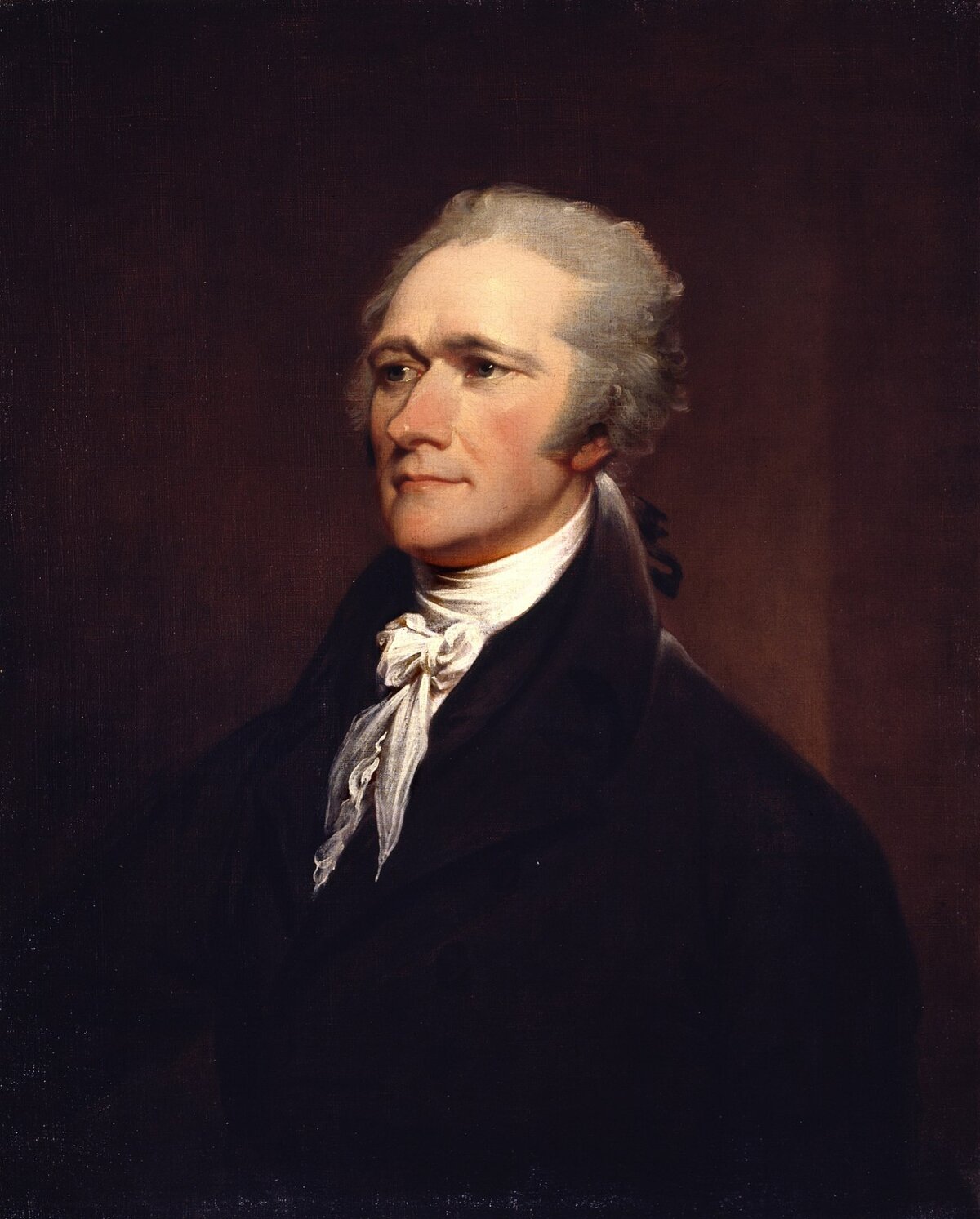
In his youth, Alexander Hamilton worked as a clerk for a local import-export mercantile firm in the British West Indies. Those early lessons in maritime trade stuck with him for decades, even after President George Washington appointed him secretary of the treasury in 1789. Early in 1790, he submitted a bill to Congress calling for the creation of a revenue marine service to guard against smuggling.
“A few armed vessels,” he wrote in “Federalist No. 12” in 1787, “judiciously stationed at the entrance of our ports, might at small expense be made useful sentinels of the laws.”
Hamilton suggested Revolutionary War veterans captain the new federal ships and that all officers be required to follow proper etiquette, to “refrain, with the most guarded circumspection, from whatever has a semblance of haughtiness, rudeness, or insult.”
As for the ships themselves, called cutters, they were to be fast and seaworthy to deter smuggling, enforce tariff laws, and ensure the safety of commerce. Each would have a schooner rig with topsails and a light armament of four swivel guns. If any vessel was found to be in violation of federal law, these cutters were to arrest the captain and crew and confiscate the cargo.
Congress and Washington agreed. The legislation was signed into law on Aug. 4, 1790, establishing the Revenue Marine Service, later known as the Revenue Cutter Service. Ten ships would be built or acquisitioned for the service.
Over 100 years later, in 1915, President Woodrow Wilson combined the agency with the Lighthouse Service and the Life-Saving Service. He also gave it a new name, which it has to this day: the U.S. Coast Guard.
An Expanding Mission
At first, the cutter masters were instructed to stop commercial vessels and verify that they and their cargo were properly documented in accordance with federal laws. They patrolled common smuggling spots to catch undocumented ships or contraband headed to the black market. But it didn’t take long for their responsibilities to expand.
Soon, they were carrying supplies to remote lighthouses and rescuing seamen in distress. As part of their law enforcement duties, cutters enforced quarantine restrictions and defended American ships against piracy or enemy ships during times of war. And as early as 1792, the largest cutter at the time, the Massachusetts, served as a research vessel for a federal scientific effort: one of the first known experiments in the desalination of salt water.
Cutters also aided the first federal coast survey and created charts for dangerous coastlines in the years before the U.S. Coast Survey was founded in 1807. They served as maritime mailmen, delivering important federal communiques and public announcements in an era when roads were scarce, impassable, or too slow to carry important news.
When Congress passed the Slave Trade Act of 1794 and the 1807 Act to Prohibit the Importation of Slaves, cutter masters like Capt. Jackson were tasked with hunting down slave ships headed for American ports. Many of the rescued slaves, in keeping with international law, had to be returned to claimants hailing from slave-holding nations. But by 1865, cutters had captured numerous slavers and returned nearly 500 slaves to Africa.
A Storied Legacy
Since 1790, generations of cutter crews have carried American authority across treacherous waters, facing storms and wars, smugglers and pirates, slave traders and kidnappers.
During World War I, the Coast Guard was formally placed under the Navy’s command during times of war, but members of the service had served in most of the nation’s conflicts since 1790, including the War of 1812 and the Civil War. After that, the service’s wartime contribution continued to grow, with over 241,000 Coast Guard members serving during World War II alone.
Equally as important are the Coast Guard’s rescue missions, whether it’s saving someone lost at sea or evacuating individuals trapped by natural disasters.
The service has evolved far beyond Hamilton’s original vision. Yet today, over two centuries after Congress first authorized “a few armed vessels” to enforce federal law, Coast Guardsmen still patrol our nation’s coastlines to safeguard American lives and commerce just like those first cutter masters. They do so under a motto that Capt. Jackson might well have approved of: Semper Paratus, “Always Ready.”
What arts and culture topics would you like us to cover? Please email ideas or feedback to features@epochtimes.nyc
