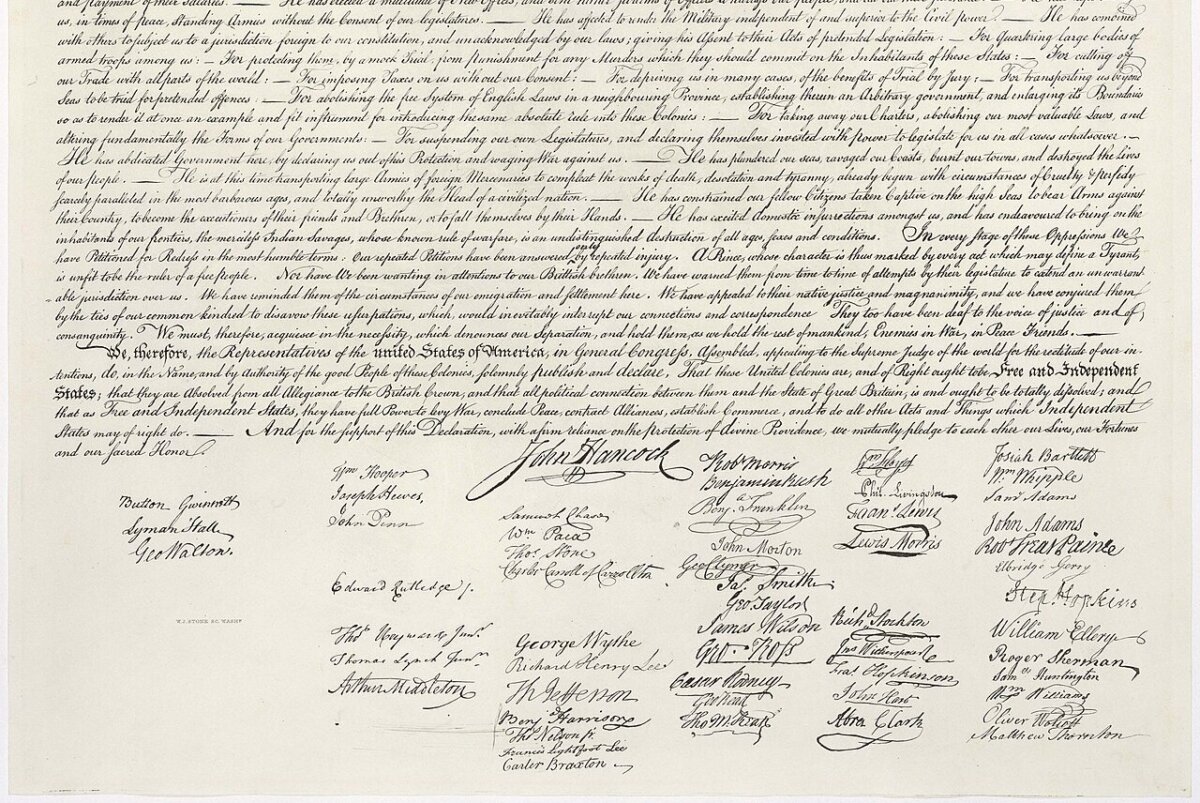
Even as the war with Great Britain raged and delegates in Philadelphia moved toward a complete breakaway from the mother country, Carter Braxton (1736–1797) resisted the calls for independence and a republic. As late as April 1776, while serving as a Virginia delegate to the Continental Congress, he wrote, “Independence is in truth an elusive bait which men inconsiderably catch at, without know the hook to which it is affixed.”
Yet in July 1776, the wealthy Braxton voted in favor of the Declaration of Independence. From that point on, he adopted the old adage, “In for a penny, in for a pound” in his support of the Revolution. Though the reasons for this shift in attitude remain hidden, Braxton gave time and treasure for the cause of freedom. That resulted in the loss of much of his wealth.
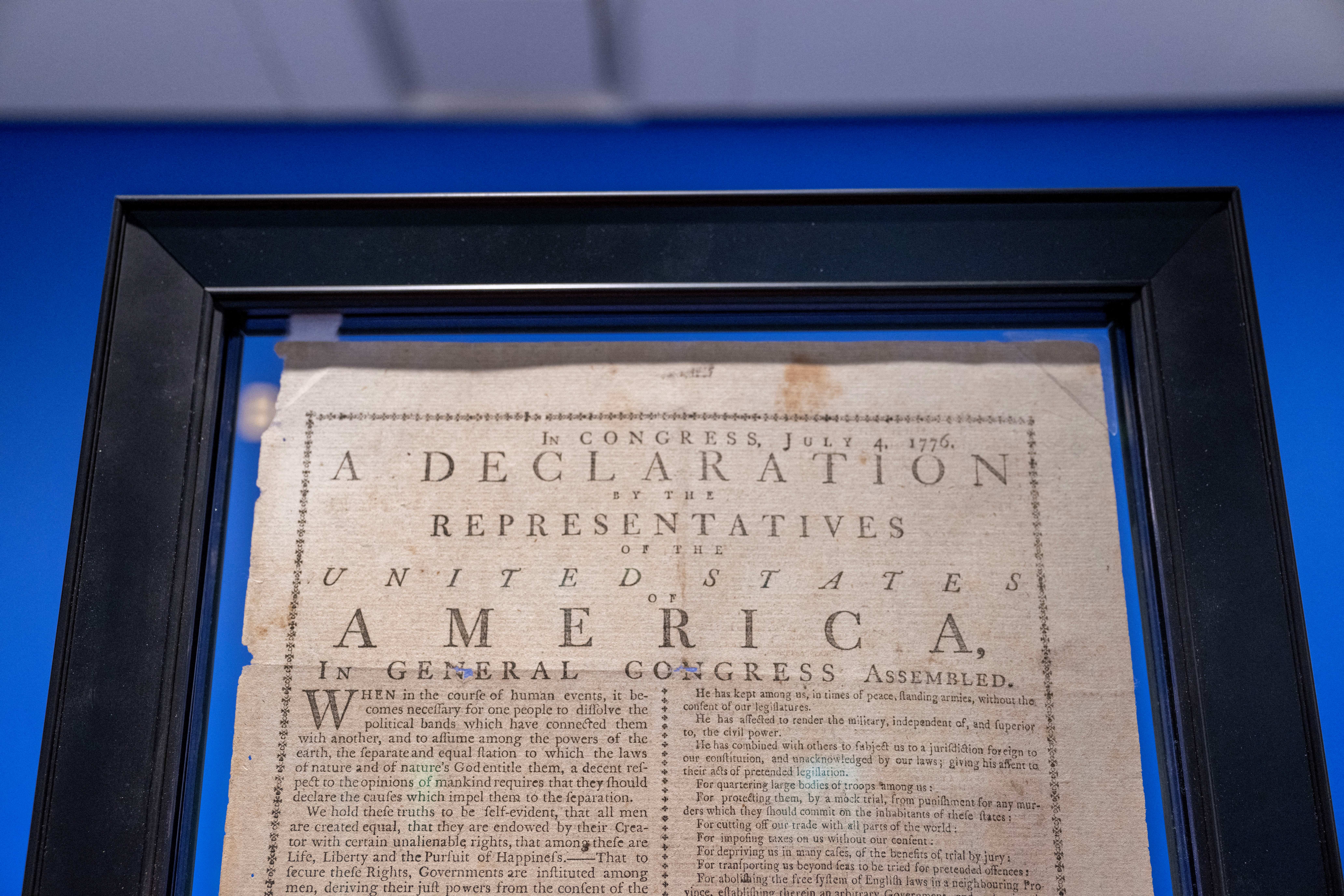 The U.S. Declaration of Independence is on display at Sotheby’s in New York on June 25, 2024. (Angela Weiss/AFP via Getty Images)
The Ripening Years
Braxton’s mother, Mary Carter, died within days of his birth. Both the Carters and the Braxtons were wealthy families with a notable ancestry in England and deep roots in the colonies. Several members had served in the Virginia House of Burgesses and local county offices. Consequently, Braxton came to manhood with advantages most colonials could only dream of.
After finishing his education at William and Mary, Braxton applied himself to his plantations—tobacco was the cash crop—and showed an interest in shipping. In 1755, he married Judith Robinson, the daughter of another family of wealth and privilege. When she died just days after the birth of their second child, Braxton in his grief left America for Britain, where he remained for two years, popular among the aristocracy for his gentlemanly ways and affable personality.
During this time that he acquired his first inklings of the taxes the British parliament intended to lay on their American colonies, in large part to help pay for the enormous costs of the French and Indian War.
Soon after his return to Virginia, Braxton married Elizabeth Corbin, also a daughter of a prestigious family. Her father, who would later prove to be a staunch Loyalist during the Revolution, had not only served in the Burgesses, but for almost 20 years held the post of receiver general, responsible for collecting the colony’s taxes and customs.
With Elizabeth, Braxton had 16 sons and daughters for a total of 18 children. That made him the most prolific parent out of the signers of the Declaration.
As tensions between Britain and the American colonies mounted over the next decade and a half, Braxton supported efforts to resist British taxation. At the same time he acquired a reputation as a moderate regarding the prospect of independence. Following the Battles of Lexington and Concord, he immediately joined the Virginia Colonial Convention, yet refused to go along with firebrands like Patrick Henry.
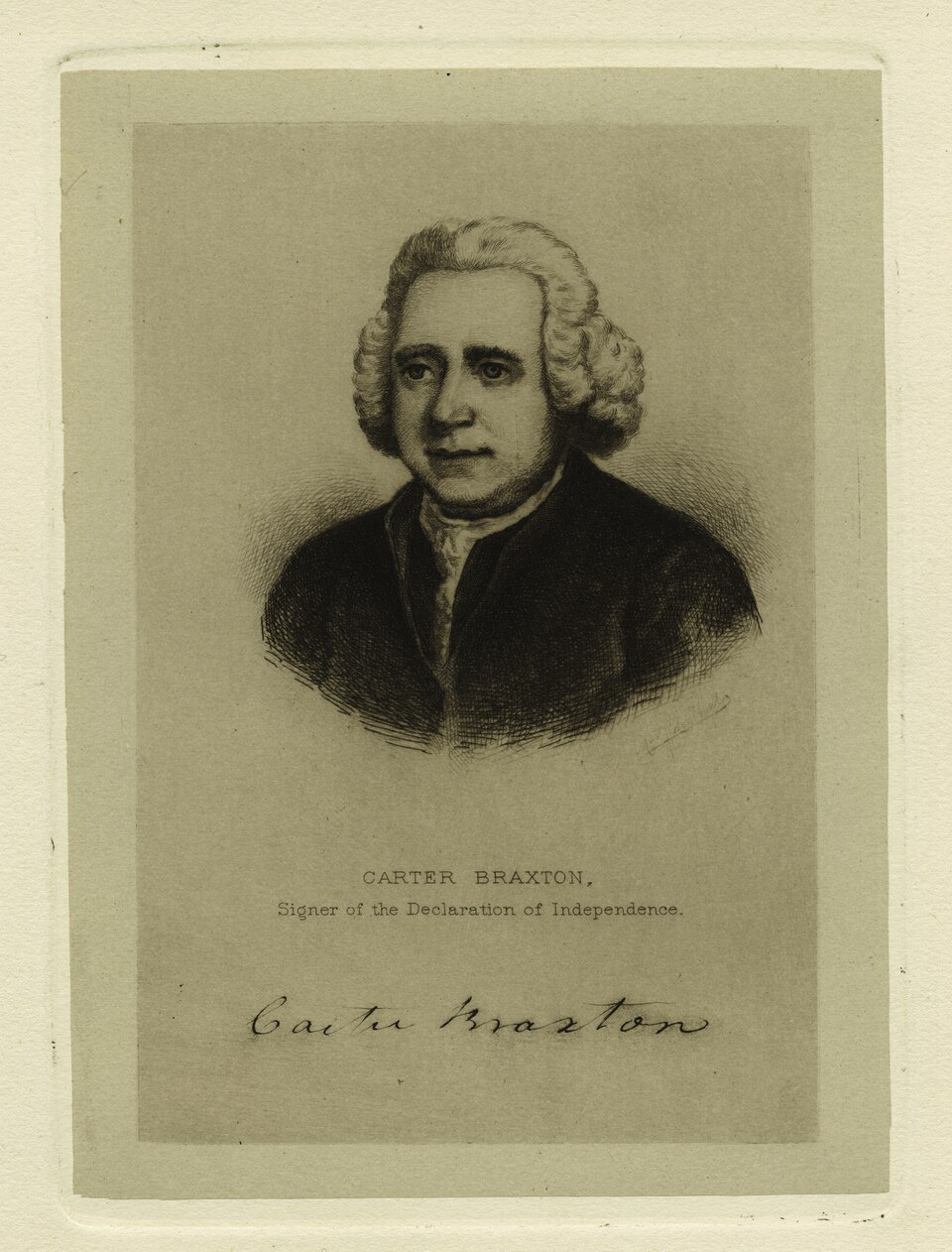 Drawing of Carter Braxton, signer of the Declaration of Independence. Circa 1850 to 1890. New York Public Library. (Public Domain)
An incident in 1775 that might have led to violence in Williamsburg, Virginia’s capitol at the time, demonstrated Braxton’s abilities as a negotiator. Then Colonial Governor Lord Dunmore ordered the colony’s gunpowder removed from the city magazine and had it stowed abroad a British man of war. In response, Patrick Henry led a group of patriots into the city to demand the return of the gunpowder. Braxton stepped in, and speaking on behalf of Henry and his followers, he convinced his father-in-law, still the king’s receiver, to pay the Virginians for the gunpowder, thereby averting possible bloodshed in the streets.
Crossing the Rubicon to Republicanism
Braxton had personal reasons for opposing a rupture with Britain. He was a wealthy planter, owner of a vast estate of more than 12,000 acres along with approximately 165 slaves. The money from his tobacco crops and shipping had added to his wealth. Moreover, he had his in-laws with their Loyalist sympathies to consider.
More broadly, Braxton regarded the founding of a republic a dangerous proposition, believing it would quickly collapse into corruption and tyranny. He pointed to the failed republics of the Netherlands and Venice. Moreover, like many others at the time, he feared that the colonies lacked the military experience and resources to defeat the British.
Yet by early July Braxton voted in favor of the Declaration and independence. He was soon afterwards recalled to Virginia, apparently for opposing the more democratic vision of John Adams’s republic and for suspicion among some that his family ties made him a Loyalist sympathizer. He remained active in state politics, however, and demonstrated his support for the cause by lending or giving large sums of money to the new American government.
The war took a direct toll on his fortunes. British attacks ruined his shipping ventures, and some of his Virginia properties were heavily damaged by British troops. At war’s end and into the 1780s, his financial fortunes waned, though his political and social prestige remained intact. Forced to leave his plantation life, he rented a small home in Richmond. There, faithfully tended by his wife while suffering a series of strokes, he died.
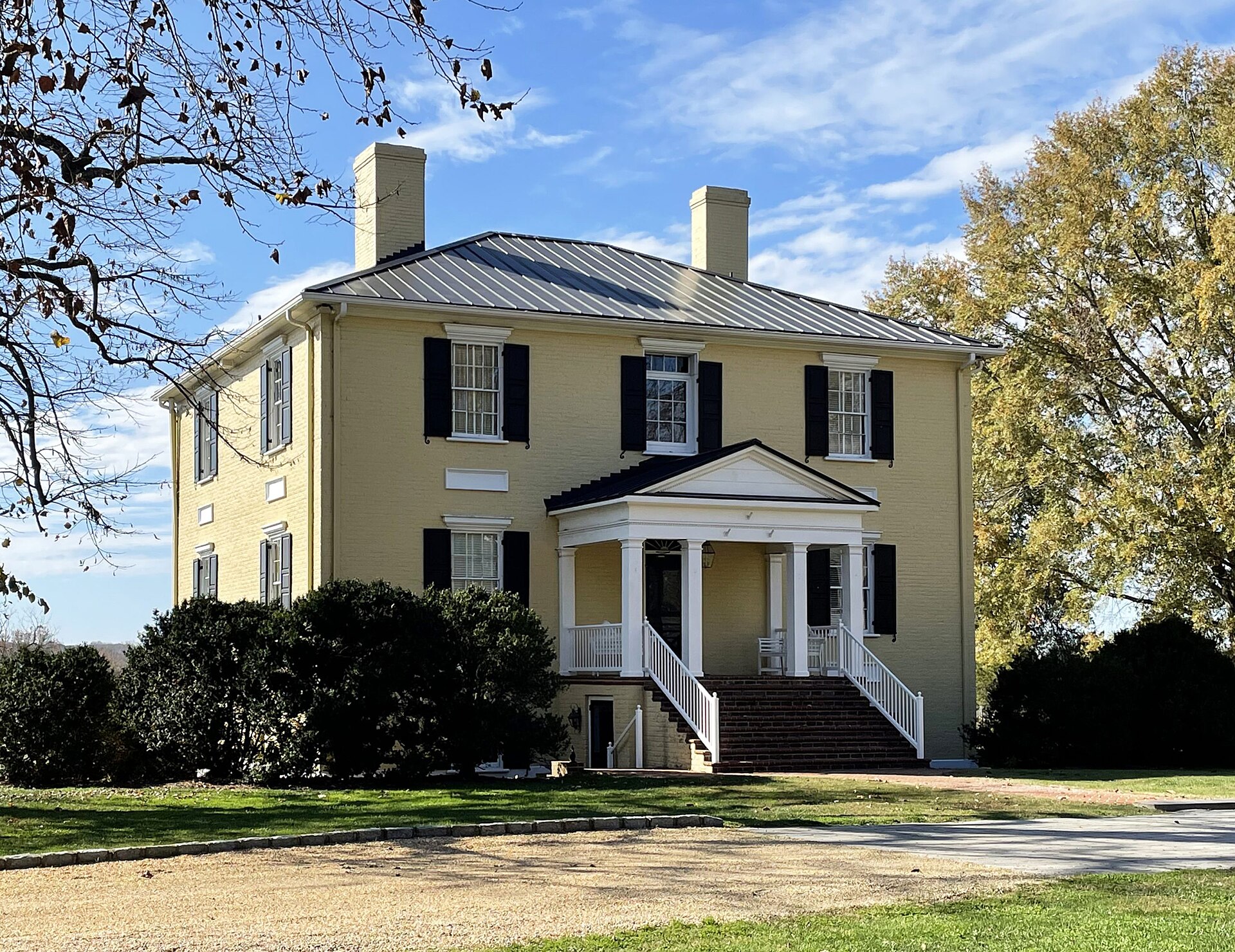 Chericoke, the small country house in Virginia where Buxton died. (User 73324234324/CC BY-SA 4.0)
Braxton’s contemporary and fellow signer of the Declaration, physician Benjamin Rush, praised him as a a sensible and agreeable gentleman. Others commented on his “cultivated mind and respectable talents.”
This landmark Fourth of July, we will hear much about men like Jefferson, Adams, Washington, and Franklin. But it behooves us to remember all those who made this new republic possible. That includes not only the lesser-known signers of the Declaration like Carter Braxton, but the farmers and merchants, the schoolteachers and drovers, the wives and mothers, and all the rest who pledged their lives, their fortunes, and their sacred honor to the cause of American independence.
What arts and culture topics would you like us to cover? Please email ideas or feedback to features@epochtimes.nyc