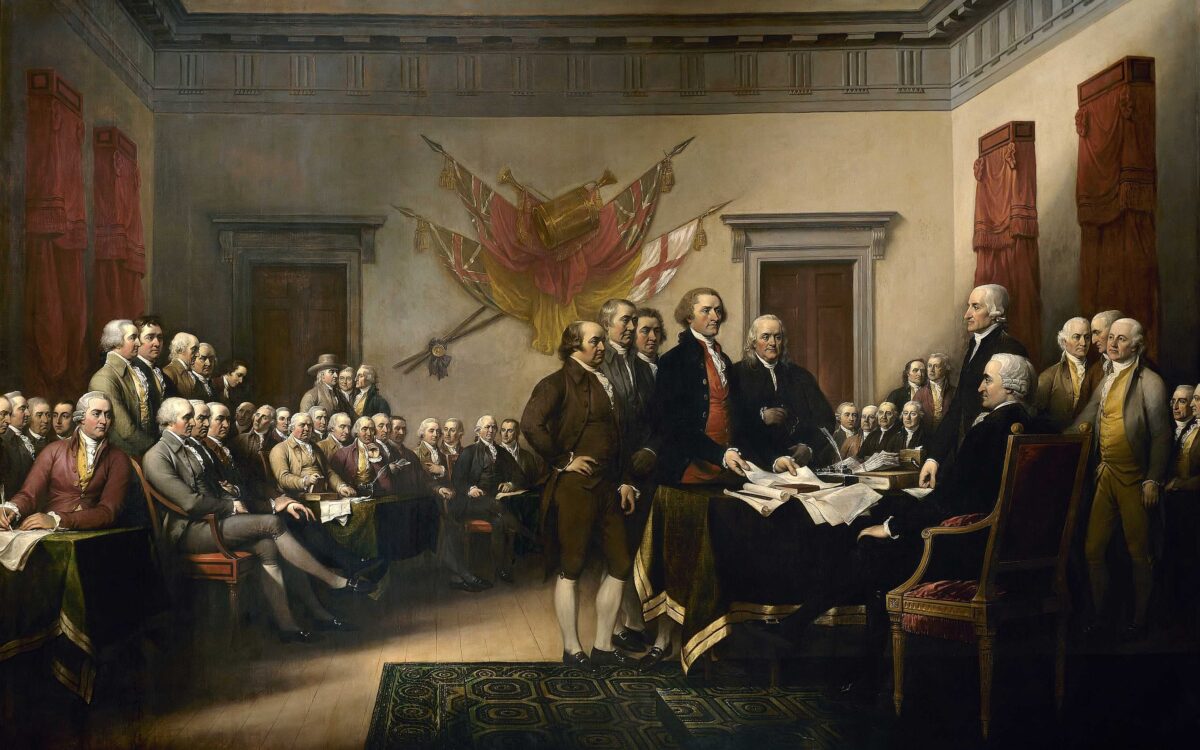
American history is replete with unsung patriots who played significant roles in shaping the country and the Revolutionary War. Names like Thomas Jefferson, George Washington and Benjamin Franklin are the familiar Founding Fathers, but others worked quietly behind the scenes—men who conducted lesser-known but vitally important functions and were also present at the dawn of American independence.
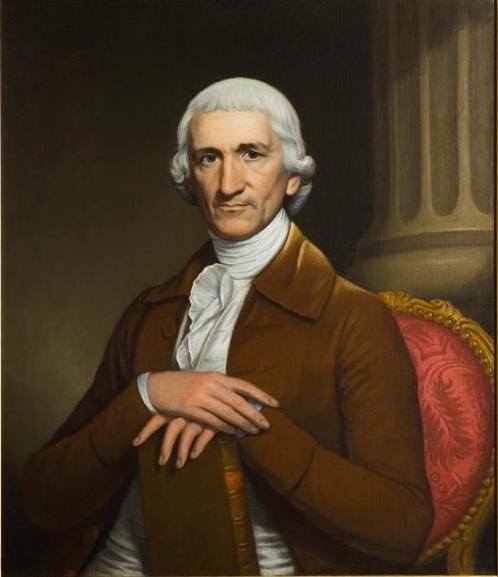
The name Charles Thomson may be unfamiliar today, but his contributions arguably impacted the development of America’s national consciousness as much as those of the delegates who signed the Declaration of Independence. As congressional secretary, Thomson’s “John Hancock” appears on the official Declaration of Independence as the only nondelegate signature on the document. In artist John Trumbull’s 1818 painting “Declaration of Independence,” Thomson is shown standing across the table from the Committee of Five.
Thomson saw and heard much in the 15 years he served as the Continental Congress’s only secretary, and the meticulous journals and files he kept during his tenure became the archives of the nation.

The Man Who Speaks the Truth
In 1756, Thomson took his first step into politics by representing Quaker opposition to Pennsylvania’s treatment of the Delaware and Shawnee Indians. The Delaware chief was so impressed with Thomson that he made him an honorary tribal member and named him Wegh-wu-law-mo-end, or “The Man Who Speaks the Truth.”
Years later, as secretary of the Continental Congress and Confederation Congress, Thomson’s thorough records were so trusted that when a congressional report appeared with his signature, the expression “here comes the truth” was frequently voiced.
As secretary, Thomson recorded notes for all sessions of Congress, including special minutes of secret meetings and insider deals between members. His precise recording of events and fidelity to the actual debates often led to arguments and even physical fights on the floor of Congress. One such event occurred in 1780, when James Searle, a close friend of John Adams, slashed Thomson in the face with his cane, saying Thomson had misquoted him.
Thomson was diligent in recording congressional proceedings. He first drafted meeting minutes contemporaneously or shortly afterward in a rough journal, then updated the original draft into a transcribed journal, and concluded by compiling his notes into an official journal that was sent for printing.
Thomson also registered notes on Continental Army battles and engagements, both won and lost. His archival discretion in documenting sensitive military intelligence discussed in Congress helped prevent leaks that might expose military vulnerabilities to the British.
From Designing the Great Seal to Escorting the First President
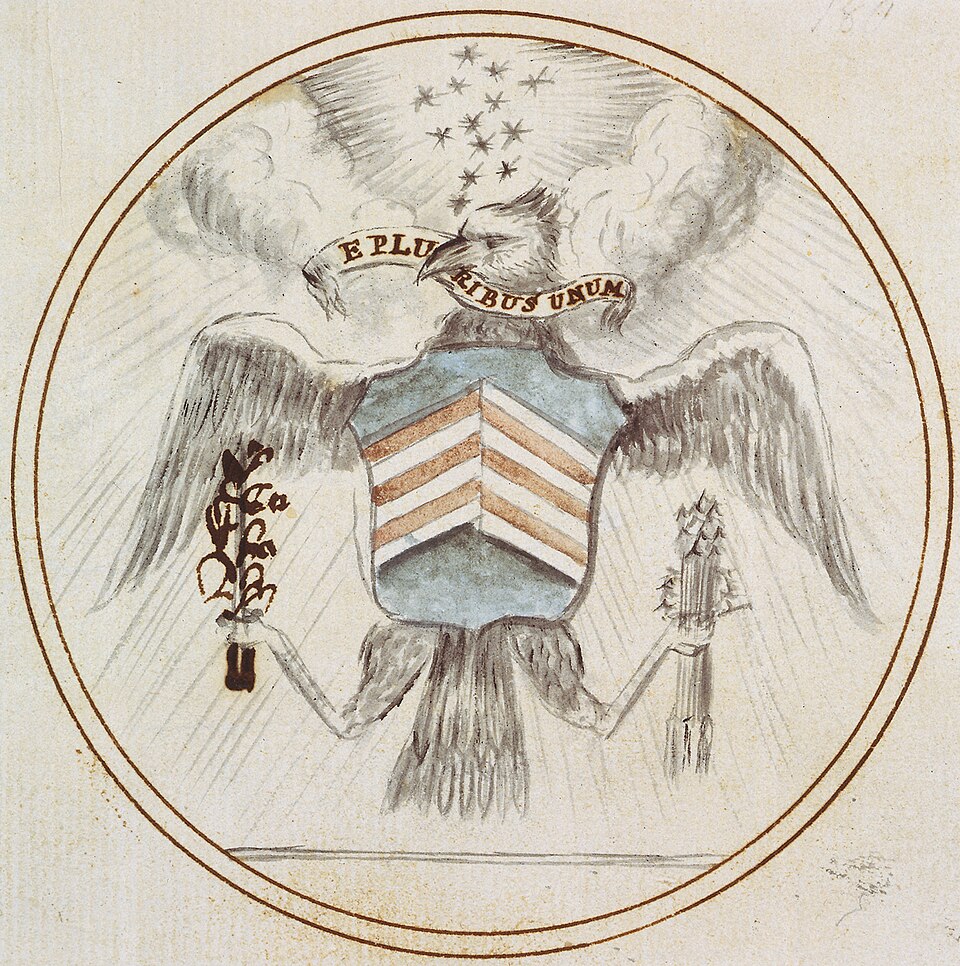
In May 1782, Congress assigned Thomson the task of finalizing the Great Seal of the United States. Together with Philadelphia lawyer and heraldry expert William Barton, the two refined several earlier versions of the design discussed in Congress. Thomson also added the Latin phrases “Annuit Coeptis” (He [God] has favored our beginnings) and “Novus Ordo Seclorum” (A new order of the ages), along with the Roman numerals MDCCLXXVI noting the signing date of the Declaration of Independence. The Great Seal still appears today on the back of every one-dollar bill.
On April 14, 1789, it was Thomson who formally notified George Washington at Mount Vernon of his unanimous election as president under the new U.S. Constitution. As the official escort of the new president, Thomson accompanied Washington to New York City with public receptions along the way in Alexandria, Baltimore, and Philadelphia.
As the longtime secretary of the Continental Congress, Thomson aspired to continue in that role under the newly constituted Congress outlined in the Constitution. He failed to win that appointment, presumably due to political enemies he had garnered over the years. Consequently, in July 1789, he transferred the congressional records and the Great Seal to President Washington, effectively resigning the post he had held for 15 years.
Thomson’s participation in Washington’s inauguration symbolized America’s transition from the revolutionary government to the Articles of Confederation, culminating in the new constitutional republic.
Post-Retirement
After leaving public service, Thomson undertook a biblical project to translate the Septuagint and New Testament from the original Greek.
Nineteen years later, his four-volume work was published in 1808, though it received limited distribution. In 1815, he published “A Synopsis of the Four Evangelists,” a comparative guide to the four Gospels.
Thomson also planned to write a book on the American Revolution based on over 1,000 pages of notes he had compiled. After writing a lengthy account, he tragically destroyed that work shortly before his death, believing it more patriotic to preserve the popular image of the country’s heroes than to contradict it.
What arts and culture topics would you like us to cover? Please email ideas or feedback to features@epochtimes.nyc