
Several of Kerr County’s top officials were unavailable when floods struck Texas in the early hours on July 4, according to their testimonies at a joint state Senate and House of Representatives hearing on July 31.
William B. Thomas IV, Kerr County’s emergency management coordinator, testified during the hearing that he had become ill on July 2.
Thomas said his symptoms worsened and that he used a previously scheduled day off on July 3 to stay home and rest, rather than fulfill a commitment to his elderly father.
Thomas briefly woke at 2 a.m. on July 4 before going back to sleep. His wife woke him up around 5:30 a.m. after a call came in requesting he mobilize. Thomas went to his vehicle and drove to the sheriff’s office, where it “quickly became clear that the situation was escalating,” Thomas said.
Kerr County Sheriff Larry Leitha also acknowledged being asleep when floods hit and said he woke up at 4:20 a.m. on July 4.
A third official, Kerr County Judge Rob Kelly, was out of town, preparing for a family gathering. He said that “nothing felt out of the ordinary” on July 3 and that “we received no alerts suggesting an extreme weather event was imminent.”
When he woke up on July 4 around 5:30 a.m., he saw calls and texts from the sheriff and others, prompting him to declare a disaster and drive back to town.
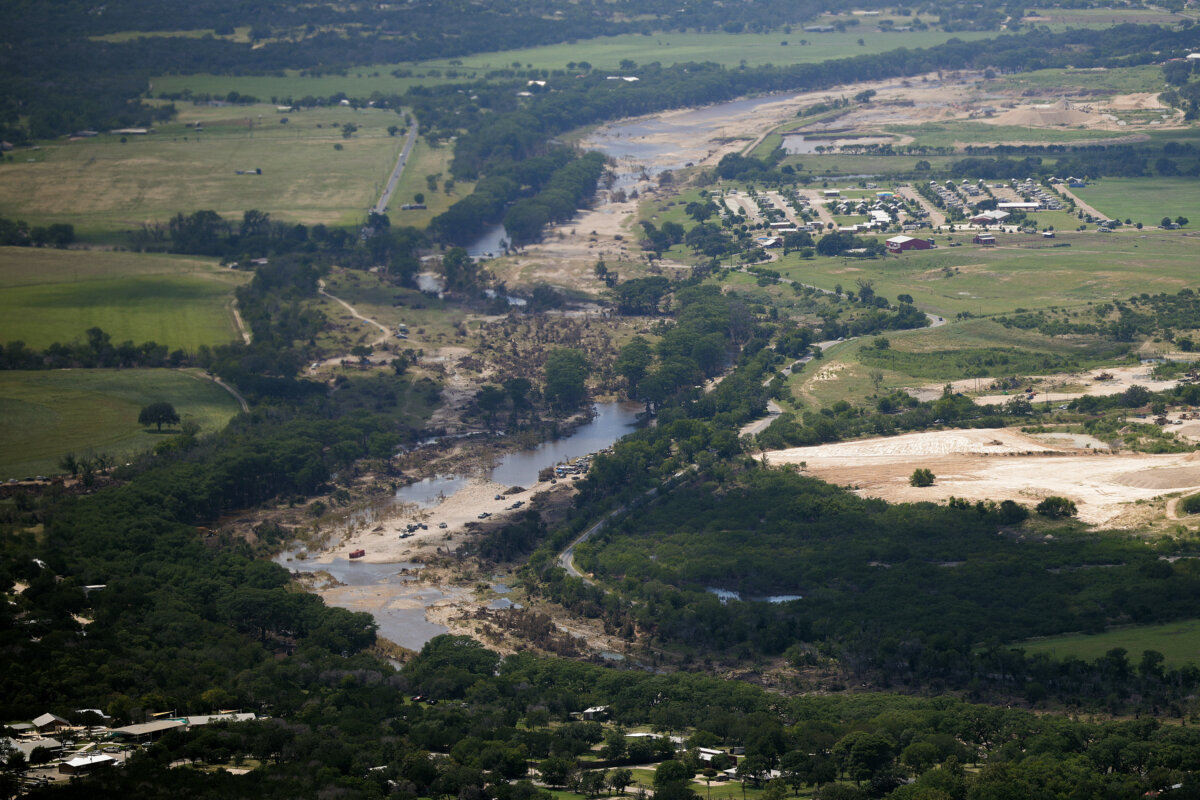
The flooding killed at least 136 people.
Some lawmakers expressed disappointment at the situation.
“The three guys in Kerr County who were responsible for sounding the alarm were effectively unavailable. Am I hearing that right?” state Rep. Ann Johnson said.
Leitha said that deputies and dispatchers were hard at work starting before he woke up, and that a code red was issued around 5 a.m.
Johnson asked, looking back, whether there should be a protocol put into place in the event top officials are unavailable during a future event.
“We can look at that real hard,” Leitha said. He added that “I can look at maybe they can call me earlier.”
Lt. Gov. Dan Patrick also criticized the officials’ absence in the initial hours of the emergency.
“I’m not pointing a finger, I’m not blaming you, I just want to set the record straight. Everyone was here that day working their ass off, and you were nowhere to be found,” Patrick said, as audience members applauded.
Officials said that a hydrology study in Kerr County showed that the storm was a 1,000-year flood. The storm highlighted a need for better tools, including those for detection and communication, especially in rural communities, Kelly said.
Leitha said that in his view, “no alert system would have changed the outcome or prevented the tragic loss of life that was upriver.” He recounted his experience in law enforcement and seeing the storm and said, “I have never seen anything like this before.”
Residents along the Guadalupe River have said they were caught off guard and had no warning when rainfall struck. Kerr County does not have a warning system along the river after state and local agencies declined to finance one.
The hearing was taking place after authorities started publicly releasing records and audio, including 911 calls, that have provided new glimpses into the escalating danger and chaos in the early hours of the July Fourth holiday. They include panicked and confused messages from residents caught in trees as well as families fleeing with children from homes with water creeping up to the knees.
“People are dying,” one woman tells a 911 operator in call logs released by nearby Kendall County. She says she had a young relative at a church camp in Kerr County who was stranded along with his classmates because of the high waters.
“I don’t want them to get stuck in a low-water crossing. And what are they going to do? They have like 30 kids,” the woman says.
The Associated Press contributed to this report.
 Friends Read Free
Copy
Facebook
Tweet
Friends Read Free
Copy
Facebook
Tweet