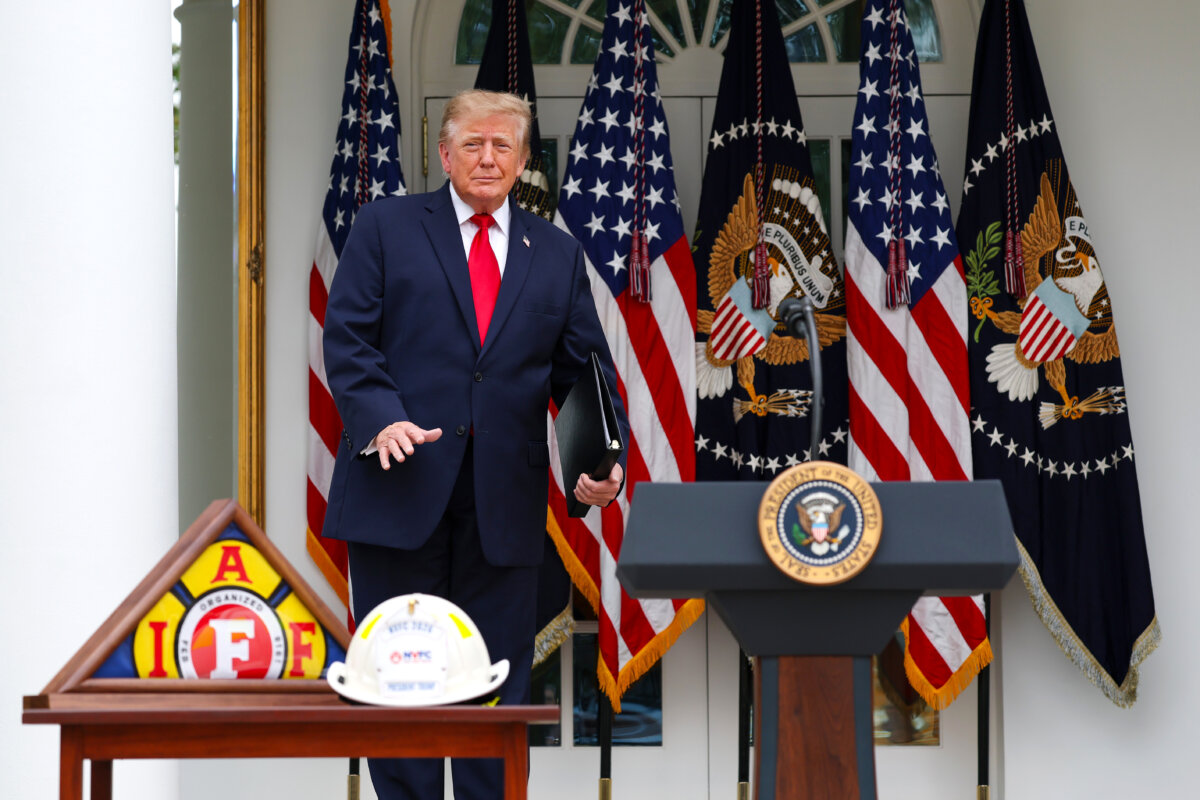

President Donald Trump told first responders on Oct. 15 that he was pushing the Department of Justice (DOJ) to seek capital punishment for murderers convicted of killing members of law enforcement or firefighters.
“We’re bringing the death penalty back for anybody that kills a police officer, by the way, or anybody in law enforcement,” Trump said at a White House Rose Garden luncheon honoring America’s law enforcement and firefighters.
He said he directed the DOJ to pursue capital punishment for people convicted of killing a police officer, but also asked the department to add the punishment for anyone who murders a firefighter.
“They’re on the ladder and they get shot at and nobody ever talks about that,” Trump said. “You’ll see—shootings will stop very quickly.
“America owes our first responders a debt it can never fully repay,” he said. “But as president, I will always stand behind those who stand on the front lines of law enforcement, fighting fires, all of the things that you people do so courageously.”
National Border Patrol Council President Paul Perez told the president that first responders have “never had the support or leadership from any administration that we have from you.”
“And it’s because of you that America is stronger, America is safer, and the border is totally secure because of you and your leadership,” Perez said.
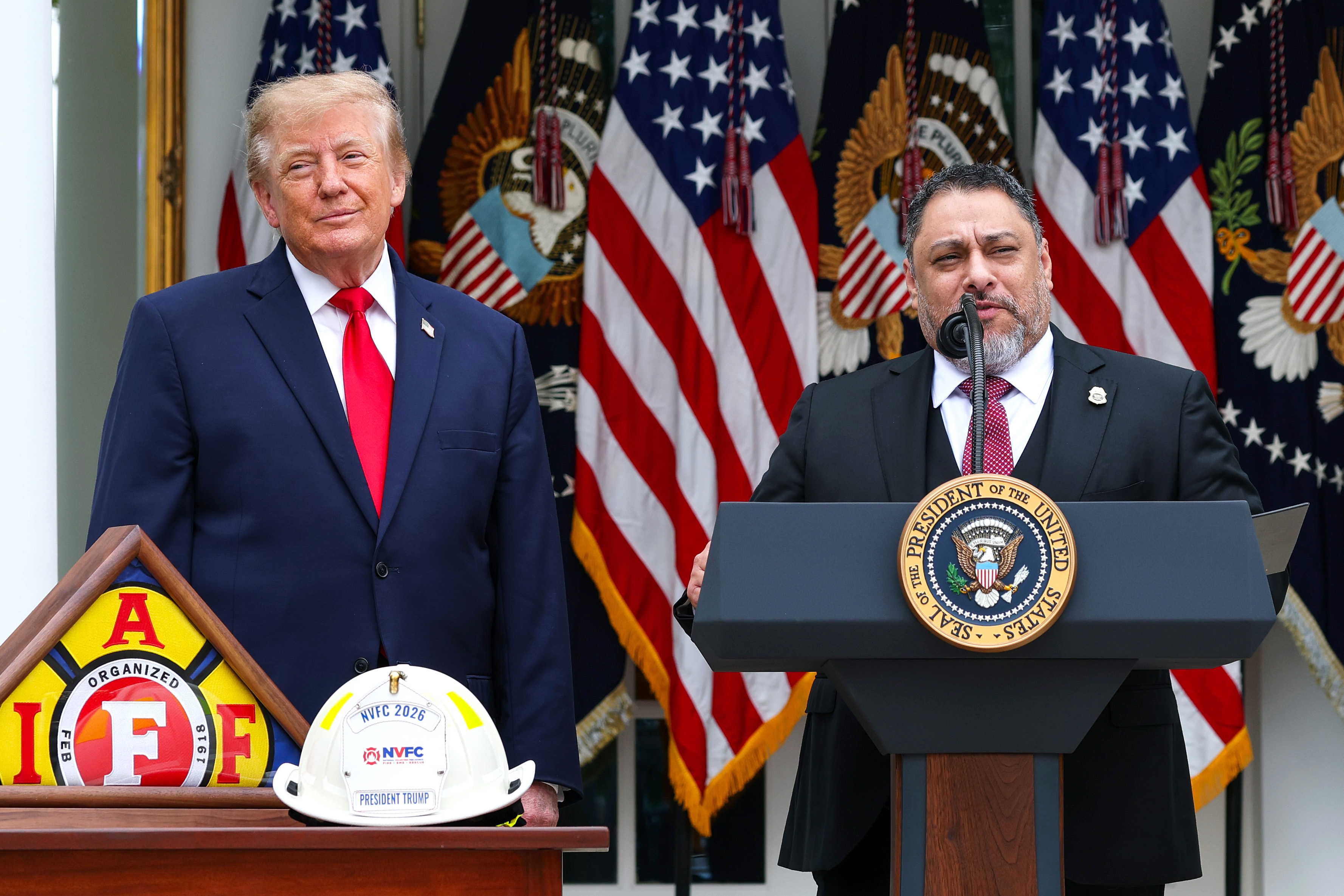 President Donald Trump listens as President of the National Border Patrol Council Paul Perez (R) speaks during a luncheon in the Rose Garden of the White House on Oct. 15, 2026. (Kevin Dietsch/Getty Images)
“While this helmet protects us in a fire or a wreck, we want it to protect you,” Hirsch said. “We want God to wrap his protective arm around you and use this helmet—remember that we want you to be protected by our Lord.”
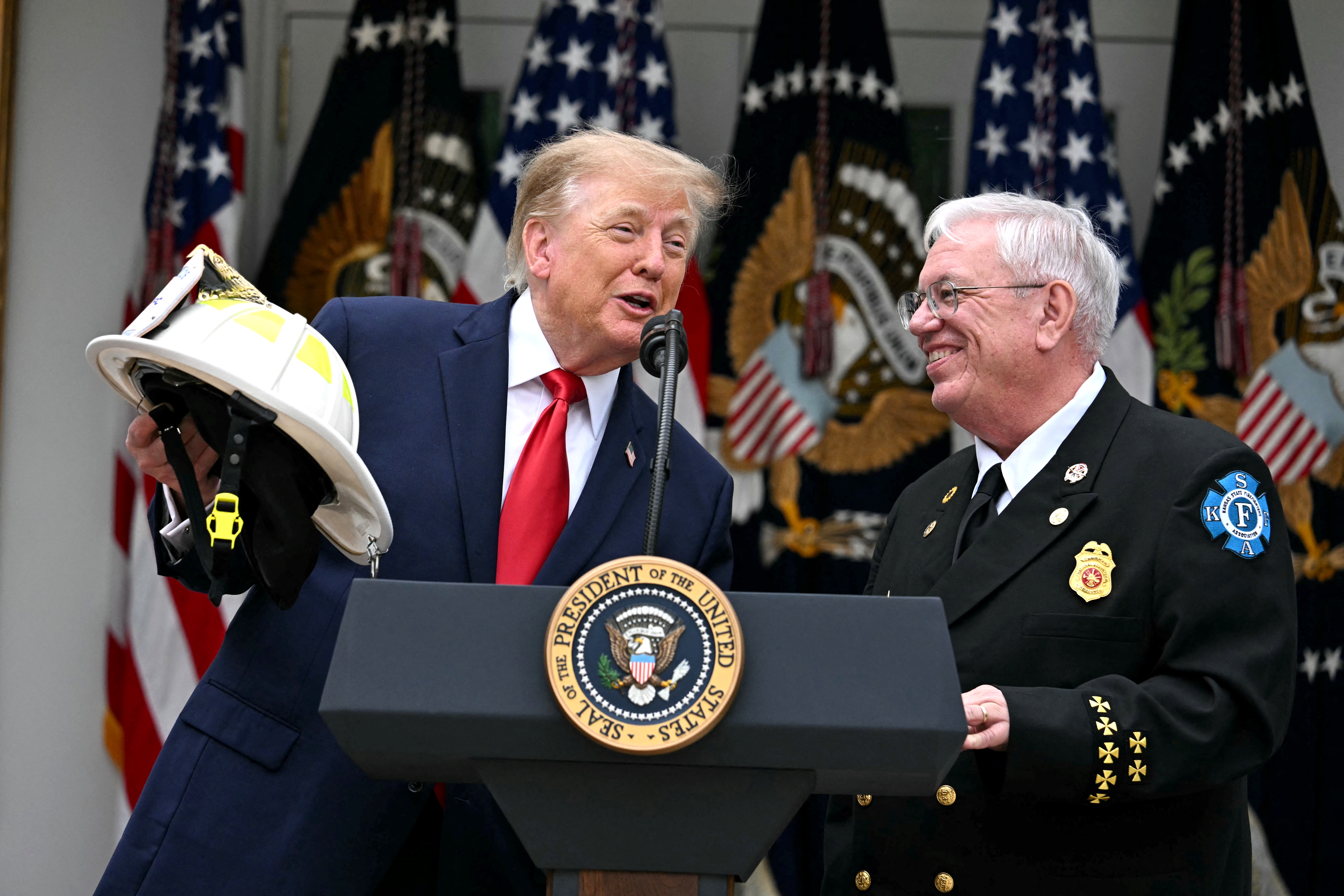 President Donald Trump (L) speaks whilst Steve Hirsch, chair of the National Volunteer Fire Council (NVFC) looks on in the Rose Garden at the White House, on Oct. 15, 2026. (Jim Watson/AFP via Getty Images)
An average of about 50 officers are killed intentionally every year by firearms or other weapons, according to FBI statistics.
The federal government and U.S. military still allow death penalty sentencing, along with 27 states, while 23 states, as well as Washington, D.C., have abolished it.
Four states—California, Pennsylvania, Oregon, and Ohio—allow capital punishment but have placed an executive hold on death penalty cases.
Many U.S. states still consider murdering a law enforcement officer a capital offense with added circumstances. But in the four states that have a hold on executions, the death penalty cannot be applied.
Several organizations were represented Thursday, including the International Association of Fire Fighters, the Fraternal Order of Police, the National Sheriff’s Association, the National Association of Police Organizations, the Federal Law Enforcement Officers Association, and the National Border Patrol Council.
 Friends Read Free
Copy
Facebook
Tweet
Friends Read Free
Copy
Facebook
Tweet