



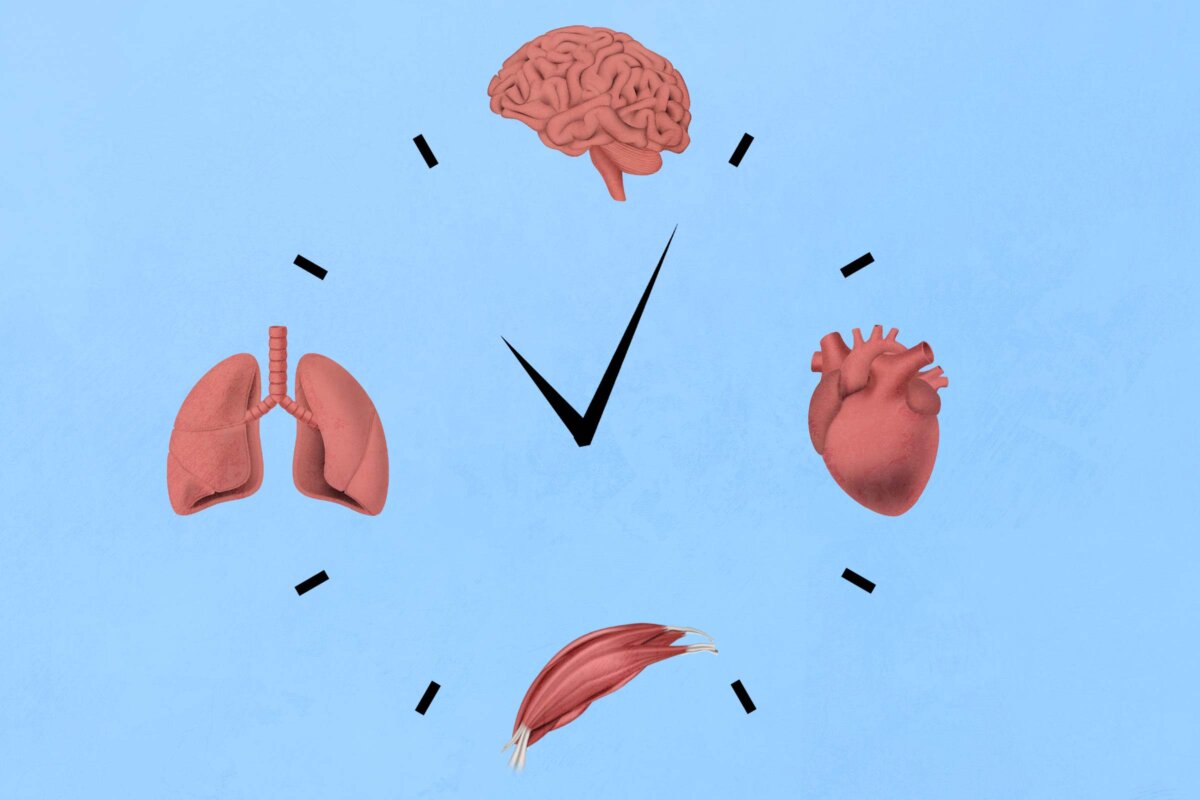
The health of your organs can predict your long-term risk of Alzheimer’s disease, heart failure, and death, a decade before you show symptoms.
By measuring proteins in the blood, researchers can now estimate the biological age of individual organs.
The findings, published in Nature Medicine, suggest the test could flag a person’s risk of conditions years before any symptoms appear.
“This is, ideally, the future of medicine,” senior author Tony Wyss-Coray, a professor of neurology and director of the Knight Initiative for Brain Resilience, said in a press statement. “Today, you go to the doctor because something aches, and they take a look to see what’s broken,” he noted. “We’re trying to shift from sick care to health care and intervene before people get organ-specific disease.” Wyss-Coray has co-founded Vero Biosciences, a company that has licensed the technology from Stanford and is developing a consumer version of the test.
One-Third of People Have an Organ Aging Out of Sync
Researchers analyzed blood samples from nearly 45,000 participants ages 40 to 70 from the UK Biobank, a large ongoing health research database. By tracking proteins in the blood that are linked to specific organs, they created an algorithm that compares each organ’s biological age to what’s typical for a person’s chronological age.
About one-third of participants had at least one organ that was biologically significantly older or younger than expected, and that gap turned out to be a more powerful predictor of disease than chronological age itself.
The brain’s biological age was especially influential, with an “extremely aged” brain linked to more than triple the risk of Alzheimer’s disease and a 182 percent increased risk of death from any cause over about 15 years.
Similarly, an aged heart or lungs raised the odds of heart failure or chronic obstructive pulmonary disease, and an aged muscle-cell profile was linked to a nearly 13-fold higher rate of amyotrophic lateral sclerosis.
When certain organs and their specific cell types age too quickly, their protein patterns change in predictable ways. Neurofilament light is a protein in the brain. When brain cells get damaged, this protein can leak into the blood. High levels of neurofilament light can indicate stroke and nerve damage.
Catching Issues Before They Become Problems
The findings also showed that the biological age of an organ was the strongest predictor of disease risk, surpassing traditional measures like chronological age.
Wyss-Coray emphasized that the goal is to eventually use these measurements to guide personalized prevention— catching warning signs while there’s still time to act. “We could intervene before symptoms develop, potentially preventing diseases like Alzheimer’s,” he told The Epoch Times.
He added that the test’s real value is in identifying “the weakest link”—the cells and organs showing advanced aging or risk for diseases “including heart disease, Alzheimer’s disease, diabetes and various forms of cancer.”
At this time, Wyss-Coray cautioned, “most of our models have been developed in people older than 50 years and recommendations could only be made for them.”
Understanding the biological age of individual organs, especially the brain, could give clinicians a far more precise way to tailor care, Christopher U. Missling, a neuroscientist and former president and CEO of Anavex, a biopharmaceutical company focused on developing treatments for neurological diseases, who was not involved in the study, told The Epoch Times.
If a patient’s brain appears “older” than their chronological age, it could justify earlier cognitive screening, more aggressive management of vascular risk factors, or stronger emphasis on sleep, exercise, and anti‑inflammatory lifestyle habits.
A “younger” brain reading, on the other hand, might support holding off on unnecessary interventions and focusing on maintenance.
“Organ‑specific aging could shift care from reactive to proactive,” Missling said, “helping clinicians personalize prevention strategies long before symptoms appear.”
Personalized Recommendations to Optimize Health
Wyss-Coray noted that this technology could be used to personalize treatment plans or lifestyles to optimize individual health and longevity. “This is exactly the idea behind developing these measurement tools.”
Based on the models he developed, the concentrations of specific proteins could then be used to estimate the relative age of various cell types and organs to generate a personal health status and risk profile.
“With professional advice from physicians, specific interventions including lifestyle changes or the use of pharmaceuticals could be recommended to counter accelerated aging and disease risk,” he added.
The findings build on a related 2025 study using the same UK Biobank cohort, which first identified the link between organ-specific aging and disease risk. Researchers caution that the current results are based on a single population of UK adults ages 40 to 70, and that an association between biological age and disease risk isn’t the same as proof that slowing organ aging will actually prevent illness. Larger, more diverse studies and ultimately trials testing whether intervening on biological age changes outcomes would be needed before the test could be widely recommended.
Tools like this could help identify people whose organs, especially the brain, are aging faster than expected long before symptoms appear, giving clinicians a chance to intervene earlier with targeted monitoring, risk-factor management, and lifestyle changes tailored to a patient’s biology rather than age, Missling said.