WASHINGTON—U.S. President Donald Trump met with the leaders of five West and Central African nations at the White House on July 9 to underscore his administration’s shift from aid-based foreign policy to commercial diplomacy. The meeting focused on strengthening economic ties, attracting investments, and tapping into Africa’s vast mineral wealth.
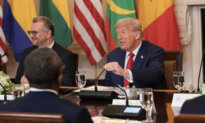
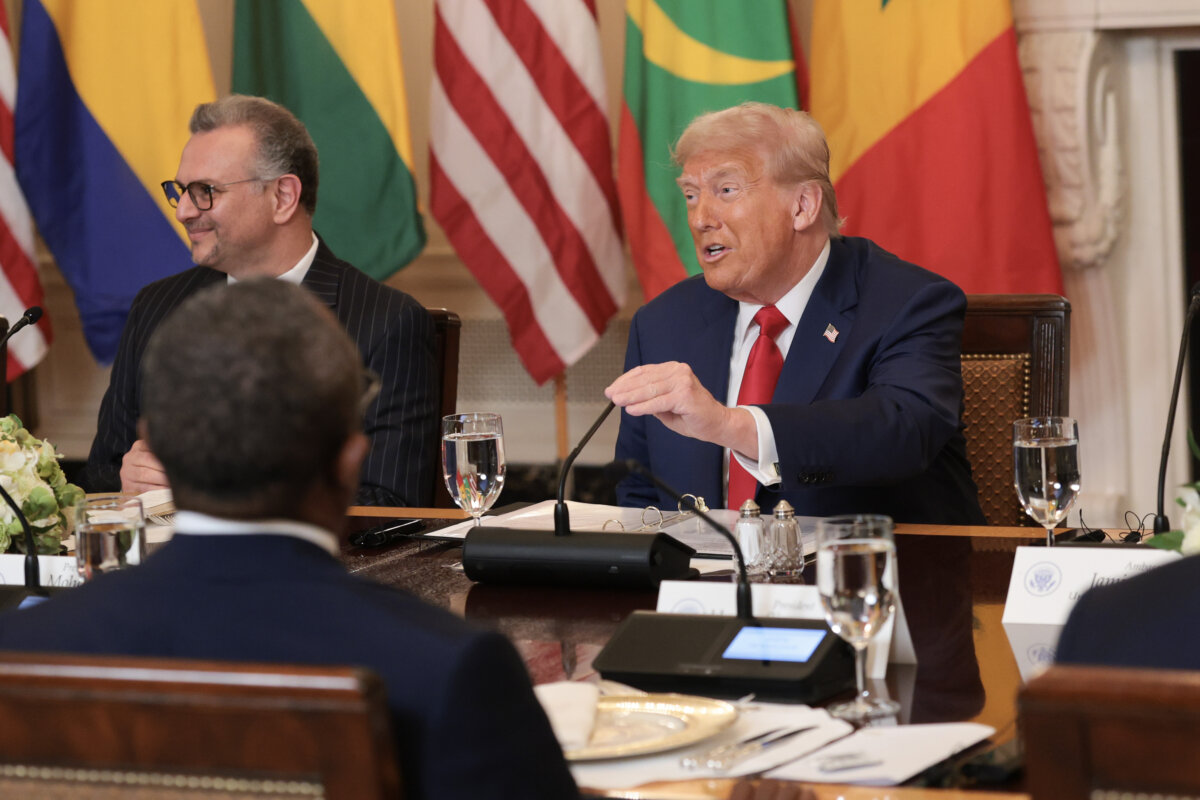
The president hosted a multilateral lunch with the leaders of Gabon, Guinea-Bissau, Liberia, Mauritania, and Senegal in the State Dining Room.
In addition to commercial matters, the meeting also addressed regional security challenges, including the rise of terrorism and concerns over visa overstays, as several African nations have among the highest overstay rates for U.S. visas.
“My administration is committed to strengthening our friendships in Africa through economic development efforts that benefit both the United States and our partners, and we’re shifting from aid to trade,” Trump told leaders during the meeting.
“To that end, we have closed the USAID group to eliminate waste, fraud, and abuse … and we’re working tirelessly to forge new economic opportunities involving both the United States and many African nations.
“There’s great economic potential in Africa.”
He said that his foreign policy approach would be “far more effective and sustainable” in the long run.
All five countries are rich in natural resources, including manganese, which is a key mineral used in the production of batteries and stainless steel. They also possess abundant reserves of iron ore, gold, diamonds, lithium, and cobalt.
In recent years, China and Russia have made significant inroads across the continent, capitalizing on its vast mineral wealth. China, for example, imports 22 percent of its manganese ore from Gabon, according to the SOAS University of London.
The Trump administration recently shut down the U.S. Agency for International Development (USAID), which affected the African countries the most, as they depend on U.S. funding to support essential public services.
In Liberia, for example, U.S. funds have supported nearly 50 percent of the country’s health budget.
This is a big shift from a charity-based model of foreign aid, as U.S. Secretary of State Marco Rubio called it, to a new model, “prioritizing trade over aid” and “investment over assistance.”
The Trump administration’s strategic priorities include promoting prosperity through commerce and investment, as well as achieving peace through leadership and strength—both of which were key focuses of the meeting, U.S. foreign policy expert Michael Walsh told The Epoch Times.
Walsh said he expects significant discussions on U.S. trade and investment opportunities in African countries, as well as African investments in the United States.
“This is an opportunity for the Trump administration to show that commercial diplomacy is a better approach than development assistance,” he said, noting that the administration is using these engagements to highlight the contrast with the previous administration’s approach.
Peace Deal in Africa
The leaders who joined the lunch meeting with Trump were Gabonese President Brice Clotaire Oligui Nguema, Bissau-Guinean President Umaro Sissoco Embaló, Liberian President Joseph Nyuma Boakai, Mauritanian President Mohamed Ould Ghazouani, and Senegalese President Bassirou Diomaye Faye.
Mauritania’s president praised Trump for his efforts to bring peace to conflicts around the world, including the war between the Democratic Republic of Congo (DRC) and Rwanda.
“Lots of efforts had been made by many heads of states, but your will [make] it possible for this agreement to be signed, and now this conflict is behind us,” he said during the meeting.
In June, Trump brokered a peace agreement between the DRC and Rwanda, welcoming the foreign ministers of both African nations to the White House to sign the deal.
During the July 9 lunch meeting, Gabon’s president also praised Trump for the peace effort, noting that the president deserves the Nobel Peace Prize.
Trump brokered a peace that many believed was impossible, Oligui Nguema said.
He also noted that his country is rich in minerals and open for business with U.S. companies.
According to Alex Vines, head of the Africa program at Chatham House, the lunch signals that the Trump administration is not ignoring the African continent.
“This transactional approach to foreign policy is familiar for many African leaders,” Vines wrote in a July 8 report. “Indeed, it is a preferred method for some, who will be content to see old US narratives—focused on good governance, human rights and institution building—replaced by deal-making.”
Countering Terrorism
The Trump administration views coastal West Africa—bordering the Sahel region—as a strategic priority because of the rising threat of terrorism emanating from countries such as Burkina Faso, Niger, Mali, and Nigeria, Walsh said. While coastal nations currently experience low levels of terrorism, they are seen as vulnerable to its potential spread. To address this risk, the Trump administration is focused on strengthening these countries by encouraging them to spend more on defense and promoting economic stability and job creation through increased commerce and investment, he said.
During the meeting, Trump said he would encourage the African nations to increase their investments in defense and expressed hope that this would lead to greater purchases from the United States.
Mauritania is also seen as a potential candidate to join the Abraham Accords, a move that would mark a significant diplomatic win for Trump, according to Walsh. The timing is notable, coinciding with Israeli Prime Minister Benjamin Netanyahu’s visit to Washington this week.
A White House official told The Epoch Times that it remains uncertain whether Mauritania’s president will agree to sign the accords during his visit to Washington.
A member of the Arab League, Mauritania severed diplomatic ties with Israel in 2009.
When asked about a potential visit to Africa, Trump said he would like to travel to the continent “at some point.”
 Friends Read Free
Copy
Facebook
Tweet
Friends Read Free
Copy
Facebook
Tweet