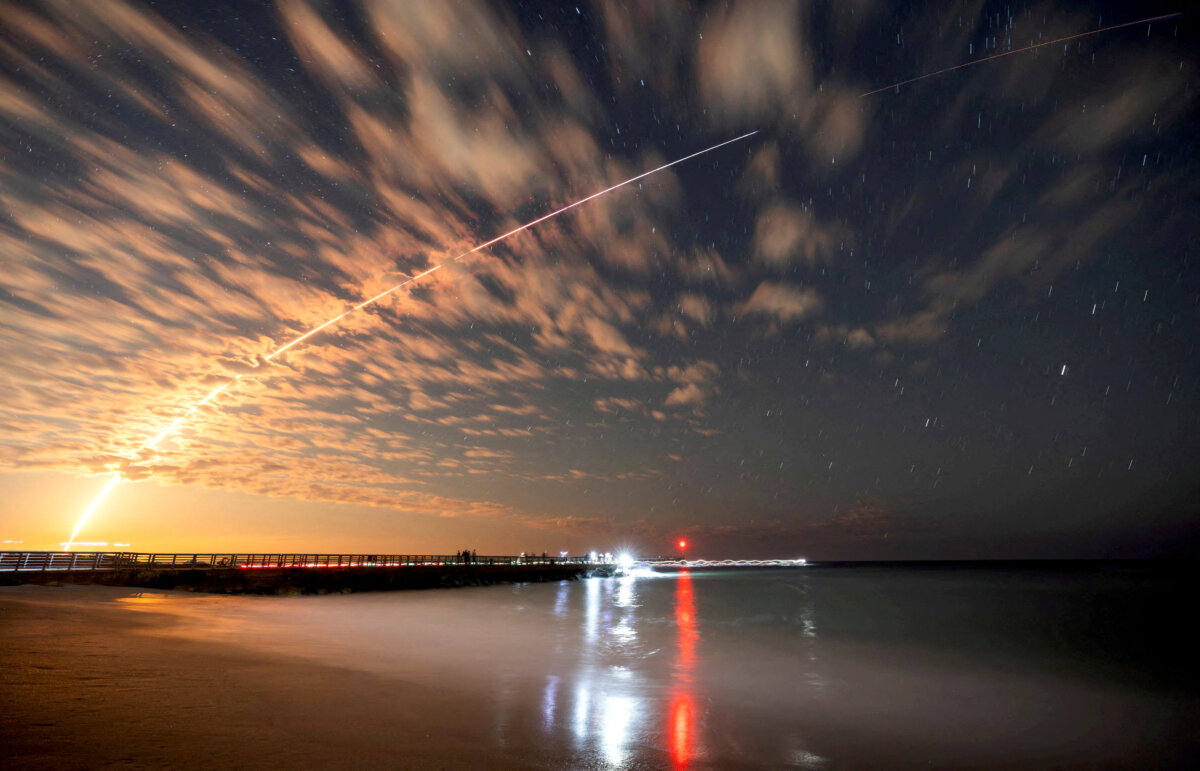

President Donald Trump signed a presidential memorandum on Aug. 20, aiming to skyrocket the annual number of U.S. space launches by 2030, helping secure America’s position as the leader in the next era of exploration.
The memo promoted a large boost of infrastructure—launch pads, landing sites, and scheduling systems—to help “grow and support over 1,000 launches and reentries every year.”
For context, the United States had 178 launches in 2025. Elon Musk’s SpaceX accounted for 165 of the 178 missions.
“The United States must establish and maintain space transportation capabilities that ensure access to the full range of orbital regimes relevant to United States interests, from suborbital and very-low Earth orbit altitudes to the lunar surface, Lagrange points, and deep space,” the memo signed by Trump stated.
The president urged that access to space was a “vital national and economic security interest.”
The memo reiterated plans for America to return to the moon, which the Trump administration wants to happen in 2028.
NASA Administrator Jared Isaacman was ordered to “develop a lunar logistics architecture that facilitates commercial transportation to and from the lunar surface.”
Isaacman was also ordered to explore if there are commercial ways to safely send humans to Mars and back.
Secretary of War Pete Hegseth was ordered to look into “in-space transportation services for existing and potential Department of War mission applications” and find ways to “maximize infrastructure to enable diversity of transportation types, including spaceplanes.”
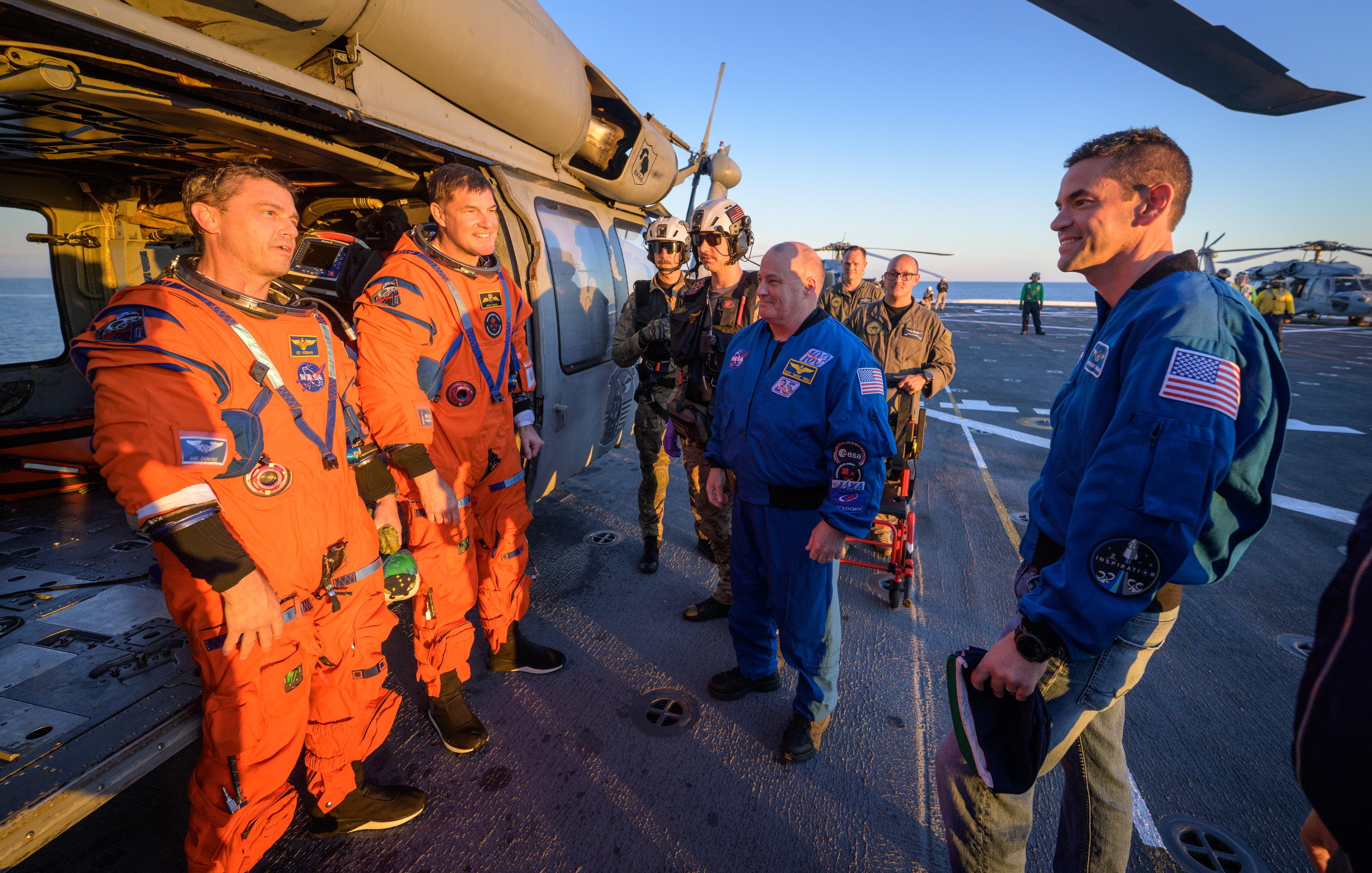 (L-R) NASA astronaut Victor Glover, Artemis II pilot, and CSA (Canadian Space Agency) astronaut Jeremy Hansen, Artemis II mission specialist, talk with NASA Administrator Jared Isaacman at their Navy MH-60 Seahawk from Helicopter Sea Combat Squadron (HSC) 23 on the flight deck of USS John P. Murtha after they and fellow crewmates NASA Astronauts Victor Glover, and Christina Koch were extracted from their Orion spacecraft after splashdown in the Pacific Ocean off the coast of California on April 10, 2026. NASA’s Artemis II mission took the quartet on a nearly 10-day journey around the Moon and back to Earth. (Bill Ingalls/NASA via Getty Images)
Agencies will also expedite permits and environmental reviews while being transparent about the costs and process.
Meanwhile, the Department of War, NASA, the Department of Commerce, and the Department of Transportation will have six months to develop a scheduling system that organizes how the government and commercial companies can collaborate using launch pads.
Department heads will need to “ensure United States Government payloads are launched by or transported in space on vehicles manufactured in the United States.”
Any foreign “space vehicle” intended to be launched or reenter the United States must be reviewed on a case-by-case basis.
Secretary of Transportation Sean Duffy will also have six months to work with Hegseth and Isaacman to find new potential locations for launch facilities and areas to develop infrastructure, modernize how the launches will collaborate with air traffic control operators, and designate priority airspace for “critical space launch corridors.”
 Friends Read Free
Copy
Facebook
Tweet
Friends Read Free
Copy
Facebook
Tweet