
President Donald Trump said on Oct. 15 that his administration is considering land strikes targeting Venezuelan drug cartels, an escalation of recent military strikes on drug trafficking boats off the nation’s coast.
During a press conference with FBI Director Kash Patel on Oct. 15, Trump said the U.S. military has “almost totally stopped” Venezuelan drug trafficking rings by sea, noting, “Now we’ll stop it by land.”
“We are certainly looking at land now, because we’ve got the sea very well under control,” Trump said.
On Oct. 14, U.S. forces conducted their fifth strike on drug trafficking boats off the coast of Venezuela, resulting in the deaths of six men suspected of being narcotraffickers, according to Trump.
“Intelligence confirmed the vessel was trafficking narcotics, was associated with illicit narcoterrorist networks, and was transiting along a known [drug trafficking organization] route,” he said.
The operation was the latest in a series of lethal U.S. military strikes targeting drug trafficking boats in the southern Caribbean in recent weeks. Secretary of War Pete Hegseth said on Oct. 3 that the United States had completed another strike on a narcotics trafficking boat in the area—at least the fourth such strike since September.
The State Department has designated 13 different cartels and organizations in Latin America and the Caribbean as foreign terrorist organizations, including Venezuela’s Tren de Aragua, since Trump’s inauguration in January.
In addition to the strikes on drug trafficking boats, the Trump administration has also increased pressure on Venezuelan President Nicolás Maduro, accusing him of supporting drug cartels operating out of his country. Maduro has denied these allegations.
The pressure surged in August when the Justice Department doubled its reward for information relating to the regime leader’s arrest, raising it from $25 million to $50 million.
The same day, Deputy Secretary of State Christopher Landau said relations with Venezuela had transformed from diplomacy to “fundamentally a law enforcement matter.”
“Usually when there are differences between countries, representatives from both governments can get together to try to work them out—that’s what diplomacy is all about,” Landau said in an Aug. 7 post on X. “But that assumes that both countries actually have governments. That’s unfortunately not the case with Venezuela, which has been hijacked by a criminal gang.”
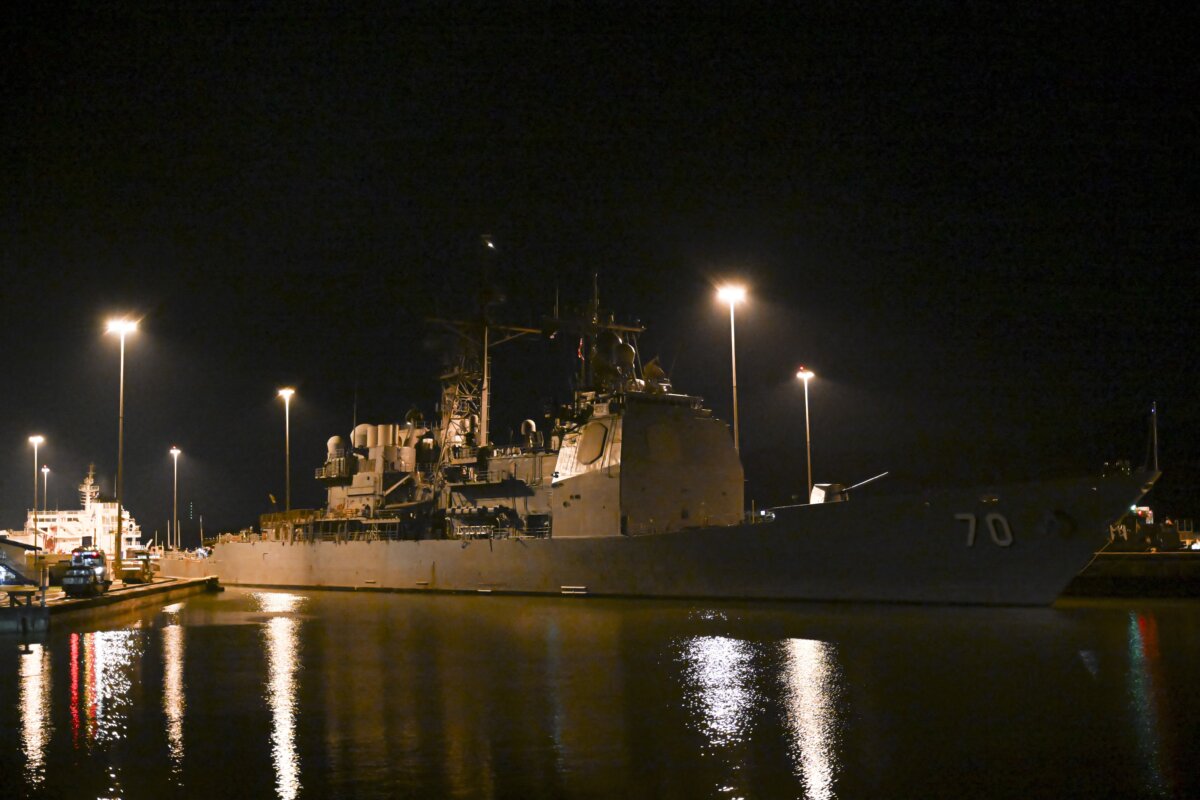
In the ensuing weeks, the United States deployed multiple warships to the South Caribbean, including guided missile destroyers and an amphibious-ready group with a contingent of U.S. Marines.
Maduro has responded by calling the U.S. force buildup near his coast a threat. He recently placed Venezuelan forces on a heightened state of alert.
When Trump announced the first U.S. strike on a drug trafficking boat in early September, he said the 11 narco-trafficking suspects killed in the strike were members of Tren de Aragua, and were “operating under the control of Nicolas Maduro.”
Two days after that boat strike, a pair of Venezuelan military aircraft flew over a U.S. warship operating in the Caribbean, causing the U.S. military to reposition 10 F-35 Lightning II stealth fighters to Puerto Rico.
The Trump administration formally notified Congress that the United States is in a “non-international armed conflict” with drug cartels, which the administration referred to as “unlawful combatants,” according to an administration report The Epoch Times obtained on Oct. 2.
Last week, the Senate rejected a Democrat-led effort to withdraw the U.S. military from any operations not explicitly authorized by Congress amid the Trump administration’s strikes on the narcotics trafficking boats.
Ryan Morgan, Yeny Sora Robles, Zachary Stieber, Melanie Sun, T.J. Muscaro, and Jack Phillips contributed to this report.
 Friends Read Free
Copy
Facebook
Tweet
Friends Read Free
Copy
Facebook
Tweet