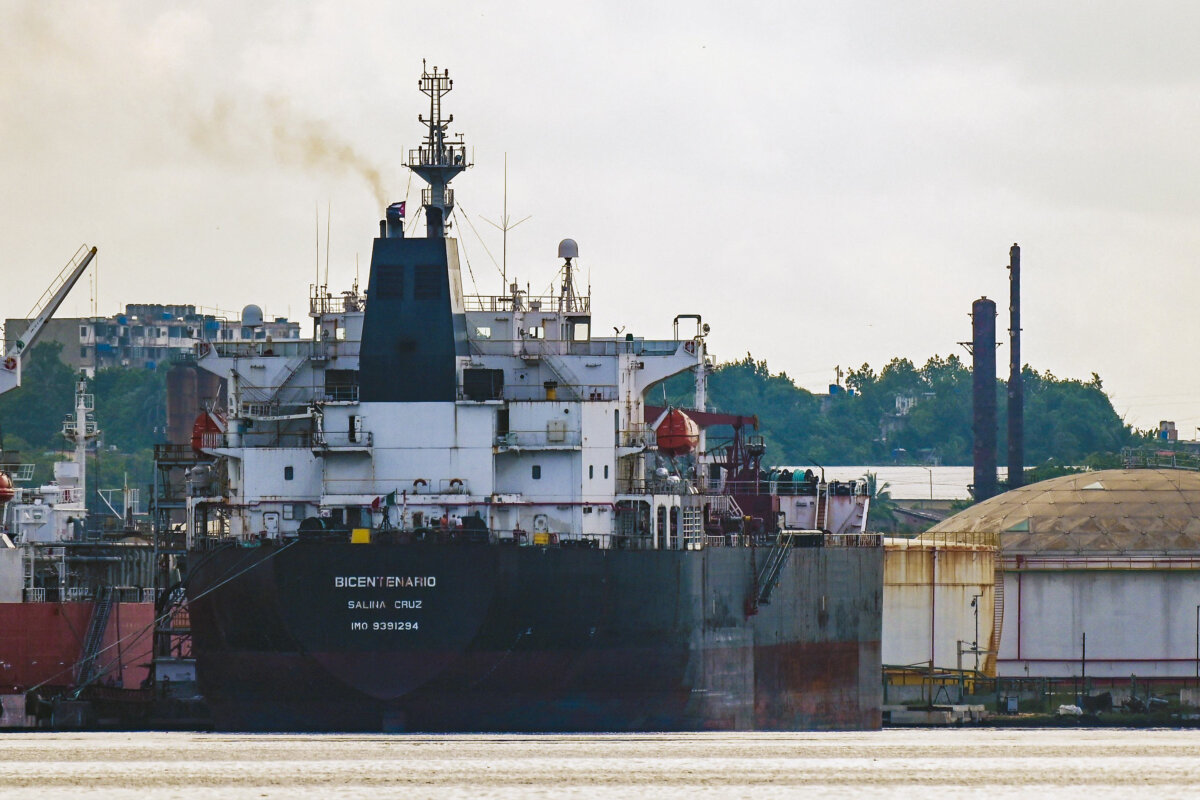

President Donald Trump said on Feb. 2 that Mexico would stop sending oil to Cuba, escalating a U.S.-led pressure campaign aimed at cutting off the communist-run island’s remaining fuel supplies and pushing Havana toward negotiations.
“Mexico is going to cease sending them oil,” Trump told reporters in the Oval Office, without offering details on timing or enforcement.
Mexican authorities did not immediately respond to requests for comment, and it was not clear whether Mexico had formally agreed to halt shipments.
Mexico is Cuba’s second-largest oil supplier after Venezuela and a critical source of fuel for electricity generation, transportation, and aviation.
Trump’s pressure campaign comes as Cuba has been grappling with rolling blackouts, fuel shortages, and a deepening economic crisis.
The president has sought to push Havana toward talks and concessions, saying that decades of communist rule have left the island economically broken since the 1959 revolution led by Fidel Castro.
While Trump has stopped short of explicitly calling for regime change, he said that the actions of communist-led Cuba represent an “unusual and extraordinary threat” to America’s national security, and senior U.S. officials have made clear their criticism of Cuba’s current leadership.
Secretary of State Marco Rubio said recently that the Cuban regime is “a huge problem,” adding that it is no secret the Trump administration is “not big fans of the Cuban regime.” Rubio said the government in Havana has played a central role in propping up Venezuela’s leadership, including providing internal security and intelligence support.
Trump said on Jan. 31 that his administration had begun communicating with Cuban leaders after the United States moved to cut off oil deliveries from Venezuela and announced new tariffs on countries that supply petroleum to Havana, describing the pressure as necessary to force engagement.
The U.S. president has accused the Cuban regime of aligning itself with Russia, China, Iran, as well as with the Hamas and Hezbollah terrorist groups.
Oil Supplies at Center of Standoff
Cuba depends heavily on imported refined fuels. U.S. sanctions and years of economic decline have limited Havana’s ability to purchase energy on global markets, forcing it to rely on a small group of allies.
Last year, Venezuela supplied roughly 26,500 barrels per day—about one-third of Cuba’s daily oil needs—before those deliveries were disrupted following the U.S. military capture of Venezuelan leader Nicolás Maduro in January. Mexico supplied an estimated 5,000 barrels per day, making it the island’s second-largest source of crude and refined fuel.
The potential halt in Mexican shipments threatens to deepen fuel shortages and prolong blackouts, increasing pressure on Cuba’s leadership as Washington seeks to push Havana toward talks.
Trump was recently asked by a reporter whether he was trying to “choke off” Cuba by imposing tariffs on countries that supply it with oil.
“The word ‘choke off’ is awfully tough,” Trump replied. “I’m not trying to, but it looks like it’s something that’s just not going to be able to survive.”
The Cuban regime has blamed U.S. pressure—including sanctions and actions against its oil supply chain—for worsening shortages. The Cuban foreign ministry on Jan. 30 issued a statement condemning recent U.S. measures as “economic strangulation,” saying they violate international law and risk severe harm to basic services such as electricity generation, agriculture, and health care.
Amid the escalating pressure, Cuban officials have acknowledged limited communication with Washington but deny that formal talks are underway.
Carlos Fernández de Cossío, Cuba’s deputy foreign minister, told Reuters and The Associated Press that the two countries have exchanged messages but do not have a structured dialogue.
“We have had exchange of messages, we have embassies, we have had communications, but we can not say we have had a table of dialogue,” de Cossío told Reuters in an interview in Havana.
He told The Associated Press that Cuba is open to dialogue but stressed that negotiations would not include changes to Cuba’s constitution, economic model, or socialist system of governance.
“If we can have a dialogue, maybe that can lead to negotiation,” he told the outlet, adding that in the meantime, Cuba is “preparing itself with creativity, with stoicism and with austerity” to cope with the looming oil supply crunch, which he described as a “very difficult situation.”
Reuters and The Associated Press contributed to this report.
 Friends Read Free
Copy
Facebook
Tweet
Friends Read Free
Copy
Facebook
Tweet