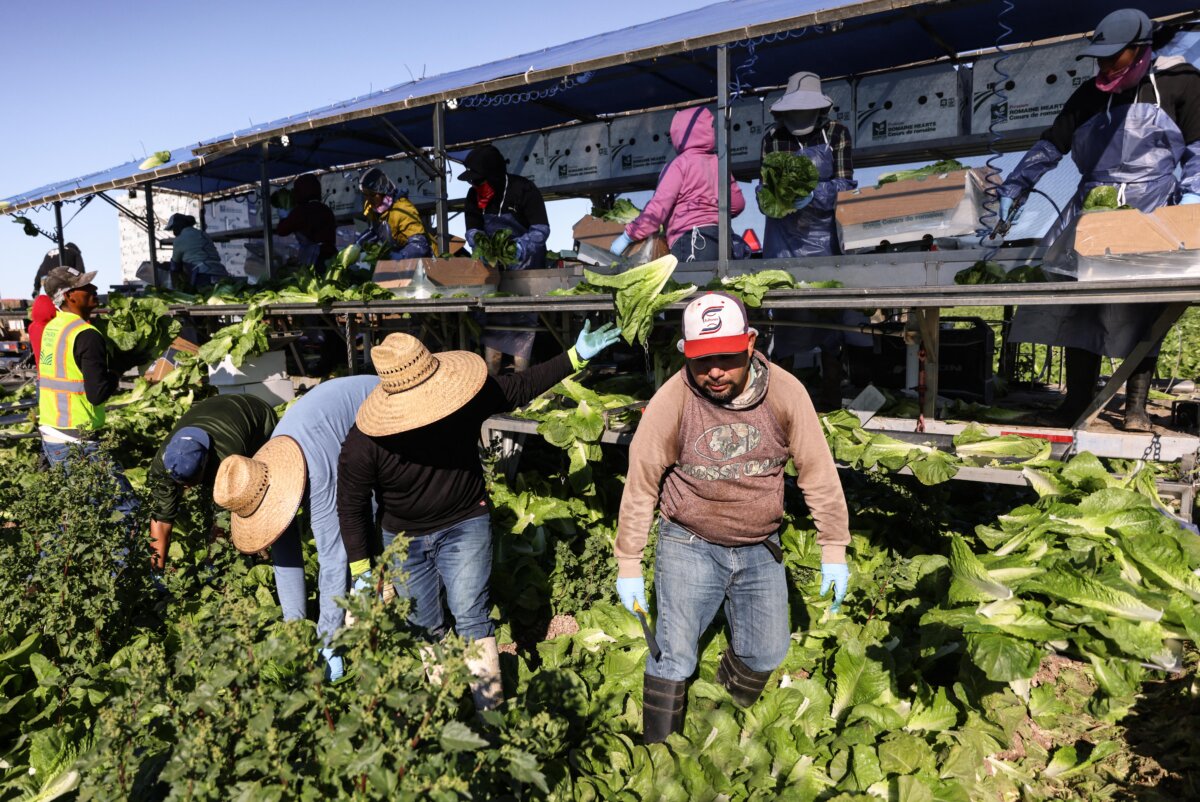

President Donald Trump said on Tuesday that his administration is allowing some deported farm workers who were in the country illegally to return to the United States legally and is preparing new rules to more broadly address farm labor shortages created by an increase in deportations.
In an Aug. 5 interview on CNBC’s “Squawk Box,” Trump said the move is intended to protect farmers who rely on longtime employees, while immigration authorities continue large‑scale removals of people he described as dangerous criminals.
“In some cases, we’re sending them back to their country, with a pass back in legally,” he said of illegal immigrant farm workers.
“We’re doing things that are very difficult to do and very complex, but it works really well. We’re sending them back, and then they’re schooling, they’re learning, they’re coming in. They’re coming in legally. We have a lot of that going on, but we’re taking care of our farmers. We can’t let our farmers not have anybody.”
Trump added that new regulations are forthcoming to formalize and expand those efforts.
“We’re not going to do anything to hurt the farmers,” he said. “We’re working on that, and we’re going to be coming out with rules and regulations.”
A White House spokeswoman said Trump remains committed to helping farmers maintain their workforce and emphasized that criminals remain the focus of deportation efforts.
“President Trump is a tireless advocate for American farmers—they keep our families fed and our country prosperous. He trusts farmers and is committed to ensuring they have the workforce needed to remain successful,” spokeswoman Abigail Jackson told The Epoch Times in an emailed statement.
“But there will be no safe harbor for the countless, unvetted, criminal illegal aliens that Joe Biden let waltz into the country. Removing these dangerous criminals and targeting the sanctuary cities that provide them safe harbor is a top priority for the President.”
While the White House had no new policy changes to announce, officials pointed to the Department of Labor’s new Office of Immigration Policy (OIP), established in June to coordinate and streamline foreign labor certification programs, including H-2A and H-2B visas, for employers seeking legal seasonal workers.
A June 23 memo from Labor Secretary Lori Chavez-DeRemer said the OIP will function as a one-stop shop for agricultural employers navigating complex visa programs, coordinating with other agencies to reduce red tape. While the White House has not explicitly tied Trump’s remarks to the new office, his description of deported workers returning legally after “schooling” and other steps aligns with processes overseen by the Employment and Training Administration and its Office of Foreign Labor Certification, which manage certification and oversight of these visa programs.
Trump has repeatedly vowed “no amnesty” for illegal immigrants while seeking to ensure farmers and other sectors have the workforce they need to meet the needs of American consumers—without displacing American workers.
“There’s no amnesty,” Trump said at a July 8 Cabinet meeting. “What we’re doing is we’re getting rid of criminals, but we are doing a work program.”
Chavez‑DeRemer offered further clarification on the program in remarks to Fox Business in mid‑July, saying the H‑2A visa process itself is not being expanded but is being restructured to work more efficiently for both farmers and the federal agencies that administer it. She stressed that the changes are intended to shorten wait times and lower costs for employers, not to create new pathways for illegal immigrants.
Balancing Enforcement, Farm Needs
About 40 percent of the nation’s farmworkers lack legal status, according to the U.S. Department of Agriculture. Nonprofit groups such as KFF place the share of unauthorized farmworkers even higher, at around 47 percent of the agricultural workforce.
Trump and his top advisers, including Homeland Security Secretary Kristi Noem and border czar Tom Homan, have said their focus is on deporting the worst offenders—including gang members and other hardened criminals—while exploring targeted relief for industries such as agriculture and hospitality.
“My job is to operate within the framework provided me by the administration,” Homan told NewsNation in July. “So, if the president comes up with a policy, and says, ‘OK, here’s what we’re going to do with farm workers,’ then ICE [Immigration and Customs Enforcement] will abide by that policy.”
Farm industry groups have warned of supply‑chain risks if deportations remove large numbers of experienced workers during peak harvest seasons.
“If these workers are not present in fields and barns, there is a risk of supply chain disruptions similar to those experienced during the pandemic,” Zippy Duvall, president of the American Farm Bureau Federation, said in June.
The administration has also moved to roll back certain labor protections for foreign farmworkers under the H‑2A visa program.
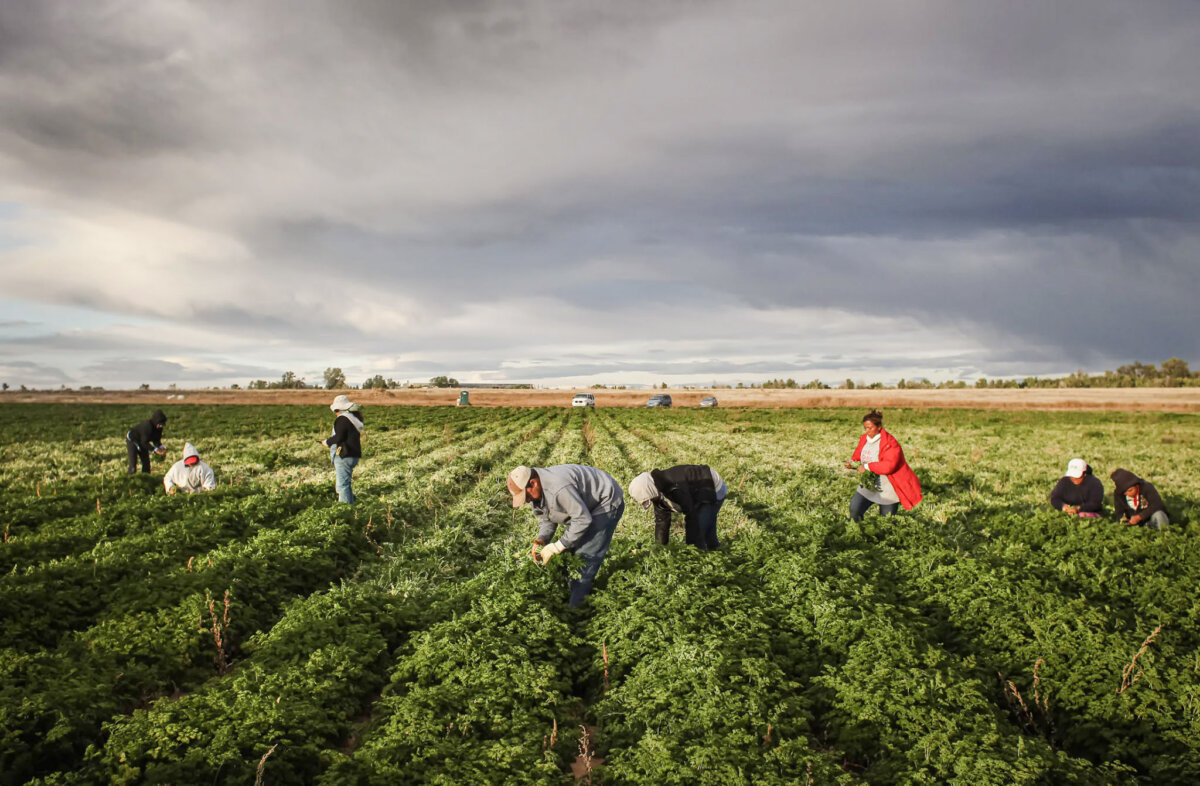
In June, the Labor Department suspended a rule that expanded organizing rights for H‑2A workers, calling it burdensome and citing federal court injunctions. Officials said the suspension would give farmers “critical predictability” and align with Trump’s immigration enforcement priorities.
Separately, Trump signaled in June that an executive order addressing labor shortages in agriculture, hospitality, and related sectors could be forthcoming.
“Our farmers are being hurt badly. They have very good workers. They’ve worked for them for 20 years. They’re not citizens, but they’ve turned out to be, you know, great. We’re going to have to do something about that,” Trump told reporters in mid-June. “We can’t take farmers and take all their people and send them back because they don’t have maybe what they’re supposed to have. We can’t do that to our farmers, and leisure, too, hotels. We’re going to have to use a lot of common sense on that.”
 Friends Read Free
Copy
Facebook
Tweet
Friends Read Free
Copy
Facebook
Tweet