Following six weeks of unrest over immigration enforcement in Minnesota, President Donald Trump told reporters on Jan. 27 that he wants “a very honorable and honest investigation” into the second fatal shooting of a protester in Minneapolis.
“I want to see the investigation. I’m going to be watching over it,” the president said as he boarded Marine One in Washington.
Trump was referring to the Jan. 24 death of Alex Pretti, 37. Pretti had brought a gun with him when he confronted officers who were trying to arrest an illegal immigrant with a criminal past, according to officials.
Pretti was not part of an ordinary protest, they said. He arrived at the scene with other activists who had been stalking officers via online networks. Federal authorities are identifying sources of funding for the networks, FBI Director Kash Patel told conservative influencer Benny Johnson on Jan. 26.
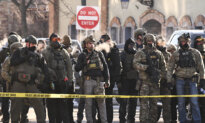
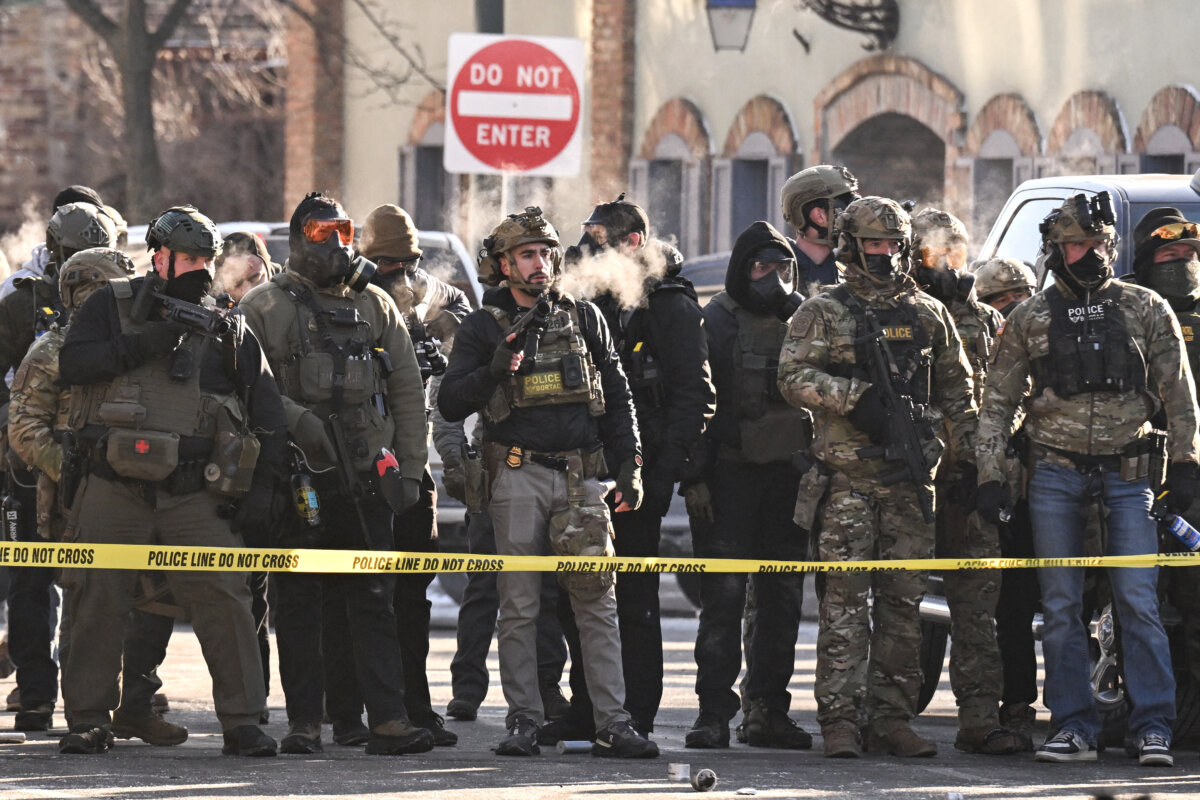
Video footage of the Pretti shooting and also of the Jan. 7 fatal shooting of Renee Good, 37, a protester fleeing in her vehicle who apparently hit an Immigration and Customs Enforcement (ICE) agent, has sparked public debate over the actions of all involved.
Amid those varying interpretations, state and federal officials have been at odds over who should head the official investigations. Federal authorities initially stated that they would investigate, but state officials cried foul; it appeared that federal officials were proceeding despite Minnesota officials’ objections.
Trump said he lamented Pretti’s death. He extended his sympathies to Pretti’s family, saying, “I love everybody. I love all of our people. I love his family. And it’s a very sad situation.”
Those statements echoed remarks he made previously about Good’s death.
Trump also commented on his recent directives to change key personnel who have been overseeing Minnesota immigration-enforcement operations.
In the wake of Pretti’s death, Trump deployed White House border czar Tom Homan to Minnesota.
Homeland Security Secretary Kristi Noem and Border Patrol commander Gregory Bovino had been heading the Minnesota enforcement sweeps. The Epoch Times has learned that Bovino is among the agents leaving Minnesota.
Homan was scheduled to arrive in Minnesota on Jan. 26. He met with Minnesota Gov. Tim Walz just before the president’s remarks. He also met with Minneapolis Mayor Jacob Frey.
“I hear that’s all going very well,” said Trump, who reported that he had productive phone conversations with both leaders, despite past acrimonious exchanges.
Both Frey and Walz have insisted, along with protesters, that Immigration and Customs Enforcement and the Border Patrol need to leave Minnesota.
Trump said later on Jan. 27 that the personnel reassignments did not amount to a “pullback” in Minnesota.
“It’s a little bit of a change,” Trump told Fox News’s Will Cain from a restaurant in Iowa. “Everybody in this room that has a business, you know, you make little changes. You know, Bovino is very good, but he’s a pretty out there kind of a guy. And in some cases, that’s good. Maybe it wasn’t good here.”
The president added that Homan’s meetings with Frey and Walz were aimed at de-escalating the situation.
Frey, in a statement via email, said that he told Homan “that Minneapolis does not and will not enforce federal immigration laws” but committed to further talks with Homan and his team. Now, Homan, rather than Noem, will report directly to Trump about the federal government’s Operation Metro Surge in Minnesota.
Ever since the operation began in early December 2025, federal agents have been met with opposition. According to the Justice Department, Minnesota is a sanctuary state with policies that shield illegal immigrants from deportation. Its largest cities, St. Paul and Minneapolis, are both considered sanctuary cities.
Asked whether Noem would step down, Trump said no.
“I think she’s doing a very good job,” he said.
White House reporters did not ask about Bovino.
Trump said it’s important to put the Minnesota controversies into context.
“You forget: We had a border that I inherited where millions of people were coming through. Now we have a border where no one is coming through,” the president said. “They come into our country only legally. … As soon as you accomplish something, it goes into history, and nobody ever wants to talk about it.”
The crackdown in Minnesota is part of a nationwide effort. Trump promised to conduct mass deportations of illegal immigrants if voters elected him the 47th president. Minnesota is also the focus of a major federal investigation into systemic welfare fraud centered in the Somali community.
Trump said every city targeted for immigration enforcement has seen dramatic drops in crime rates. He credits the arrests of violent criminals made by ICE, along with Customs and Border Protection.
The cities of Washington, Memphis, and even Minneapolis benefited from reduced crime, he said.
Despite the upheaval, the Trump administration notched a win when a federal appeals court on Jan. 26 stayed a lower court’s decision to prevent ICE agents from detaining protesters or using nonlethal munitions during protests.
The Jan. 26 ruling by a three-judge panel of the Eighth U.S. Circuit Court of Appeals called the lower court’s injunction on the federal law enforcement officers “too vague” and stated that Homeland Security made a “strong showing” of its case.
The administration is still awaiting an answer to the state of Minnesota’s call for an emergency block to the Trump administration’s deployment of federal officers for immigration enforcement.
With reporting by Nathan Worcester and Savannah Hulsey Pointer
 Friends Read Free
Copy
Facebook
Tweet
Friends Read Free
Copy
Facebook
Tweet