
U.S. President Donald Trump renewed his threat to strike Iran’s Pickaxe Mountain nuclear facility, saying the United States had observed activity at the underground complex and warning Tehran against advancing its nuclear program.
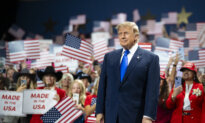
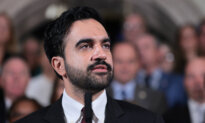
Speaking at the Republican midterm convention in Dallas on Wednesday, Trump said the United States had detected movement at Pickaxe Mountain and suggested the site could be targeted.
He recalled the June 2025 U.S. strikes on Iran’s nuclear facilities, saying B-2 bombers flew from Missouri, refueled multiple times in flight, flew for 37 hours back and forth, and “they knocked them out.”
“We may have to give them a shot there, too, because somebody said there was a little movement at the site,” he said, referring to Pickaxe Mountain.
Trump also said the United States could closely monitor activity there through its space-based capabilities. The U.S. president reiterated his longstanding position that Iran must never acquire nuclear weapons.
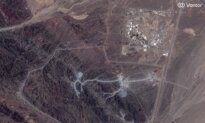
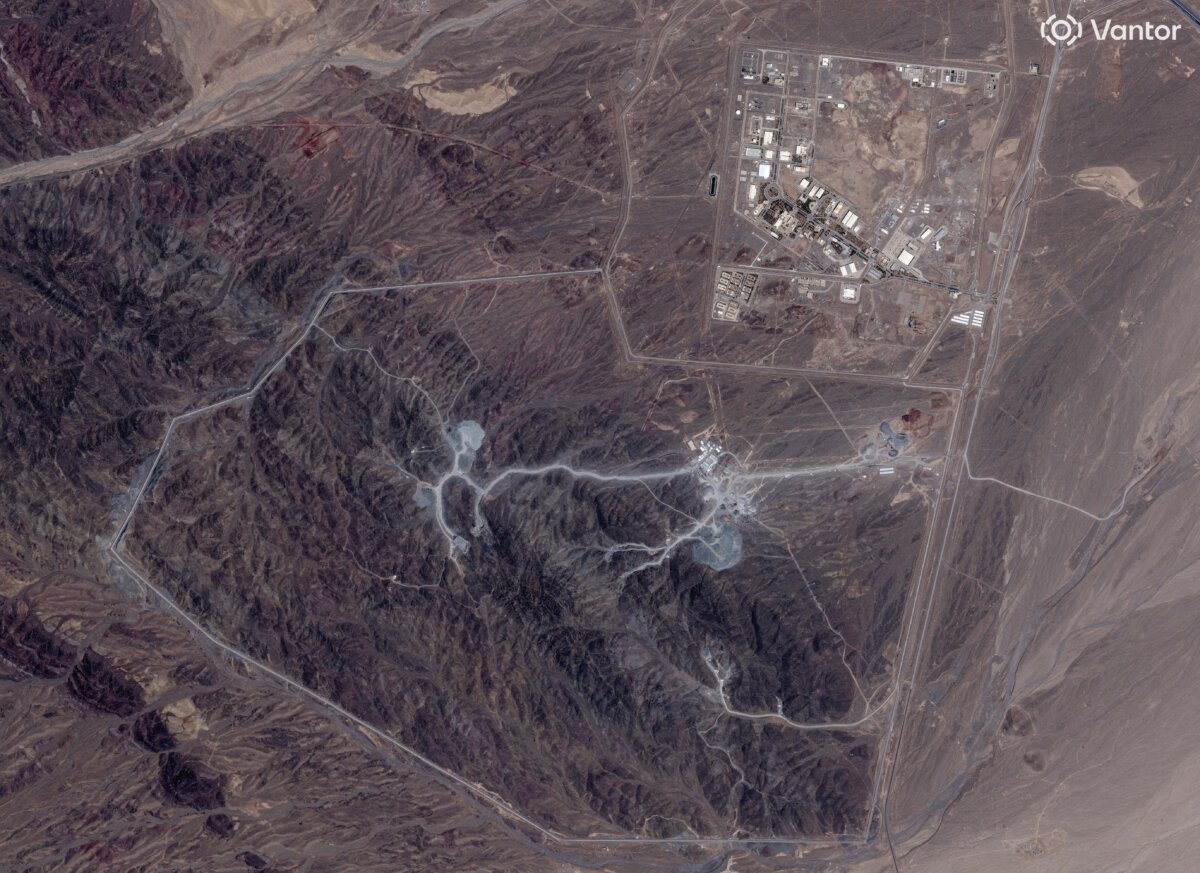
Pickaxe Mountain is located in central Iran, about 140 miles south of Tehran. The mountain is surrounded by granite and rises to roughly one mile above sea level.
Iran announced plans in 2020 to build a new centrifuge assembly facility inside the mountain after suspected sabotage damaged another nearby assembly facility in Natanz that year.
Unlike several other Iranian nuclear facilities, the International Atomic Energy Agency (IAEA) has not been permitted to inspect the site at Pickaxe Mountain.
As a result, much of what is publicly known about the facility has come from commercial satellite imagery.
The Center for Strategic and International Studies (CSIS) said on Wednesday that the construction activity at Pickaxe Mountain has clearly accelerated this year.
CSIS reported in October 2025 that construction had picked up and that Iran had erected a security perimeter around the facility.
Using six years of satellite data, as well as the latest imagery from July and August, the analysis concluded that road activity at Pickaxe Mountain was higher in 2026 than at any point since monitoring began in 2020.
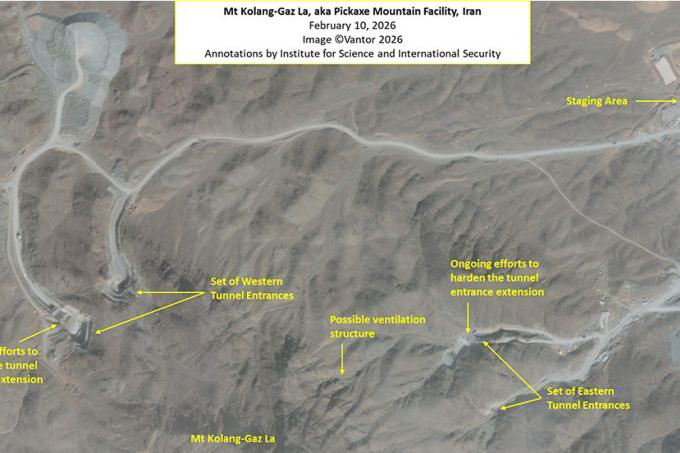 An overview of the Western and Eastern tunnel portals showing the ongoing hardening efforts at the Pickaxe Mountain tunnel entrances, Isfahan Province, Iran, on Feb. 9, 2026 (isis-online.org)
“Pickaxe Mountain is a deeply buried granite fortification, and it will be difficult to destroy the facility even with the heaviest non-nuclear U.S. munitions, such as the GBU-57 Massive Ordinance Penetrator,” the analysts said.
2025 US Strikes
Trump’s latest warning came more than a year after he said U.S. forces had severely damaged Iran’s nuclear facilities during Operation Midnight Hammer on June 22, 2025.
During that operation, the U.S. military struck the Fordow, Natanz, and Isfahan nuclear sites.
Trump’s renewed warning comes as he continues to make Iran’s nuclear program a central issue. Iran maintains that its nuclear activities are for peaceful purposes.
Responding to Trump’s July remarks, Iranian Foreign Ministry spokesman Esmail Baghaei said Iran had fully declared its nuclear activities to the IAEA and that no nuclear activity was taking place at Pickaxe Mountain.
Inspection Impasse
Director General Rafael Grossi said on Sept. 7 that it had been “more than a year” since the IAEA lost “continuity of knowledge” over Iran’s previously declared inventories of low-enriched uranium and uranium enriched up to 60 percent uranium-235.
Grossi urged Iran to restore cooperation with inspectors and called for diplomacy to resolve disputes over its nuclear program.
Iranian state-run media IRNA reported on Sept. 10 that Iran’s mission to the IAEA said it was unreasonable to expect the normal implementation of nuclear safeguards while the country remained under military threat.
Iranian officials said that current obstacles to inspections resulted from what it described as unlawful U.S. and Israeli attacks on its nuclear facilities, rather than any failure by Tehran to cooperate.
Ryan Morgan contributed to this report.
 Friends Read Free
Copy
Facebook
Tweet
Friends Read Free
Copy
Facebook
Tweet