
The United States on Jan. 29 signed a new trade agreement with El Salvador that will reduce reciprocal tariffs on that country in exchange for lower regulatory barriers for U.S. exports.
The agreement alters the 10 percent tariff rate that U.S. President Donald Trump placed on El Salvador as part of the reciprocal tariffs that he has imposed on all countries. Several imports from El Salvador will have their reciprocal tariffs eliminated, although some tariffs will be maintained. The agreement also says that the rate for some goods “shall be no higher than 10 percent.”
El Salvador has committed to adopting U.S. regulatory standards for its imports from the United States, meaning that U.S. goods will be able to enter the country with minimal non-tariff barriers. These commitments include joining several intellectual property treaties, banning imports produced by forced labor, and banning value-added taxes, among others, according to the text of the agreement.
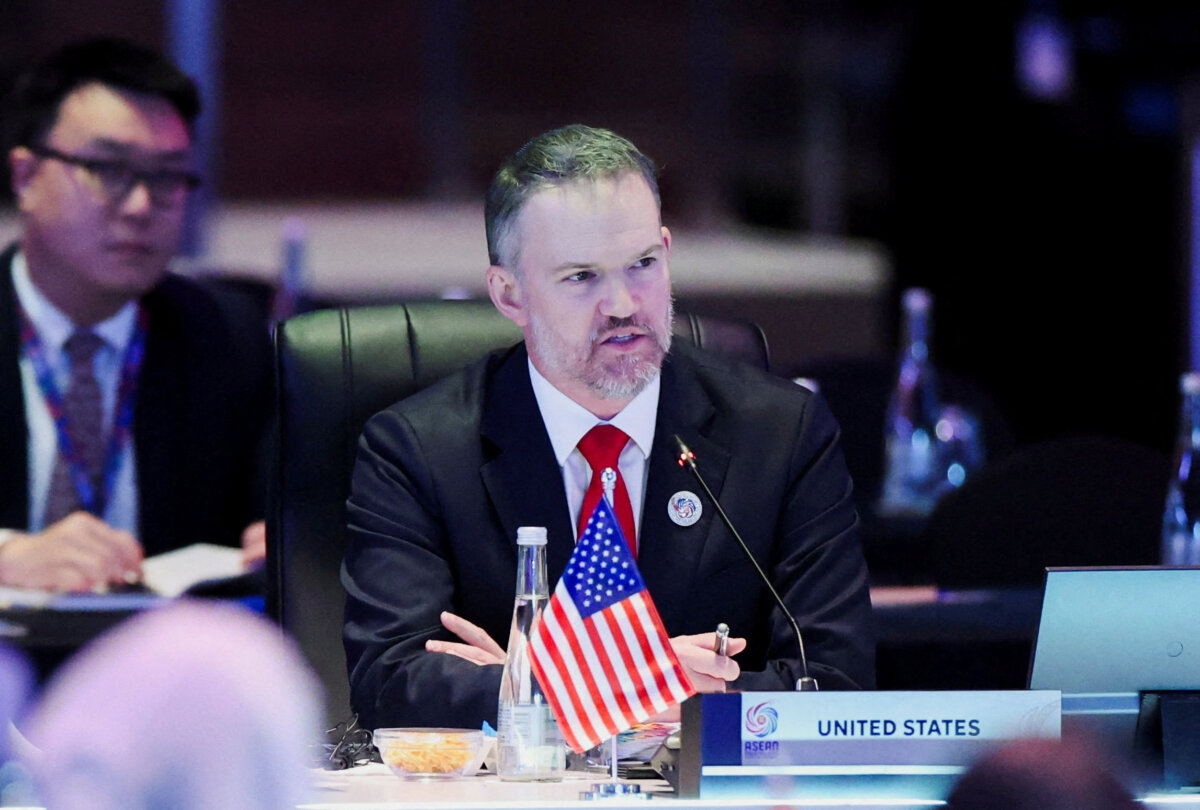
“Today’s signing of the first Agreement on Reciprocal Trade in the Western Hemisphere will further strengthen markets for U.S. exports and lower trade barriers facing American workers and producers,” U.S. Trade Representative Jamieson Greer remarked in a statement about the agreement. Greer signed the agreement for the United States in Washington alongside El Salvador’s minister of economy, María Luisa Hayem.
“The first Reciprocal Trade Agreement in the entire Western Hemisphere,” Salvadoran President Nayib Bukele wrote on social media. Bukele’s post included a picture of Greer and Luisa Hayem holding up the agreement.
Two-way trade between the United States and El Salvador amounted to $10.7 billion in 2024, according to the Office of the U.S. Trade Representative. The United States presently has a $2.2 billion trade surplus with El Salvador. In November 2025, both countries said they agreed to a new framework for trade.
The signed agreement provides El Salvador with relief from Trump’s Executive Order 14257, issued on April 2, 2025, which imposed reciprocal tariffs on all nations’ exports to the United States. Before that order, which imposed a 10 percent tariff, most of El Salvador’s exports already qualified for duty-free access to the U.S. market under the Dominican Republic—Central American Free Trade Agreement of 2006, which continues to apply.
The agreement with El Salvador is the latest trade deal signed with a Latin American country negotiated by the administration since the reciprocal tariffs were imposed. The United States has also reached agreements with Argentina, Ecuador, and Guatemala.
The tariffs imposed by Executive Order 14257 have been controversial in the United States and could be upended with an anticipated Supreme Court decision.
Oral arguments in the case were heard on Nov. 5, 2025, and Trump has called the expected decision “one of the most important ever.”
Greer has said that the Trump administration has a “backup plan” in case the court rules that the tariffs are unlawful, although he has not provided details.
Democratic elected officials and some Republicans have argued that the tariffs have made goods expensive for U.S. consumers without any benefits to the country, such as increases in domestic manufacturing.
“Trump’s tariffs are one of the most disastrous and poorly thought-out policies he’s tried yet. And that’s saying a lot,” Senate Minority Leader Chuck Schumer (D-N.Y.) wrote on social media after the tariffs were imposed. “It’ll cost the average American family $5,000 more each year.”
Trump has defended the tariffs, in part by stating that they have increased revenue to the U.S. Treasury, which is where tariff collections are deposited.
“We have taken in, and will soon be receiving, more than 600 Billion Dollars in Tariffs,” Trump wrote on Truth Social on Jan. 5. “Because of Tariffs, our Country is financially, AND FROM A NATIONAL SECURITY STANDPOINT, FAR STRONGER AND MORE RESPECTED THAN EVER BEFORE.”
Analysis from the Federal Reserve Bank of Richmond indicates that the United States collected $287 billion in tariff revenue in 2025—an increase of 192 percent over 2024.
 Friends Read Free
Copy
Facebook
Tweet
Friends Read Free
Copy
Facebook
Tweet