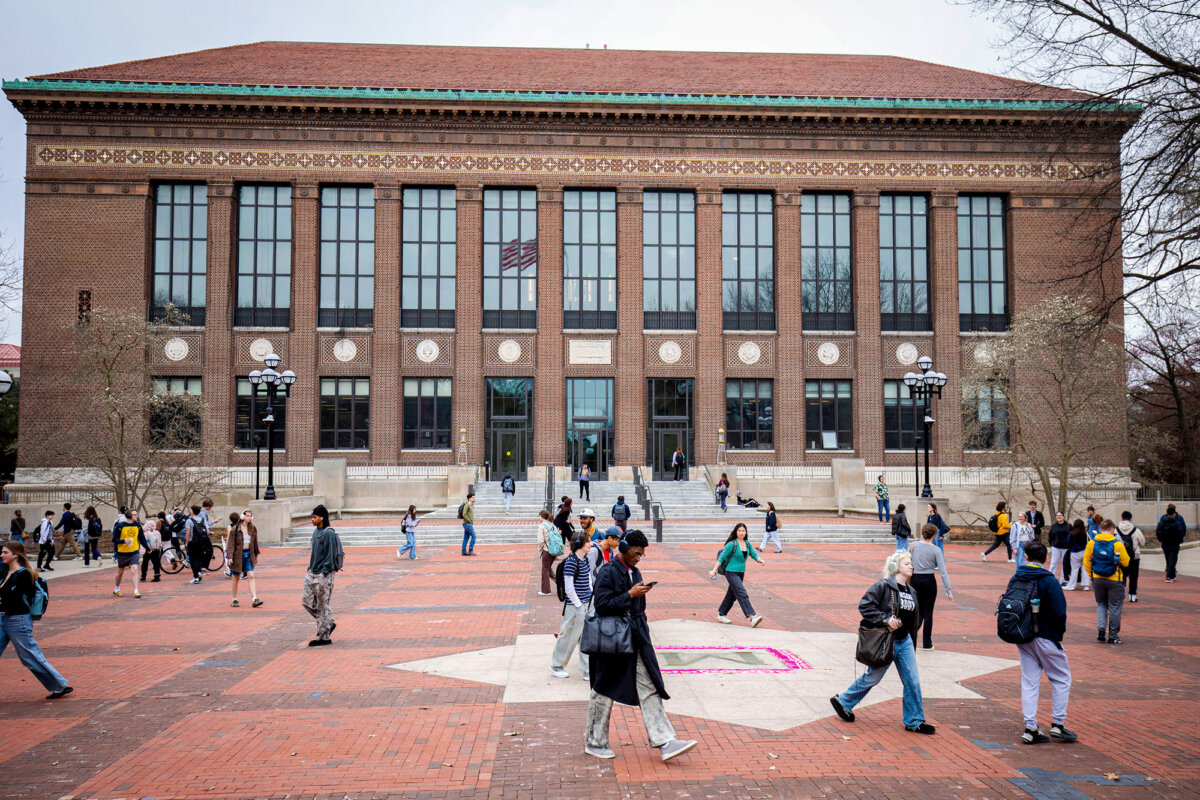

The University of Michigan’s College of Literature, Science, and the Arts (LSA) will designate all first-year students’ first-semester grades as pass or no-credit on their official transcripts starting in fall 2027 in a bid to boost their mental health.
The college described the change as part of efforts to help students establish early momentum, which it called the most important element in the university’s campus-wide Student Success Initiative.
“We believe that covering grades will help students start strong and curb the mental health crisis unfolding among college-aged individuals,” the college said on its website.
LSA enrolls about 3,500 first-year students in “more than 85 majors and sub-majors.” The policy will not apply at the university’s other 18 colleges, such the schools of business, education, and engineering. The university’s total undergraduate enrollment is about 47,000 students.
Under the pilot program, which is also known as shadow grading at colleges and universities, LSA students will still receive letter grades and instructor feedback in every course. Those final grades will not appear on external transcripts and will not count toward grade-point averages. Official transcripts will state that all first-semester grades are automatically designated as P/NC.
The university’s stated goal is “to help first-year students acclimate to the demands of college and allow intrinsic motivations to guide personally meaningful academic journeys,” which it says are core elements of a liberal arts and sciences education.
Shadow grading will allow students to “explore a subject that may not come easily to them or take a course in a new discipline without the fear that a low grade may have long-term consequences,” the website says, adding: “LSA is investing in students’ well-being and growth by fostering a culture of connection and collaboration, instead of competition.”
The university will keep internal records of first-semester grades, which could be used in academic advising, academic awards and scholarships, and students’ applications for internships, majors outside of LSA, or other opportunities.
Beginning in the second semester, LSA students’ grades will appear on their transcripts and will be reflected in their GPAs for all remaining semesters at the university.
The pilot applies only to first-year students enrolled in LSA. New transfer students are not eligible.
All first-year LSA students will be enrolled automatically. The university website says an opt-in approach would undermine “the purpose of facilitating students’ transition to campus, supporting mental health and well-being, and bolstering intrinsic motivations for learning.”
If covered grades were optional, it says, covering an individual’s grades could become equated with not doing well in a class. A uniform policy “is equitable across the board.”
Similar approaches exist elsewhere. The Massachusetts Institute of Technology implemented pass/no record first-year grading in 1968. Other institutions have adopted similar programs, including the California Institute of Technology, Swarthmore College and Wellesley College.
The College of Literature, Science, and the Arts said it is working with faculty and staff across campus to design the pilot.
 Friends Read Free
Copy
Facebook
Tweet
Friends Read Free
Copy
Facebook
Tweet