
The United States will terminate the temporary protected status for Burma (also known as Myanmar), citing progress made in governance and stability, Homeland Security Secretary Kristi Noem announced on Nov. 24.
The change gives about 3,000 Burmese nationals until Jan. 26, 2026, to return.
“[Burma] has made notable progress in governance and stability, including the end of its state of emergency, plans for free and fair elections, successful ceasefire agreements, and improved local governance contributing to enhanced public service delivery and national reconciliation,” Noem said in a statement.
After conferring with other government agencies, Noem determined that conditions in the country no longer meet the protected status requirements. Her decision was based on a U.S. Citizenship and Immigration Services review of the conditions in Burma and consultation with the State Department, according to the Department of Homeland Security (DHS).
Noem also determined that allowing Burmese citizens to stay temporarily in the United States was contrary to the national interest, DHS stated. They were encouraged to use the CBP Home app to report their departure.
The status will expire on Nov. 25, and a 60-day transition period is being provided, giving Burmese nationals until late January to return.
Burma gained independence from Great Britain in 1948 and has since struggled with military rule, civil war, poor governance, and widespread poverty, according to the Council on Foreign Relations, a nonpartisan think tank based in New York.
Removing the temporary protected status has been criticized by some groups, including Human Rights Watch, a nonprofit organization that investigates and reports on human rights abuses.
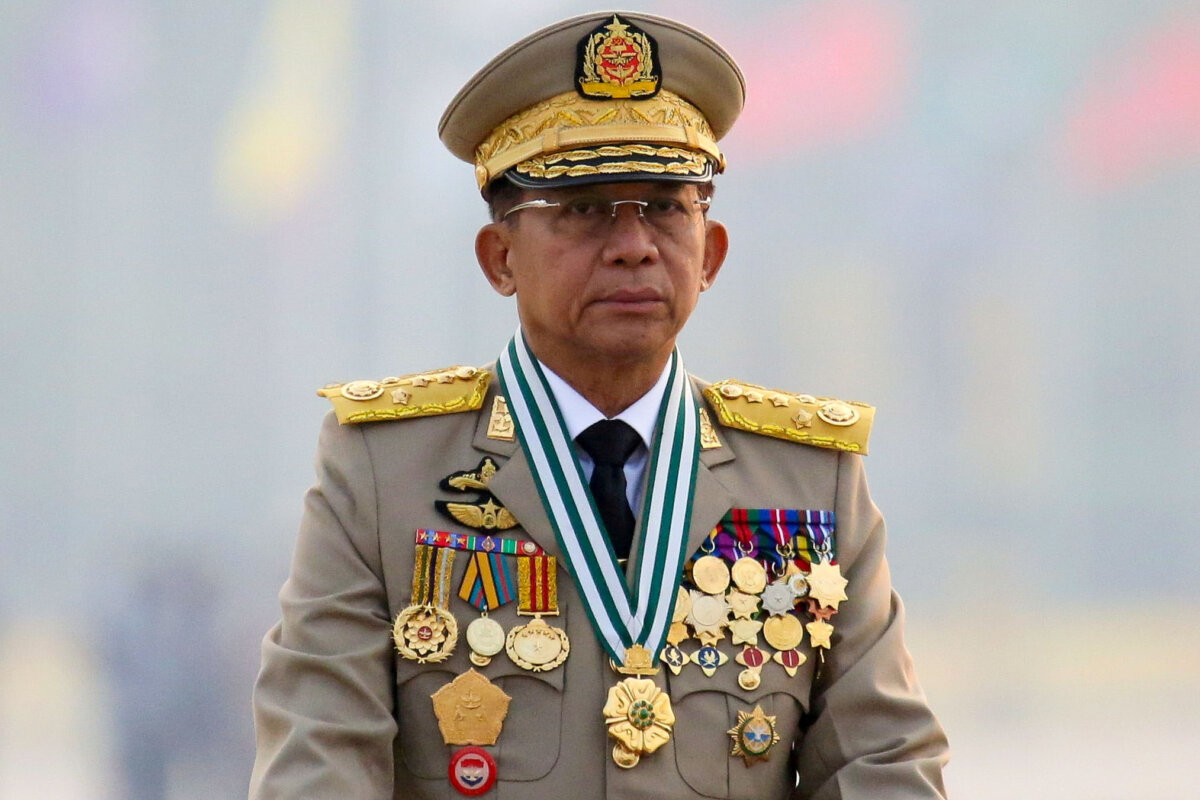
The group stated that the Burmese government’s planned elections are fraudulent and that military atrocities and attacks on civilians in Burma have not diminished.
On Nov. 19, the United States cosponsored a U.N. resolution stating that the Burmese military regime is involved in an ongoing civil war. The United States also said the regime has carried out atrocities against its own citizens, including detaining and physically abusing political opponents, killing unarmed civilians, engaging in sexual violence, and committing other human rights violations.
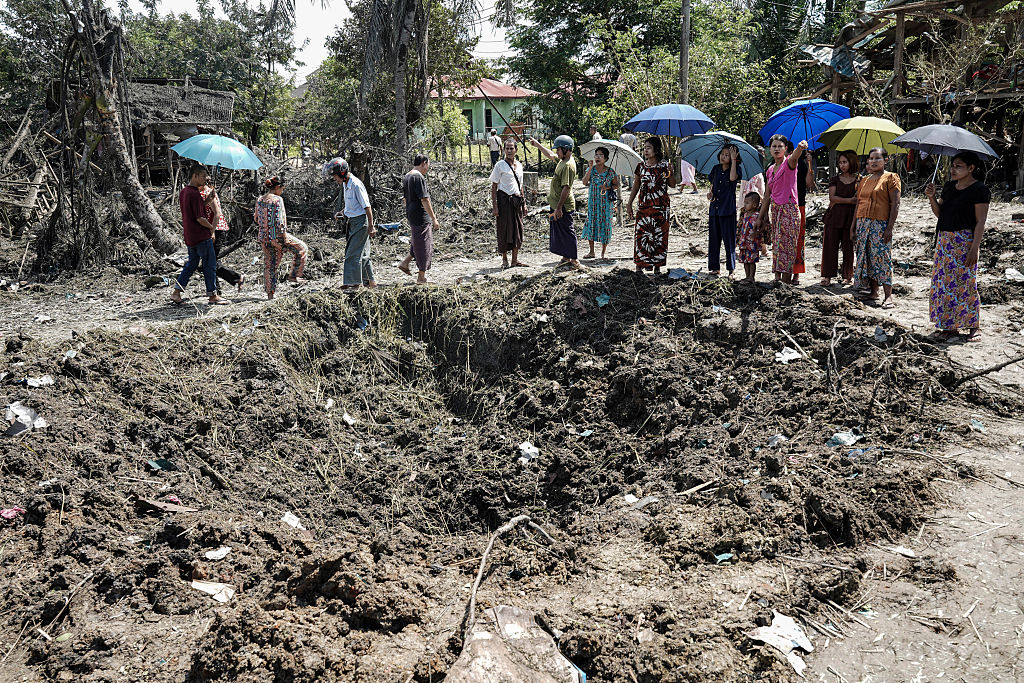 People inspect the damage after bombardments carried out by Myanmar’s military in Mrauk U, Myanmar’s Rakhine State, on Aug. 26, 2025. A Myanmar junta air strike on a rebel-held town in the country’s hunger-ravaged west killed at least 12 people, witnesses of the overnight bombing said on Aug. 26. (STR/AFP via Getty Images)
The Chinese Communist Party has invested in the country, which shares a border with China and has direct access to the Indian Ocean.
Citizens of Burma living in the United States were first given temporary protected status, allowing them to stay and work, in March 2021, after U.S. officials declared the country to be unstable and unsafe.
Former Homeland Security Secretary Alejandro Mayorkas extended the designation in March 2024 for another 18 months, after concluding that conditions were still unsafe for them to return.
The southeast Asian country of about 55 million is bordered by India and Bangladesh to the northwest, China to the northeast, and Laos and Thailand to the east and southeast, respectively.
Burma’s military government has maintained control of about 21 percent of the country’s territory following its coup in 2021. Rebel forces and ethnic armies hold 42 percent, according to a 2024 investigation by the BBC.
 Friends Read Free
Copy
Facebook
Tweet
Friends Read Free
Copy
Facebook
Tweet