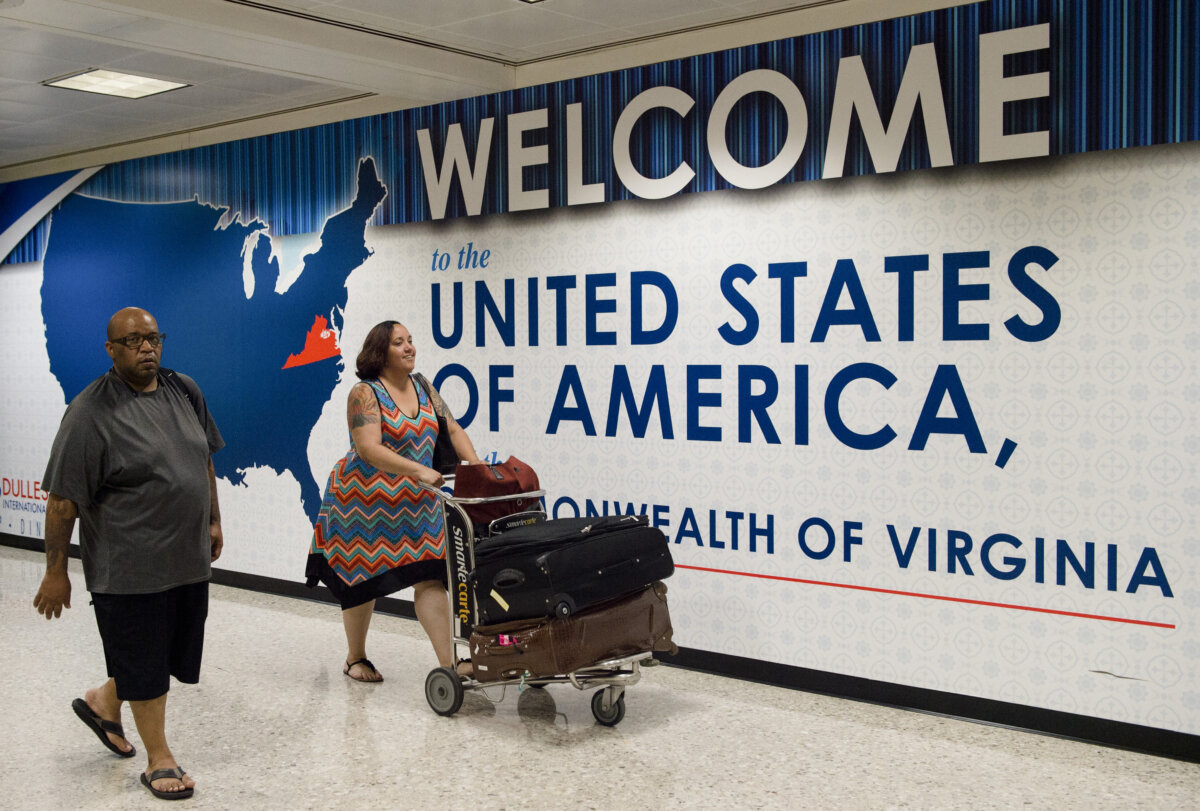

The State Department revealed on March 18 that it will require people from 12 additional countries to pay $15,000 for a business or tourist visa.
Before the March 18 announcement, the bond requirement applied to 38 nations, mostly in Africa. The nations added to the program for the B1 and B2 visas are Cambodia, Ethiopia, Georgia, Grenada, Lesotho, Mauritius, Mongolia, Mozambique, Nicaragua, Papua New Guinea, Seychelles, and Tunisia.
The purpose of the requirement is to stop immigrants from overstaying their visits.
“The visa bond program has already proven effective at drastically reducing the number of visa recipients who overstay their visas and illegally remain in the U.S.,” Assistant Secretary of State for Global Public Affairs Dylan Johnson wrote in an X post on March 18.
The bond money will be returned only to people who comply with visa terms and leave the United States on time.
“Nearly 1,000 visas under the program, and 97 percent of bonded travelers have returned home on time,” Johnson wrote in an X post on March 18.
The Trump administration suggested that the broader program, which goes into effect on April 2, will also have benefits for American taxpayers.
“The expanded visa bond program saves the American taxpayer hundreds of millions of dollars every year,” Johnson wrote.
“It costs the U.S. taxpayer $18,000+ on average to remove an illegal alien from the country and this move will save taxpayers up to $800 million per year.”
Countries that were already in the program were Algeria, Angola, Antigua and Barbuda, Bangladesh, Benin, Bhutan, Botswana, Burundi, Cabo Verde, Central African Republic, Ivory Coast, Cuba, Djibouti, Dominica, Fiji, Gabon, the Gambia, Guinea, Guinea-Bissau, Kyrgyzstan, Malawi, Mauritania, Namibia, Nepal, Nigeria, Sao Tome and Principe, Senegal, Tajikistan, Tanzania, Togo, Tonga, Turkmenistan, Tuvalu, Uganda, Vanuatu, Venezuela, Zambia, and Zimbabwe.
The Department of Homeland Security is currently offering illegal immigrants who do not have a criminal record free travel and a $2,600 bonus to exit the United States and go back to their home countries or where they have citizenship.
The March 18 announcement was made shortly after the State Department slashed fees by 80 percent for anyone wanting to renounce their United States citizenship.
The State Department reduced the cost from $2,350 to $450 after years of legal battles with several groups representing Americans who wanted to give up their citizenship.
The new fee took effect on March 13. It’s the same price as it was when the State Department started charging Americans to formally renounce their citizenship in 2010.
The Associated Press and Reuters contributed to this report.
 Friends Read Free
Copy
Facebook
Tweet
Friends Read Free
Copy
Facebook
Tweet