
The U.S. military said it destroyed a drug-smuggling vessel in the eastern Pacific Ocean that left three survivors, according to an announcement from Southern Command (SOUTHCOM) on March 20.
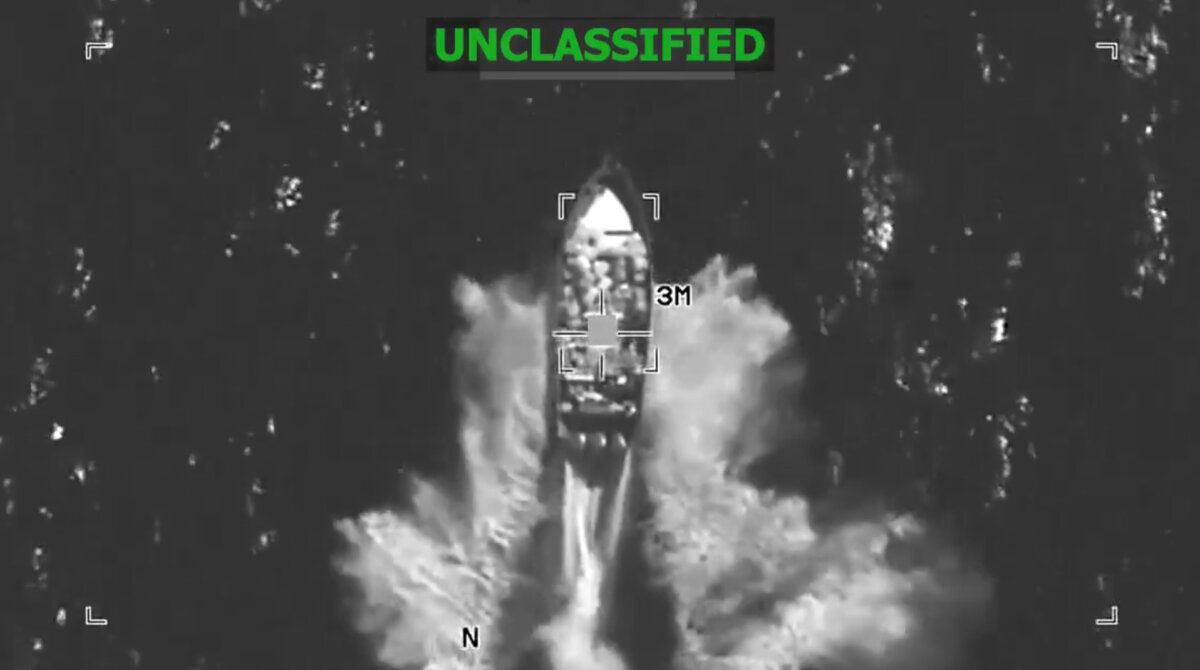
SOUTHCOM said in a post on X that “a lethal kinetic strike on a low-profile vessel operated” by a U.S.-designated terrorist group was carried out on March 19. A video of the strike was included in the post, showing a boat traveling in the water before an explosion could be seen where the vessel was located.
“Intelligence confirmed the low-profile vessel was transiting along known narco-trafficking routes in the Eastern Pacific and was engaged in narco-trafficking operations,” the military said. “Three narco-terrorists survived the strike.”
After the strike, SOUTHCOM said that it told the U.S. Coast Guard to carry out search and rescue operations for any survivors. There were no injuries to U.S. service members, it added.
It’s not clear if there were any deaths or injuries to people on board the boat that was struck.
Since September, the U.S. military has carried out dozens of strikes on suspected drug-trafficking boats in the Caribbean Sea and eastern Pacific Ocean in a bid to stave off drug trafficking to the United States. Last year, the Trump administration designated several Mexican and South American cartels and gangs as foreign terrorist organizations.
The strikes have drawn some controversy in Congress, with some Democrats asserting that the U.S. military strikes are not effective. Some have also signaled that the strikes are illegal because they were initiated without congressional approval first.
Earlier this week, Rep. Jamie Raskin (D-Md.) said in the House that the Caribbean and Pacific “strikes also fundamentally weaken our ability to bring cases against drug kingpins” because lower-level operations who are killed in the strikes cannot testify against drug lords.
This week, Gen. Francis L. Donovan, the commander of SOUTHCOM who authorized Thursday’s strike, told the Senate that he believes that military strikes on drug boats may not be a long-term solution to the problem.
“We’ve seen changes in the narco-traffickers’ patterns,” he told the Senate, adding that “looking forward, senator, the boat strikes aren’t the answer.”
However, President Donald Trump’s administration has stated that the United States is in “armed conflict” with cartels in Latin America and has said the attacks are a necessary measure to stem the flow of drugs into the country.
“Although friendly foreign nations have made significant efforts to combat these organizations, suffering significant losses of life, these groups are now transnational and conduct ongoing attacks throughout the Western Hemisphere as organized cartels,” an October White House memo said.
As a result, Trump has “determined these cartels are non-state armed groups, designated them as terrorist organizations, and determined that their actions constitute an armed attack against the United States,” it added.
Last year, Secretary of State Marco Rubio said the strikes are needed to protect Americans from illicit drugs pouring into the country.
“We’re not going to sit back anymore and watch these people sail up and down the Caribbean like a cruise ship,” he said in September. “It’s not going to happen.”
The Associated Press contributed to this report.
 Friends Read Free
Copy
Facebook
Tweet
Friends Read Free
Copy
Facebook
Tweet