
Following China’s move to restrict exports of key rare-earth elements in April, the United States is accelerating its push for rare-earth magnet independence. A new public–private partnership between the Department of Defense and MP Materials is expected to move the country significantly toward that goal.
On July 10, MP Materials Corp., the largest domestic rare-earth producer, announced a “transformational” partnership with the Department of Defense (DOD) to “drastically” build out the nation’s rare-earth magnet supply chain.
“This initiative marks a decisive action by the Trump administration to accelerate American supply chain independence,” CEO James Litinsky said in a statement.
“By year-end 2028, we are well on our way to achieving full vertical integration and meeting the rapidly growing needs of the Western magnetics market,” Ryan Corbett, the company’s chief financial officer, said during a special investor call shortly after the announcement.
MP Materials said that it will use the multibillion-dollar DOD investment to build its second magnet manufacturing facility in the United States. Once it is completed, with commissioning expected to begin in 2028, the company’s total U.S. rare-earth magnet manufacturing capacity is projected to reach 10,000 metric tons.
The United States and Europe together account for a modest share of global rare-earth magnet demand—about 40,000 tons annually across more than 30 countries, according to industry publication InvestorNews.
America’s ‘Most Pronounced Choke Point’
MP Materials views magnet manufacturing as the most urgent issue the United States needs to address.
“While many people appreciate that subscale (small) refining capacity represents an industry bottleneck, we know that the most pronounced choke point is actually in magnet manufacturing, and the two are interdependent,” Corbett said during the call.
He said America cannot build a strong magnet industry without a reliable supply of raw and refined materials, and scalable capacity to recycle the metal waste produced during magnet finishing, adding that the purpose of the company’s new partnership with the DOD is to achieve exactly that.
It will provide the certainty and economics needed to “secure this important capacity for our country while shielding against foreign market manipulation,” Corbett said.
‘Critical Gaps’ With China
Rare-earth minerals include 17 elements on the periodic table, specifically 15 lanthanides, yttrium, and scandium. The rare-earth supply chain typically includes mining, processing, and fabricating finished goods such as magnets.
According to industry experts and leading rare-earth executives, despite having abundant reserves and the second-largest critical elements mine in the world, the United States lacks the necessary infrastructure to process the metals required for producing magnets used in various defense and commercial applications.
“Those rare-earth products have to be rated and purified, which is a very difficult process. It takes nine of them to make the average advanced smartphone,” Mark Smith, CEO of NioCorp Development Ltd. and a 40-year veteran of the mining industry, told The Epoch Times.
According to the International Energy Agency (IEA), China has a virtual monopoly on the extraction and refining of all rare-earth magnets, controlling 61 percent of production and 92 percent of processing.
In 2024, China supplied about 70 percent of America’s rare-earth needs, although the estimated value ($170 million) decreased by 11 percent from $186 million in 2023, according to a January report by the U.S. Geological Survey (USGS).
China produced an estimated 300,000 tons of NdFeB magnets in 2024, compared with MP Materials’ currently projected annual output capacity of about 1,000 tons, according to Rare Earth Exchanges, a data analytics platform for the rare-earth industry.
Avadh Nagaralawala, a mining automation and control engineering consultant, told The Epoch Times that the United States has several critical gaps in its drive toward rare-earth independence, including a lack of refining infrastructure, a shortage of skilled labor—especially metallurgical and separation-process experts—and outdated equipment and technology.
Currently, he said AI, advanced process-control systems, high-throughput automation, and sensor-based separation technologies are being tested in labs or pilot settings for the first time in the United States, well behind China.
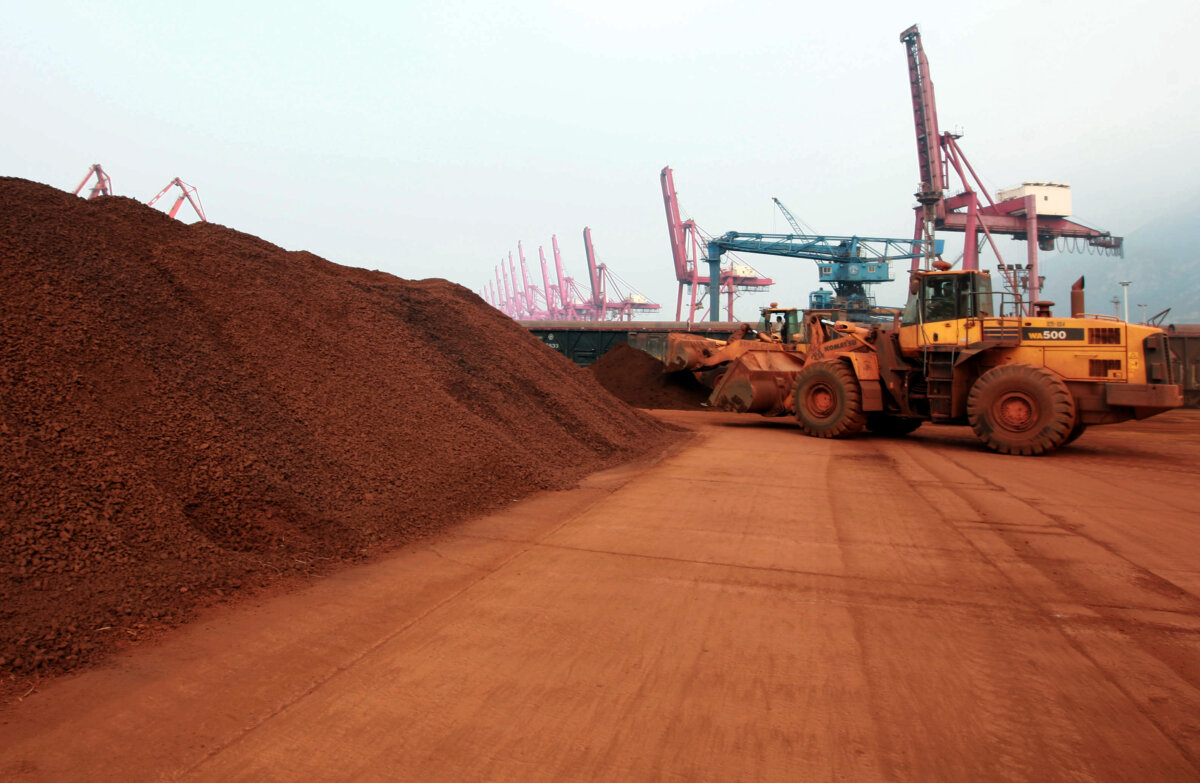
‘China Is Preparing With a Wartime Mindset’
China announced export controls in early April on seven rare-earth elements (REEs) and related magnets used in the defense, energy, and automotive sectors, in response to sweeping tariffs imposed by President Donald Trump.
The new measures require suppliers in China to obtain an export license before fulfilling foreign purchase orders, which will lead to sourcing delays and wait times of two to three months.
This disrupted the operation of many U.S. manufacturers.
Ford Motor Company recently had to close a plant because it lacked a critical rare-earth material.
During a live-streamed discussion at the Aspen Institute’s Idea Festival on June 29, Ford CEO Jim Farley said the company relies on high-powered, rare-earth magnets from China for several manufacturing processes.
“We shut down plants for the last three weeks because we can’t get [rare-earth] magnets. They go into speakers in the auto system, your seat, your wiper and your door motors, and we can’t make that stuff,” he said.
Derek Lemke, senior vice president of product-level intelligence at risk-management company Exiger, stresses the strategic importance of rare-earth minerals in industries such as defense, automotive, and aerospace.
He told The Epoch Times that China’s export restrictions and market manipulation have posed significant challenges for the United States, particularly for those with no immediate domestic alternatives.
Gracelin Baskaran, director of the Critical Minerals Security Program at the Center for Strategic and International Studies, noted the consequences of China’s new restrictions on rare-earth exports in a recent research note.
The Washington-based think tank highlighted rare earth permanent magnets that are essential components in a range of defense capabilities, including the F-35 Lightning II aircraft, Virginia and Columbia class submarines, and unmanned aerial vehicles.
“The United States is already on the back foot when it comes to manufacturing these defense technologies,” Baskaran wrote.
“China is rapidly expanding its munitions production and acquiring advanced weapons systems and equipment at a pace five to six times faster than the United States. While China is preparing with a wartime mindset, the United States continues to operate under peacetime conditions.”
While China’s upstream consolidation is mostly complete, the downstream magnet manufacturing sector remains fragmented, Felix Chang, a senior fellow at the Foreign Policy Research Institute’s Asia Program in Philadelphia, told The Epoch Times.
According to Chang, to gain more control, Beijing introduced a tracking system in 2024 to monitor transactions and customer data, and also limited access to production quotas, which are now restricted to only two state-owned enterprises: China Rare Earth Group and China Northern Rare Earth Group.
Furthermore, Chang said the current export restrictions have destabilized the market, leading U.S. and other global magnet producers to face decreased domestic demand, increasing inventories, and uncertainty about licensing.
“Although some firms have resumed exports, I believe the recovery remains fragile and largely dependent on Beijing policymakers rather than market demand. All of that has led many to expect prolonged disruptions and structural delays,” Chang said via email.
“These pressures, alongside regulatory tightening, may accelerate further downstream consolidation in the magnet sector—an outcome aligned with Beijing’s broader geo-economic strategy for competing with the United States.”
US Producers Gearing Up
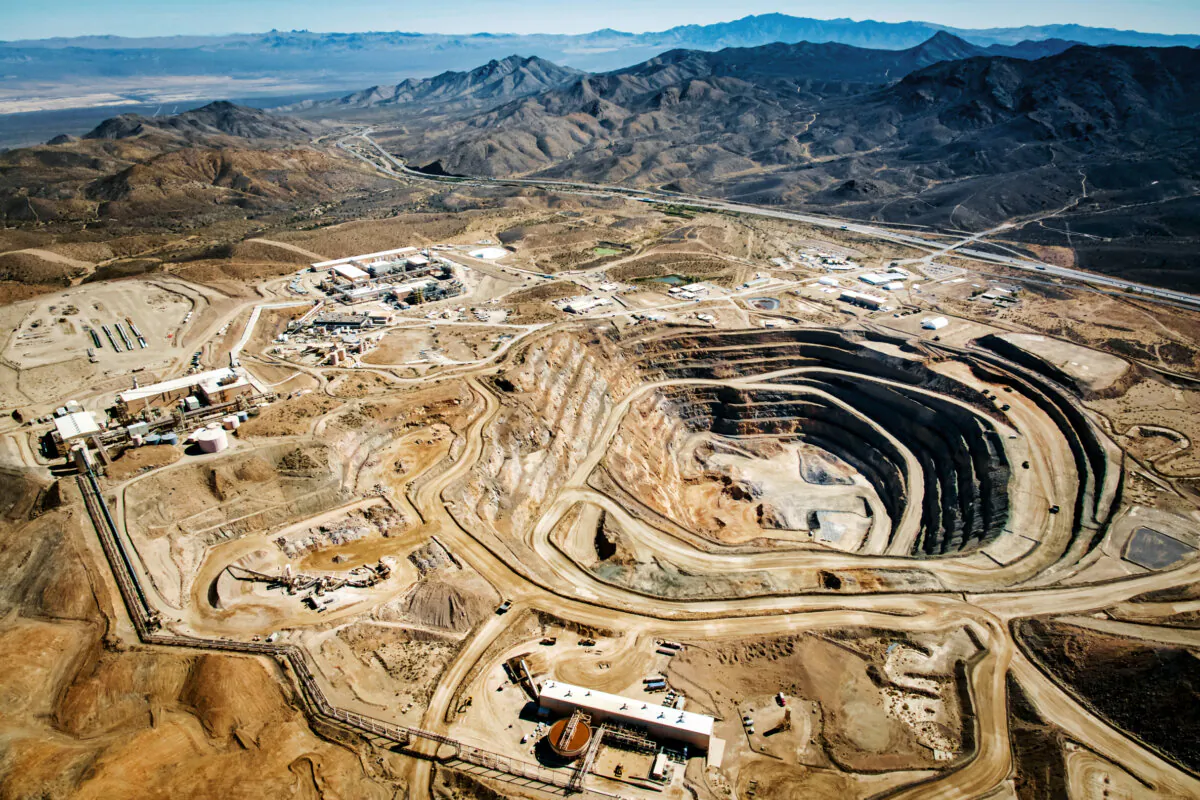
MP Materials is the only American company operating an active rare-earth mine—the Mountain Pass mine in San Bernardino County, California.
The mine was previously owned by Molycorp Inc., which unexpectedly filed for Chapter 11 bankruptcy in 2015 and shut down operations following the filing. Domestic rare-earth mineral production thus came to a complete halt in the United States until a new entity, MP Mine Operations LLC, purchased the mine in 2017, according to data from the USGS.
In July 2020, MP Mine Operations announced a reverse takeover in which the company and Strategic National Resources would merge with investment firm Fortress Value Acquisition Corp. to become a public company under the name MP Materials Corp. The deal, which closed in November 2020, raised $545 million and positioned the Las Vegas-based firm on a path to becoming the nation’s only fully integrated rare earths company.
In 2024, the Mountain Pass mine set a record by producing more than 45,000 metric tons of rare earth oxides, marking the highest level of U.S. primary production ever achieved.
Despite MP Materials’ success, Sloustcher warned that if the United States doesn’t expand the rare-earth supply chain—especially in midstream and downstream industries that refine rare-earth materials and produce magnets for defense and commercial use—the U.S. economy and national security could be at risk.
“What I would say is that all the technologies and industries that drive the America economy—manufacturing in the Midwest and all of the industries of the future like AI and robotics—these industries depend on rare-earth materials and magnets,” Sloustcher said.
In January, MP Materials announced that its 130-worker flagship facility in Fort Worth, Texas, appropriately named Independence, has commenced commercial production of neodymium-praseodymium (NdPr) metal and trial production of automotive-grade, highly pressurized neodymium-iron-boron (NdFeB) magnets.
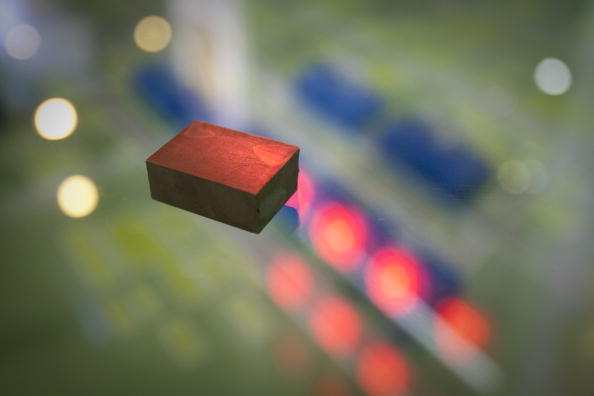
The world’s most potent and efficient permanent magnets—NeFeb—are vital components in vehicles, drones, robotics, electronics, and aerospace and defense systems.
Sloustcher said manufacturing those rare-earth magnets is key to a strategic partnership that his company has with General Motors (GM) to develop a fully integrated U.S. supply chain. Under a deal first announced in 2021, MP Materials will soon supply U.S.-sourced and manufactured rare-earth materials, alloys, and finished magnets for the electric motors used in GM electric vehicles.
“I do give a lot of credit to General Motors. The reality is that the facility we have in Texas that’s coming online now would not be built where it is today if it weren’t for GM having made a commitment to us back in 2022. I think there needs to be more of that,” Sloustcher said.
Following MP Materials’ template, USA Rare Earth Inc. (USAR), located in Stillwater, Oklahoma, is also moving to build a vertically integrated, rare-earth magnet production supply chain. Currently, the Oklahoma miner controls rights to the Round Top Mountain rare earth and critical minerals deposit in West Texas, which holds significant deposits of heavy rare earths, such as dysprosium and terbium, as well as gallium, beryllium, lithium, and other critical tech minerals.
On June 16, USAR announced that it has signed a memorandum of understanding with Moog Electric Motion Solutions (Moog) for the delivery of the company’s neodymium magnets in early 2026. Elma, New York-based Moog, which posted record sales of $3.6 billion in 2024, provides high-performance coolant distribution pumps used in data centers worldwide.
Other American and global companies, such as Moog and GM, without access to rare earth minerals, are also paying close attention. In late May, U.S. battery giant Clarios announced plans to invest up to $1 billion in a state-of-the-art critical minerals processing and recovery plant in the United States.
At the time, the Wisconsin battery manufacturer stated that the new initiative was the first step in Clarios’s $6 billion investment plan to bring a domestic supercapacitor supply chain onshore, partly enabled by Trump’s “rare earth” executive orders and federal advanced manufacturing tax credits.
If pilot plants transition smoothly to commercial operations and permitting reform accelerates, some independence—particularly in light rare earth elements like neodymium and praseodymium—could be achieved within five to seven years, Nagaralawala said. Full-spectrum independence, including heavy rare-earth elements separation and high-pressure magnet manufacturing, might take 10–12 years without accelerated innovation and scale-up efforts.

The Importance of Policy Support
As noted, the Trump administration is accelerating the DOD’s goal of developing domestic supply chains to ensure continued access to the rare-earth materials necessary for manufacturing the permanent magnets used in critical U.S. military weapons systems and commercial applications.
Defense Secretary Pete Hegseth recently said the DOD is reviewing all 72 active major defense acquisition programs, including a key Biden-era program that invested millions of dollars in expanding the U.S. rare-earth supply chain, including an initial $45 million cash advance to MP Materials in early 2022 to jumpstart the nation’s lone integrated rare-earth mine and oxide production facility.
However, Daniel O’Connor, CEO of Rare Earth Exchanges, a data analytics platform for the rare-earth industry, told The Epoch Times that the critical mineral crisis in the United States stems partly from a dysfunctional web of laws, bureaucracy, and lost expertise over the past 50 years.
O’Connor said that although the Biden administration was “sort of sleeping” regarding the domestic rare-earth supply chain, he credited the Trump administration for doing more than any other administration so far. However, he believes the DOD must change its industrial policy to build new rare-earth supply chains in the U.S. and among allies.
“What we are talking about is the topic of industrial policy, because we have to build supply chains here in the United States and among our allies,” O’Connor said.
“That’s not a very sexy topic in Washington, New York, or on Wall Street. But if you look at the upstream, midstream, and downstream and having to do this in an accelerated way, we don’t have a lot of it … and we are probably seven to 10 years away.”
Steve Christensen, director of the Washington-based Responsible Battery Coalition, told The Epoch Times that he hopes Trump’s revamp of U.S. rare-earth strategy will boost more DOD deals and encourage investments from both private and public sectors. He also noted that the U.S. rare-earth industry faces several hurdles, including securing congressional funding, coordinating among various federal agencies, and overcoming legal challenges related to land use and environmental rules.
He criticized the recent U.S.–China trade deal for not addressing the root issue of building domestic capacity. However, he praised the Big Beautiful Bill Act for its 45X tax incentive (also known as the Advanced Manufacturing Production Tax Credit), which could spur $10 billion in U.S. rare earth investments. Like O’Connor, he also emphasized the importance of policy changes to promote domestic battery manufacturing and recycling.
 Friends Read Free
Copy
Facebook
Tweet
Friends Read Free
Copy
Facebook
Tweet