
U.S. stocks rallied to kick off the trading week as Wall Street digests the fallout of Venezuelan leader Nicolás Maduro’s capture by U.S. forces.
The blue-chip Dow Jones Industrial Average increased by more than 600 points, or nearly 1.4 percent. The tech-driven Nasdaq composite index climbed by more than 200 points, or 1 percent. The broader S&P 500 added 0.8 percent.
Stock market gains were driven largely by U.S. oil and refinery companies.
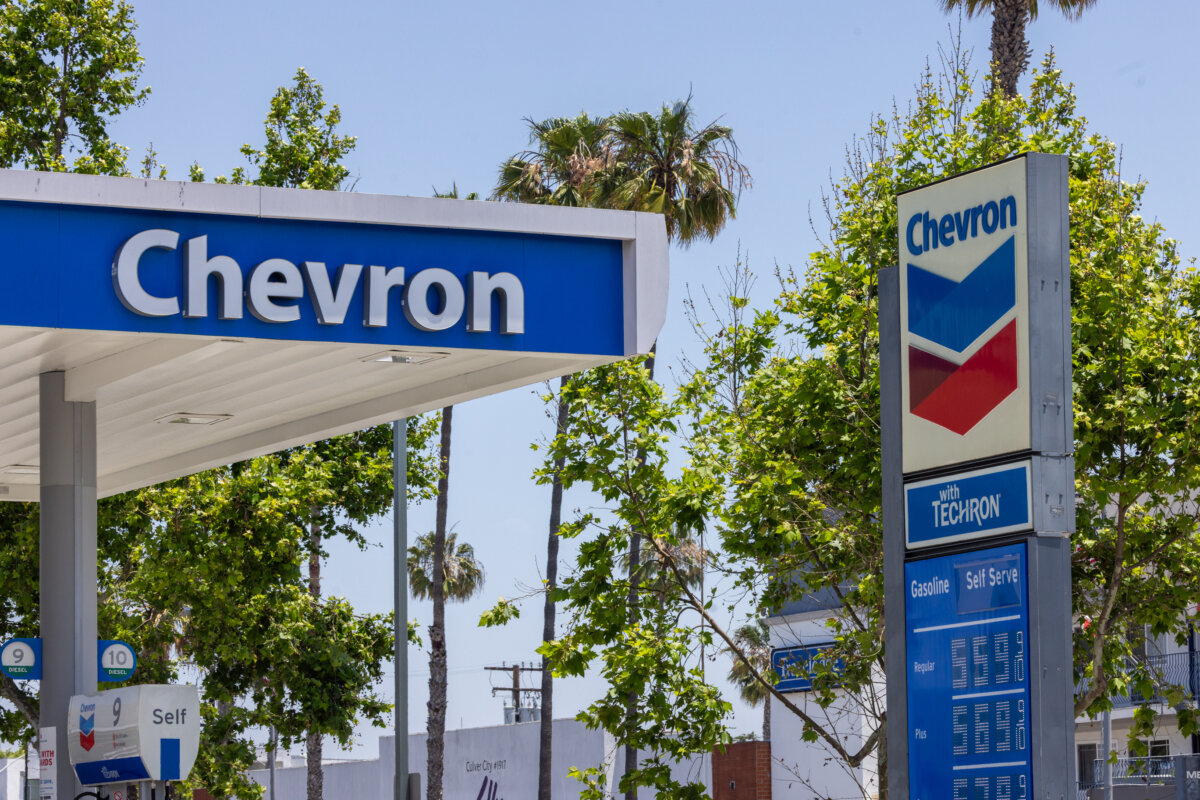
Shares of Chevron and Exxon advanced by 6 percent and 3 percent, respectively. ConocoPhillips climbed by 3 percent, while Occidental Petroleum rose by 2 percent.
Venezuela is home to the world’s largest proven oil reserves, totaling more than 300 billion barrels—nearly one-fifth of the global total. Much of it is heavy crude, which is dense, thick, and harder to pump, refine, and transport.
Companies with experience in complicated geopolitical affairs will stand to benefit the most, said Mark Malek, chief investment officer at Siebert Financial.
“Chevron is the obvious example,” Malek said in a note emailed to The Epoch Times. “It has longtime exposure to Venezuela, deep technical expertise in heavy oil, and the balance sheet to wait out the messy middle.
“ExxonMobil fits that profile as well, particularly if redevelopment becomes capital-intensive and long-dated. ConocoPhillips, with its heavy oil experience and operational discipline, also stands to benefit if production ramps become feasible under more stable conditions.”
Chevron is the only major American oil company stationed in Venezuela.
Despite sweeping sanctions in place since 2019, Chevron was granted special sanctions exemptions by both Presidents Donald Trump and Joe Biden. Additionally, Chevron never abandoned its legacy joint ventures with PDVSA, Venezuela’s state-owned oil and gas company.
The refiners also registered massive gains at the opening bell.
Shares of PBF Energy and Philipps 66 soared by 11 percent and 5 percent, respectively. Valero Energy saw its stock climb by 7 percent.
The United States has the infrastructure to refine much of Venezuela’s heavy crude. Louisiana and Texas have six of the world’s largest heavy crude oil refineries.
This, said Charu Chanana, chief investment strategist at Saxo Bank, would benefit the primary American refiners.
“If Venezuelan heavy crude flows normalise, the more direct beneficiaries are typically the most complex U.S. refiners—especially Gulf Coast plants with meaningful coking capacity—because they can monetise heavy-light spreads and run heavy grades efficiently,” she said in a research note on Jan. 5.
Typically, firms such as Valero Energy, PBF Energy, and Phillips 66 would appear in the “complex refining leverage” discussion, Chanana said.
The metals market rocketed in the aftermath of Maduro’s ouster.
Gold prices increased by almost 3 percent, or $126.30, to more than $4,455 per ounce. Silver, the sister commodity to gold, also spiked by more than $5, or nearly 8 percent, to more than $76 per ounce.
Industrial metals were also swimming in green ink.
Copper increased by more than 4 percent, platinum by 7.5 percent, and palladium by 5.5 percent.
Oil Prices Tick Up
Crude oil prices were up modestly to start the first whole trading week of 2026.
West Texas Intermediate, the U.S. crude benchmark, rose by 1.2 percent to $58 per barrel on Jan. 5 on the New York Mercantile Exchange.
Brent, the global benchmark for oil prices, climbed by 1.1 percent to more than $61 per barrel on London’s ICE Futures exchange.
Oil prices have cratered over the past year, falling by about 20 percent amid rising supply, growing output, and economic uncertainty.
Despite its vast reserves, Venezuela produces only about 800,000 barrels per day, well below the 1990s peak of about 3.5 million barrels per day. Total exports have also plummeted in recent years because of aging infrastructure, underinvestment, and technical issues.
Trump said the United States will take control of Venezuela’s oil and rebuild the industry.
“We’re going to have our very large United States oil companies—the biggest anywhere in the world—go in, spend billions of dollars, fix the badly broken infrastructure, the oil infrastructure,” Trump told reporters hours after Maduro’s capture.
“The oil companies are going to go in and rebuild their system.”
Although the short-term outlook will remain undisturbed, U.S. presence in Caracas will leave room for long-term supply increases—and downward pressure on global oil prices—according to Warren Patterson, head of commodities strategy at ING.
What happens immediately depends on the transition of power in Venezuela, he said.
“Clearly, a prolonged and messy transition increases the risk for supply disruptions in the short term,” Patterson said in a research note on Jan. 5.
“A smooth transition, with a government which is also more willing to cooperate with the US, likely leaves more downside for the market.”

Looking ahead, ING’s $57-per-barrel forecast for 2026 remains intact. However, next year, prices could be below the firm’s $62-per-barrel prediction if there start to be “meaningful supply increases from Venezuela.”
Ultimately, Patterson said, it will take some time before global energy markets witness significant supply hikes.
Although Neil Shearing, group chief economist at Capital Economics, estimates that a full restoration would add just 2 percent to global supply, he said he still expects prices to continue sliding this year.
“The bigger picture is that rising output in the US and OPEC+ will dominate oil market dynamics over the coming years,” he said in a note.
“We expect global supply growth over the next year or so to push oil prices down towards $50 per barrel.”
Still, the weekend’s developments are not expected to affect global oil markets or the broader economic outlook meaningfully, Shearing said.
In other energy markets, natural gas prices declined by almost 4 percent to about $2.93 per million British thermal units on the New York Mercantile Exchange. Natural gas has had a rough start to 2026, falling by more than 37 percent in the year’s first week of trading.
Wholesale gasoline futures were little changed at $1.70 per gallon. The national retail average for a gallon of gasoline is $2.82, according to the American Automobile Association.
 Friends Read Free
Copy
Facebook
Tweet
Friends Read Free
Copy
Facebook
Tweet