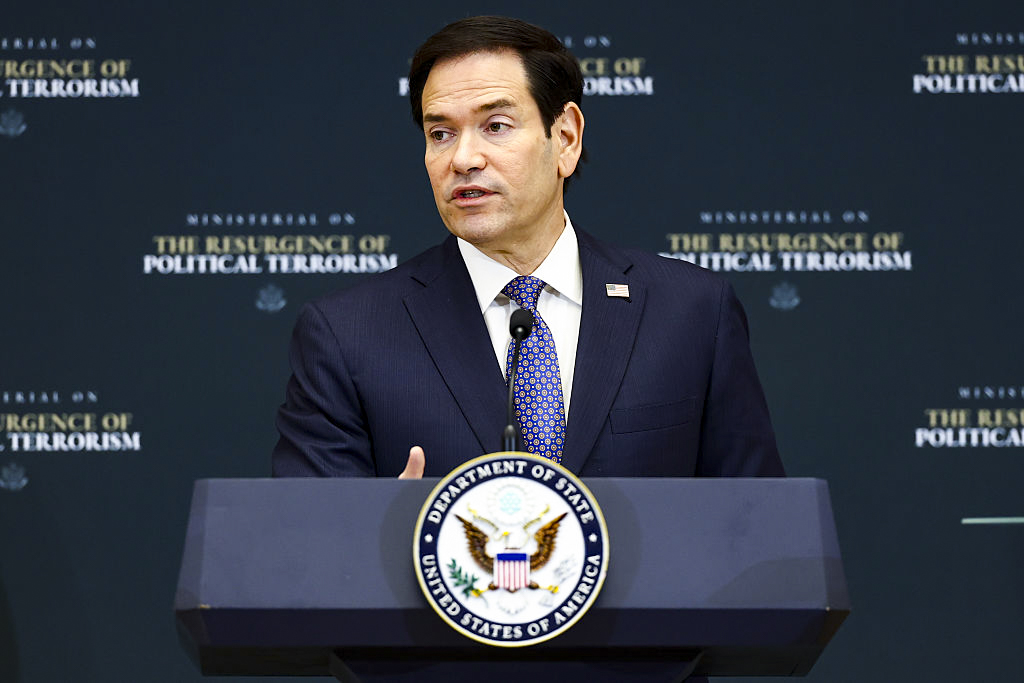

Secretary of State Marco Rubio said Monday that the United States will restrict visas for people who obstruct the return of children abducted abroad by a parent, as well as those people’s immediate family members.
He said this new policy is meant to streamline cases that have dragged on in foreign courts and government offices and “gives the Department a new accountability tool to press non-compliant countries to meet their obligations.”
“Protecting American children abducted across international borders and reuniting them with their parents is a top priority for the Trump Administration,” Rubio said in a statement.
“When foreign government officials, judges, judicial administrators, law enforcement officials, and others intentionally obstruct the prompt resolution of these cases, they prolong family separations and block the return of children to the United States.”
The State Department did not say how many people the visa restrictions could affect.
The statement said the net also covers people who “intentionally fail to implement or comply with laws, policies, or court orders to resolve these cases and return children to their country of habitual residence.”
The department said it is acting under Section 212(a)(3)(C) of the Immigration and Nationality Act. That provision permits the government to keep someone out of the country when the secretary of state finds that the person’s presence would have serious adverse foreign policy consequences.
Rubio used the same statute in July, when he announced a global visa restriction policy aimed at people “responsible for, or complicit in, cybercrime and cyber-enabled crime, such as those involved in cyberscams, and sextortion.” The policy could also bar immediate family members.
Parental abduction cases sit in a different pile from ordinary custody fights at home. In these cases, a parent takes a child out of the country where the child usually lives and refuses to return the child. The left-behind parent often wins orders that the other side won’t enforce.
The Hague Convention on the Civil Aspects of International Child Abduction, a 1980 treaty, is the main international rulebook for those fights. The pact requires children wrongfully removed from the country where they reside to be sent back so custody can be decided there.
In 2014, President Barack Obama signed the Sean and David Goldman International Child Abduction Prevention and Return Act, known as the Goldman Act. Rep. Chris Smith (R-N.J.) sponsored it. The act was a response to countries that had been designated as “noncompliant” with the Hague Convention or other obligations to resolve relevant cases. The law allows Washington to withhold certain aid and use other pressure when a country will not return abducted children.
Monday’s policy does not replace the Goldman Act.
“The Department proactively works to prevent abductions and facilitate the quick and safe … return of abducted children to their country of habitual residence,” Rubio said.
“This policy will add another tool under U.S. law to promote accountability when countries fail to meet their obligations under international law. We are committed to protecting the safety and well-being of all American children.”
 Friends Read Free
Copy
Facebook
Tweet
Friends Read Free
Copy
Facebook
Tweet