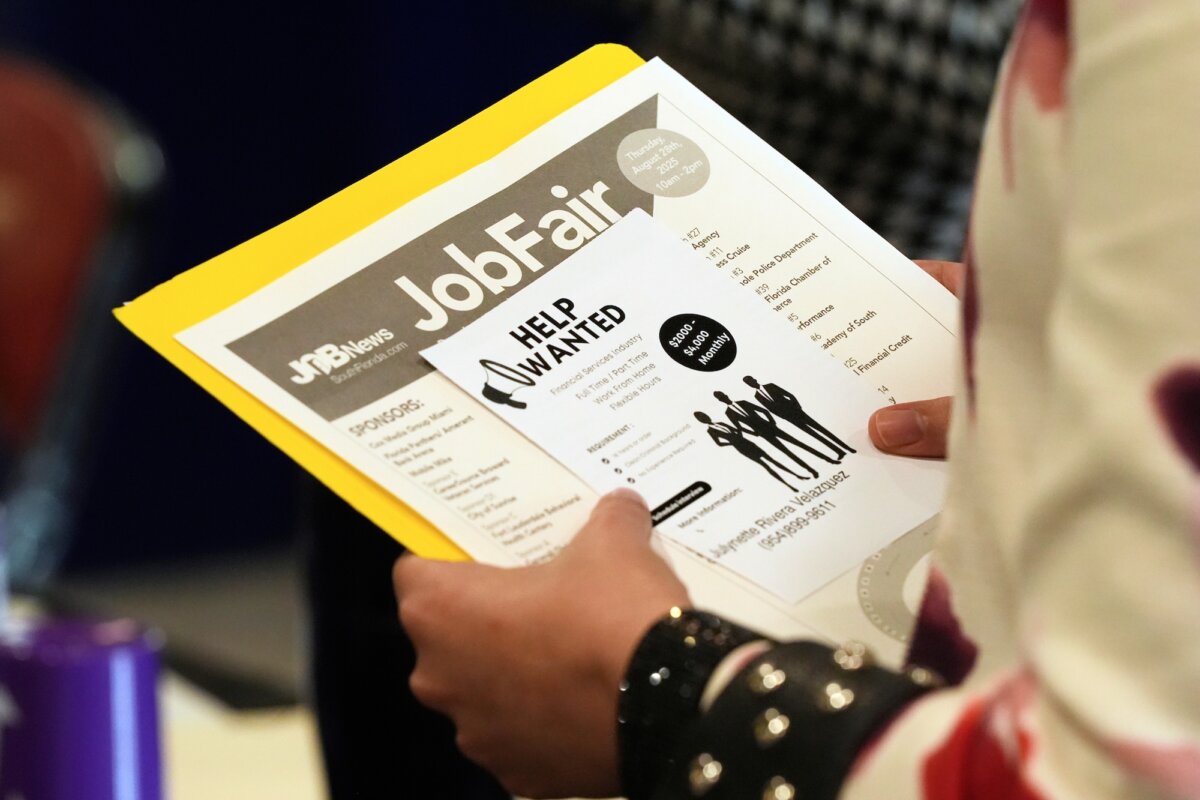

The number of Americans filing for first-time unemployment benefits declined to the lowest level in more than three years, new Department of Labor data released on Dec. 4 show.
For the week ending Nov. 29, initial jobless claims fell by 27,000 to 191,000, marking the fourth consecutive weekly drop.
Economists had penciled in a reading of 220,000.
Initial claims for state unemployment benefits, which included last week’s Thanksgiving holiday, are at their lowest level since September 2022. It is also the first time this year that claims were below 200,000.
Claims are typically volatile around this time of the year. However, the four-week average, which removes week-to-week volatility, declined to 214,750—the lowest in 10 months.
Federal worker jobless claims decreased for the second straight week, tumbling by 599 from the previous week, to 1,125. The latest figures reflect the end of the record-breaking U.S. government shutdown.
Economists have been closely watching this measure this year to determine whether the Trump administration’s policies and the Department of Government Efficiency’s measures have influenced government payrolls.
Continuing jobless claims—a gauge of unemployed individuals currently receiving unemployment benefits—dipped for the second straight week to 1.939 million, the lowest since early October.
Still, recurring claims have remained above 1.9 million since mid-May, highlighting the challenge unemployed Americans face in securing new jobs.
The positive development in the U.S. labor market comes as payroll processor ADP reported 32,000 private-sector job losses last month.
Global outplacement firm Challenger, Gray and Christmas said planned job cuts totaled more than 71,000 in November, down by 53 percent from October. Year-to-date, planned layoffs have surpassed 1.1 million for the first time since 2020.
Labor Market Anemia
Federal Reserve officials and market watchers have described employment conditions as “low fire, low hire”—a stagnating climate fueled by various factors.
The labor market stagnation has been supply-driven, with fewer workers entering the labor force and President Donald Trump’s immigration restrictions. At the same time, demand for labor has softened amid economic uncertainty, causing consternation among businesses.
Companies shifting to artificial intelligence have also begun to affect labor market dynamics, particularly for entry-level jobs.
Postings for entry-level employment in the United States have declined by about 35 percent over the past three years, according to labor research firm Revelio Labs.
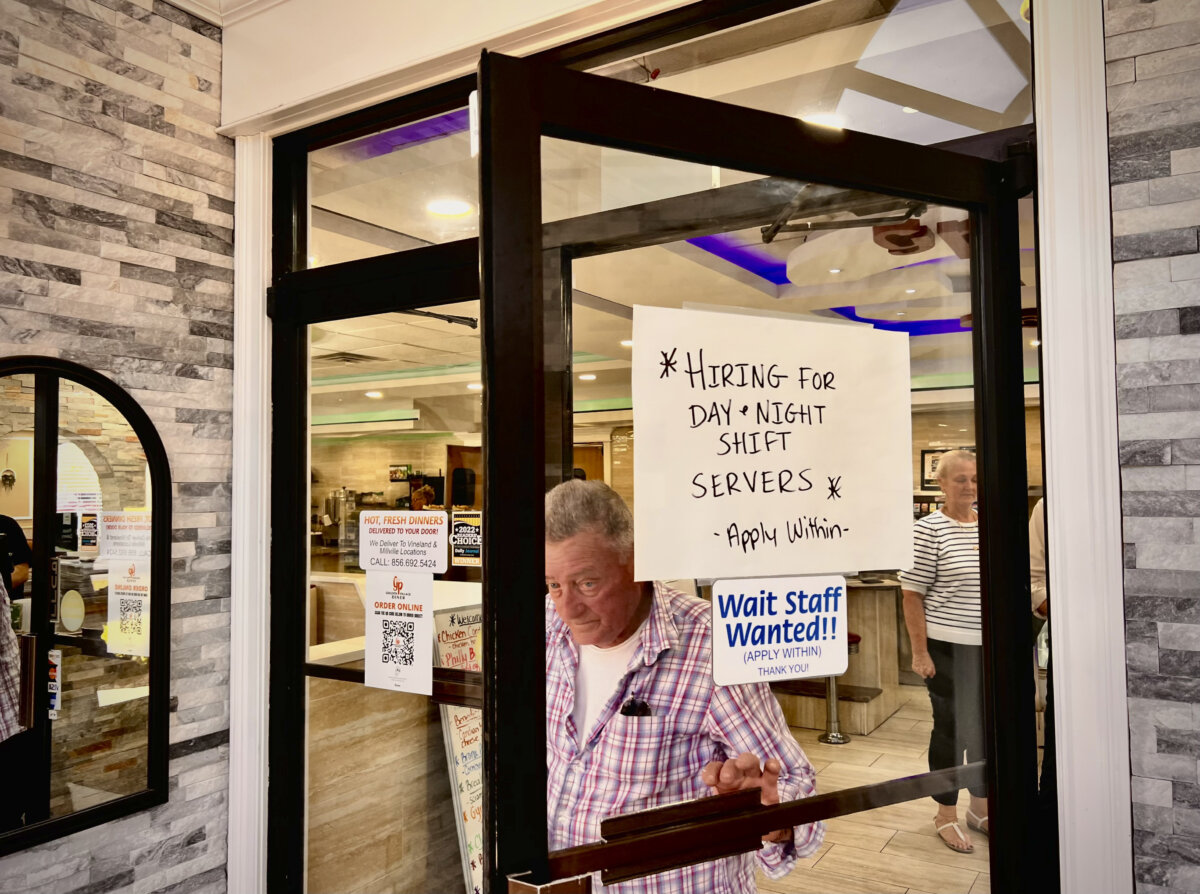
But while slowing layoffs and declining jobless claims have been positive signs, the futures market overwhelmingly expects the Federal Reserve to lower interest rates when monetary policymakers convene their two-day policy meeting next week.
Minutes from the October Federal Open Market Committee meeting reveal a divergence in views of where monetary policy is headed. Commentary from central bank officials also suggests different assessments of the U.S. economy.
“From late spring through June, the soft data, including anecdotes from business contacts, suggested the labor market was in a ‘no hire, no fire’ equilibrium,” Fed Board member Christopher Waller said in a speech last month. “Firms repeatedly said they were holding off on hiring for a variety of reasons.”
Waller, considered a top contender to replace Fed Chair Jerome Powell next year, supports a quarter-point rate cut to the benchmark federal funds rate.
Cleveland Fed President Beth Hammack has expressed skepticism over further rate cuts, warning of high inflation.
“I remain concerned about high inflation and believe policy should be leaning against it,” Hammack said at a Nov. 6 Economic Club of New York event.
The headline annual inflation rate presently sits at 3 percent. The Fed’s preferred inflation measure—the personal consumption expenditure price index—is at 2.7 percent.
But this may be the peak. The Cleveland Fed Inflation Nowcasting Model estimates the 12-month inflation rate will hover around this level in the October, November, and December consumer price index reports.
Speaking to reporters at the post-meeting press conference in October, Powell warned that a December rate cut was not guaranteed.
“In the Committee’s discussions at this meeting, there were strongly differing views about how to proceed in December,” the central bank chief said. “A further reduction in the policy rate at the December meeting is not a foregone conclusion—far from it. Policy is not on a preset course.”
The federal funds rate—a policy rate that influences business, household, and government borrowing costs—is currently in a target range of between 3.75 percent and 4 percent.
 Friends Read Free
Copy
Facebook
Tweet
Friends Read Free
Copy
Facebook
Tweet