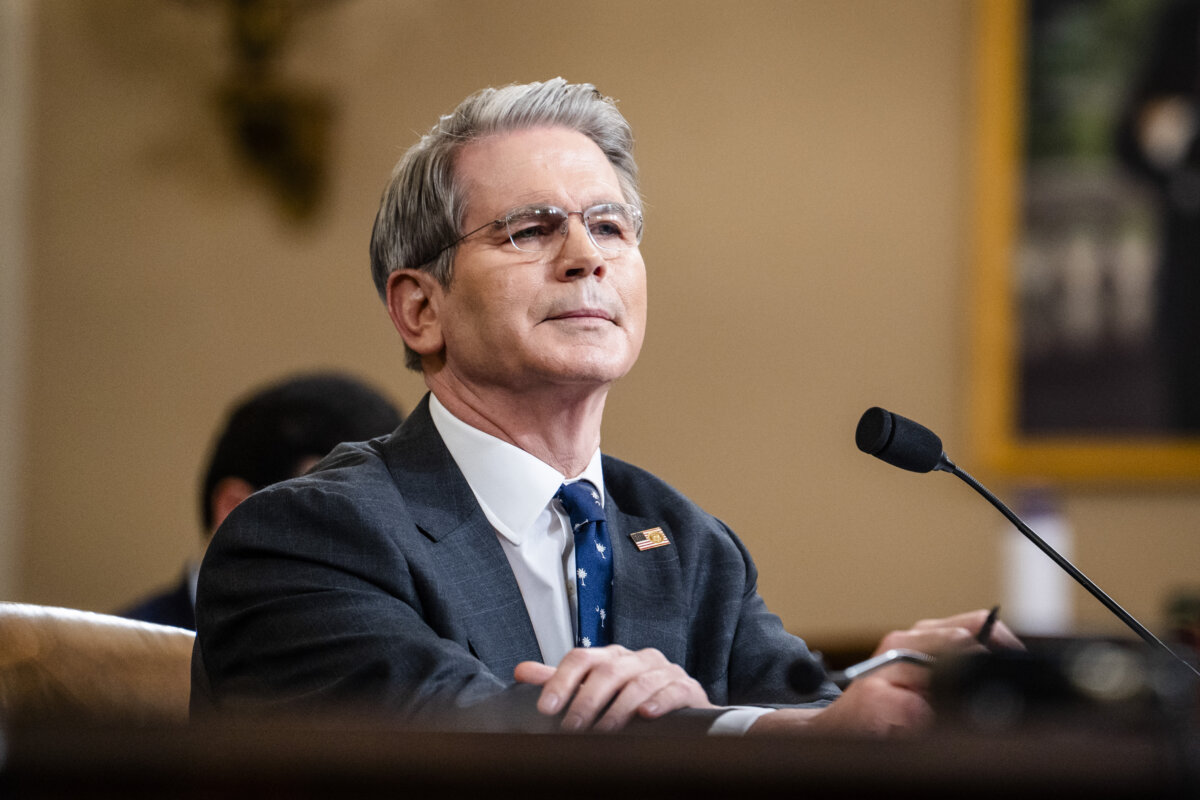

Treasury Secretary Scott Bessent said on Oct. 2 that the federal government would offer “substantial support” to American farmers as China refuses to buy soybeans, indicating that an announcement would come on Tuesday, Oct. 7.
Speaking with CNBC on Oct. 2, Bessent said farmers overwhelmingly voted for President Donald Trump in last year’s election and that the federal government has “got their backs.”
As the United States negotiates with China amid Washington and Beijing’s ongoing trade war, Chinese importers have not bought any U.S. soybeans from the autumn harvest, resulting in billions in lost sales for American farmers.
“It’s unfortunate that Chinese leadership has decided to use the American farmers, soybean farmers in particular, as a hostage or pawn in the trade negotiations,” Bessent said.
On Oct. 1, Trump said that soybeans would be a “major topic of discussion” when he meets with Chinese leader Xi Jinping in four weeks.
“The Soybean Farmers of our Country are being hurt because China is, for ‘negotiating’ reasons only, not buying,” Trump wrote on social media.
The president said last week that he would use tariff revenue to provide aid to American farmers, acknowledging that they were “going to be hurt until … the tariffs kick into their benefit.”
“We’re going to make sure that our farmers are in great shape, because we’re taking in a lot of money. Ultimately, the farmers are going to be making a fortune. But it’s a process—it has to kick in,” Trump said.
He reiterated that on Oct. 2, saying, “We’ve made so much money on Tariffs, that we are going to take a small portion of that money, and help our Farmers.”
China—the world’s biggest purchaser of soybeans—is now buying the crop from South America while negotiations over tariffs with the United States continue.
Trump’s retaliatory tariffs during his first term resulted in a $27 billion loss in U.S. agricultural exports from mid-2018 to the end of 2019, according to the Department of Agriculture. Soybeans accounted for nearly 71 percent of those losses, upward of $9.7 billion annually.
The CATO Institute noted that although some U.S. soybean exports to China recovered after both nations reached an agreement in 2020, “American farmers’ share of the Chinese market has not recovered to pre-trade war level” because Beijing turned to Brazil and other nations for soybeans.
Bessent told CNBC on Oct. 2 that since every recent U.S. trade deal has included investments in American farm products, “we’re going to see other countries substitute for China.”
He said a record harvest and limited storage opportunities are also affecting prices.
“On Tuesday, you’re going to see substantial support for the farmers, and we’re also going to be working with the Farm Credit Bureau to make sure that the farmers have what they need for next planting season,” Bessent said.
Bessent added that he thinks it will be very helpful for Trump and Xi to “be able to speak in person and set the framework for trade going forward.”
“I think with President Trump’s leadership and his relationship—the respect the party chair Xi has for him—that this round, which would be our fifth round of talks, should show a pretty big breakthrough,” Bessent said.
The first Trump administration offered a $23 billion bailout to American farmers to blunt the impact of Trump’s previous trade war with China. The president has not yet said how this year’s tariff revenue will be distributed to farmers, but confirmed he is speaking with Agriculture Secretary Brooke Rollins about “how to get money to the farmers.”
Some farmers have also said that the administration’s crackdown on illegal immigration—which impacted the agricultural and hospitality industries, among others—had led to major losses in workers, warning that more than half of their workforce was gone during a time when critical crops needed to be picked.
Trump said in late June that he was considering a “temporary pass” for farmers and hospitality business owners to potentially retain some illegal immigrant workers if they pay taxes and are not involved in crime.
 Friends Read Free
Copy
Facebook
Tweet
Friends Read Free
Copy
Facebook
Tweet