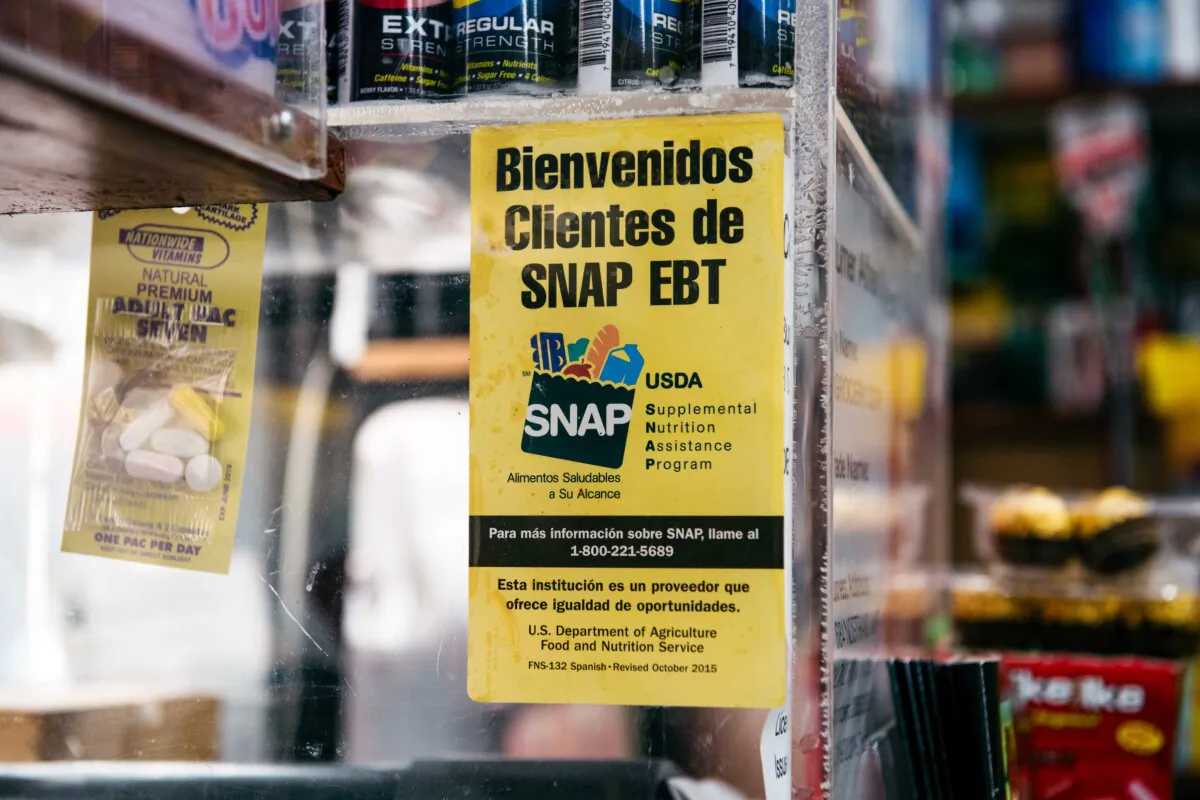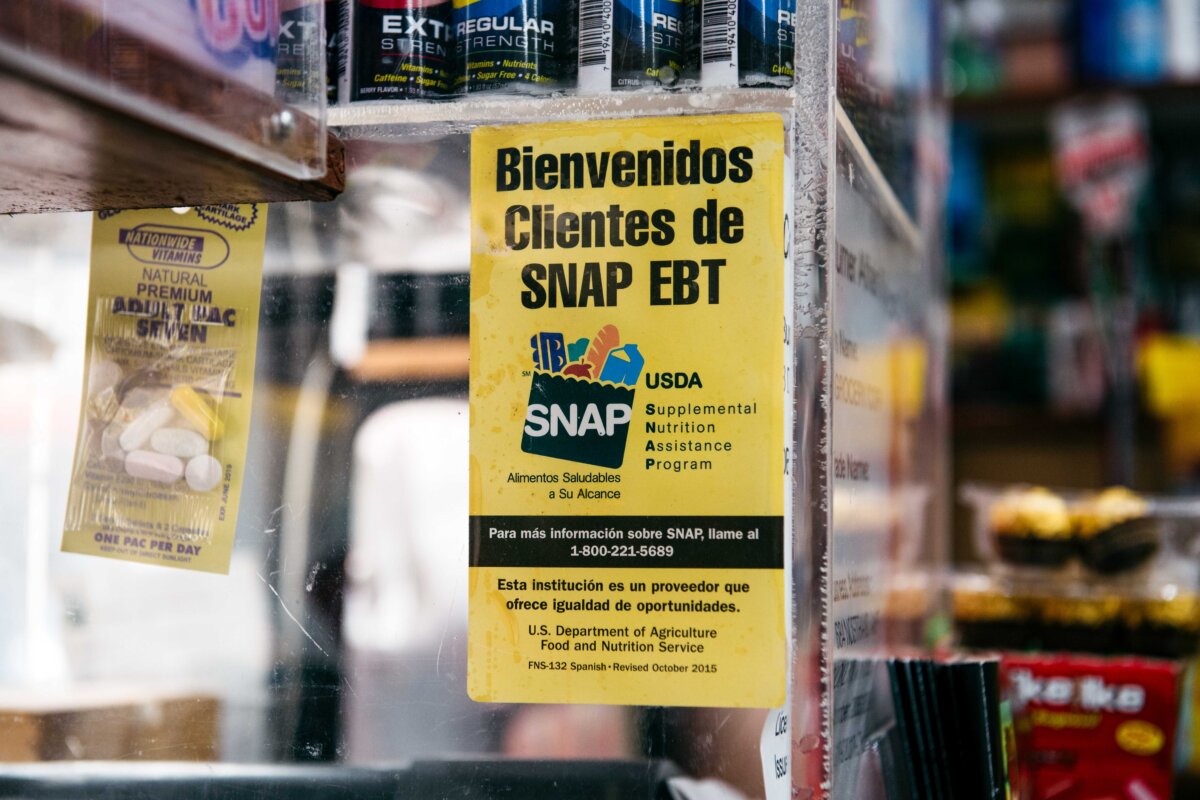

The U.S. Department of Agriculture’s (USDA’s) Food and Nutrition Service is proposing changes aimed at strengthening stocking requirements for retailers participating in the Supplemental Nutrition Assistance Program (SNAP), Agriculture Secretary Brooke Rollins announced on Sept. 24.
SNAP retailers are required to stock three food varieties from four staple food groups—dairy, grain, protein, and fruits and vegetables, the USDA said.
The proposed rule “increases variety requirements to seven per staple food category, more than doubling the food choices available to SNAP participants,” the agency said.
It also “closes loopholes that allow certain snack foods to count as staple foods, emphasizing the importance of healthy, whole food,” the agency said.
The measure simplifies the classification of foods, according to the USDA. In addition, the changes make standards easier for the Food and Nutrition Service to enforce and retailers to understand.
The USDA said the proposed changes would protect SNAP program participants and taxpayers by limiting fraud, abuse, and waste. The updates will also ensure SNAP families have access to healthier food options, in line with the Make America Healthy Again effort, the agency said.
“Low stocking requirements make SNAP more vulnerable to fraud and abuse, permitting retailers that aren’t genuinely in the business of selling food to cash in on taxpayer-funded benefits. With nearly 266,000 retailers redeeming $96 billion in SNAP benefits per year, no amount of fraud will be tolerated,” it said.
In a Sept. 25 post, convenience retail trade association NACS expressed concern that the new standard proposed by the USDA “may be challenging for small format SNAP retailers to implement in its current form.”
While NACS advocates for increasing nutritious options for SNAP beneficiaries, such changes must be workable and common sense for small retailers such as convenience stores, it said.
“For example,” NACS stated, “the proposal limits retailers from counting certain products as separate food varieties in the grains and dairy categories, making it difficult for small format stores to comply. NACS plans to advocate for changes that will allow more options for retailers and consumers.”
In the Sept. 24 USDA statement, Rollins said the proposed changes are necessary because the bar for stocking food as a SNAP retailer is “far too low” at present.
This allows retailers to game the system and leave Americans without enough healthy food options, Rollins said.
“Retailers participating in SNAP need to sell real food, plain and simple,” she said. “These common-sense changes are designed to minimize benefit trafficking and skimming, among other fraudulent activities, while making more nutritious foods available to families who rely on the program.”
President Donald Trump established the President’s Commission to Make America Healthy Again in February via an executive order.
The commission is charged with investigating the “root causes of America’s escalating health crisis,” including chronic illnesses during childhood, according to a White House fact sheet.
Earlier this month, the commission released its Make Our Children Healthy Again Strategy, outlining over 120 measures aimed at reversing the “failed policies that fueled America’s childhood chronic disease epidemic,” the Department of Health and Human Services (HHS) said in a Sept. 9 statement.
Nutrition is a key focus, with the strategy including improvements to the quality of food consumed by Americans.
“These guidelines will prioritize whole, healthy, and nutritious foods such as whole fat, dairy, fruits, vegetables, and meats, and suggest limiting highly processed foods and those high in sugar,” Rollins said.
Health Secretary Robert F. Kennedy Jr., who chairs the commission, said the Trump administration was mobilizing every part of the government to combat the childhood chronic disease epidemic facing America.
“This strategy represents the most sweeping reform agenda in modern history—realigning our food and health systems, driving education, and unleashing science to protect America’s children and families,” he said.
Meanwhile, USDA has so far granted approval to 12 states to exclude certain unhealthy foods from being bought via SNAP benefits by beneficiaries, the agency said in its Sept. 24 statement.
Excluded foods include soda, candies, prepared desserts, soft drinks, and fruit or vegetable drinks containing less than 50 percent natural juice.
The 12 states are Nebraska, Iowa, Indiana, West Virginia, Florida, Colorado, Louisiana, Oklahoma, Texas, Arkansas, Idaho, and Utah.
 Friends Read Free
Copy
Facebook
Tweet
Friends Read Free
Copy
Facebook
Tweet