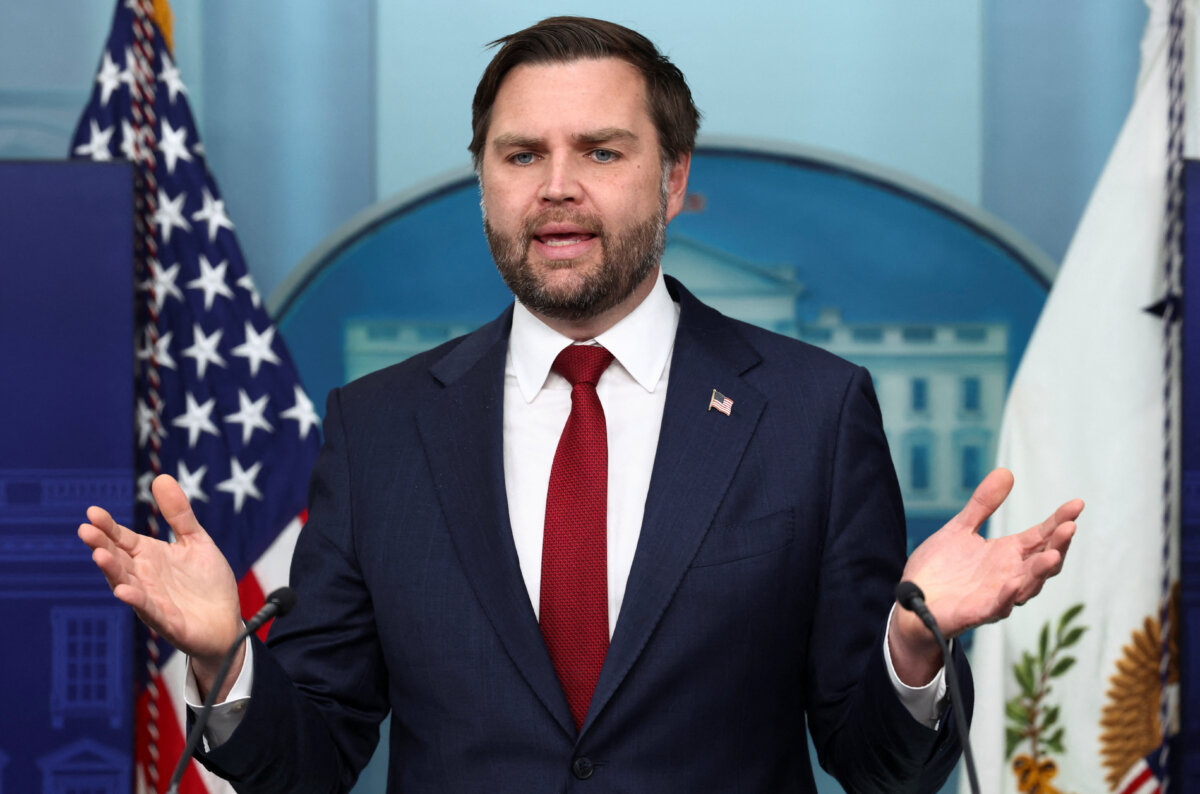

U.S. Vice President JD Vance said on Feb. 17, following mediated talks between Washington and Tehran in Geneva, that Iran was ignoring Washington’s red lines, primarily those related to its nuclear program, which has been a bone of contention in U.S.–Iranian relations for years.
“In some ways, it went well; they agreed to meet afterwards,” Vance said during a Fox News interview. “But in other ways, it was very clear that the president has set some red lines that the Iranians are not yet willing to actually acknowledge and work through.”
He said that Washington’s primary goal is to stop Iran from becoming a nuclear power, which he said would be a disaster for Americans.
“The United States has certain red lines,” Vance said. “Our primary interest here is we don’t want Iran to get a nuclear weapon. We don’t want nuclear proliferation. If Iran gets a nuclear weapon, there are a lot of other regimes, some friendly, some not so friendly, who would get nuclear weapons after them.”
The vice president noted that Washington has a “very powerful military” and that President Donald Trump has shown willingness to use it in the past. He also said that the United States’ preference was for the issues to be resolved through “diplomatic negotiation,” calling the American negotiating team of U.S. special envoy Steve Witkoff and Trump’s son-in-law Jared Kushner “remarkable.”
“The president reserves the ability to say when he thinks that diplomacy has reached its natural end,” he said. “We hope we don’t get to that point, but if we do, that will be the president’s call.”
Vance’s comments followed remarks from Iranian Foreign Minister Abbas Araghchi, who was present at the talks, saying that some “guiding principles” had been established during the negotiations.
Araghchi said that the two countries “were able to reach a general understanding on a set of guiding principles” and that they would now proceed based on those principles, according to a translation of his Feb. 17 post on Telegram.
“This does not mean that we can reach an agreement quickly, but at least the process has begun,” Araghchi said. “We hope this can be completed as soon as possible and are prepared to devote sufficient time to it. However, when it comes to drafting the text, the work becomes more detailed and complex.”
He also said that the progress made at this meeting was “good” compared with the last.
Araghchi said that Iran remained “fully prepared to defend itself against any threat or aggressive action” and that the consequences of such action “will not be limited to Iran’s borders.”
The mediated talks were conducted in the Omani Embassy in Geneva, and the Arab state’s representatives met separately with teams from Iran and the United States.
Oman hosted the first round of indirect talks between Washington and Tehran in Muscat, Oman, earlier this month, which concluded without an agreement.
Following the talks, military escalation in the Middle East continued. Iran’s semi-official Fars News Agency reported that Iran and Russia would be conducting joint naval drills in the Sea of Oman and the northern Indian Ocean on Feb. 18.
Iranian Navy Rear Adm. Hassan Maqsoudlou, a spokesperson for the drill, said the primary objective is to enhance maritime security and promote sustainable navigation cooperation, according to Fars.
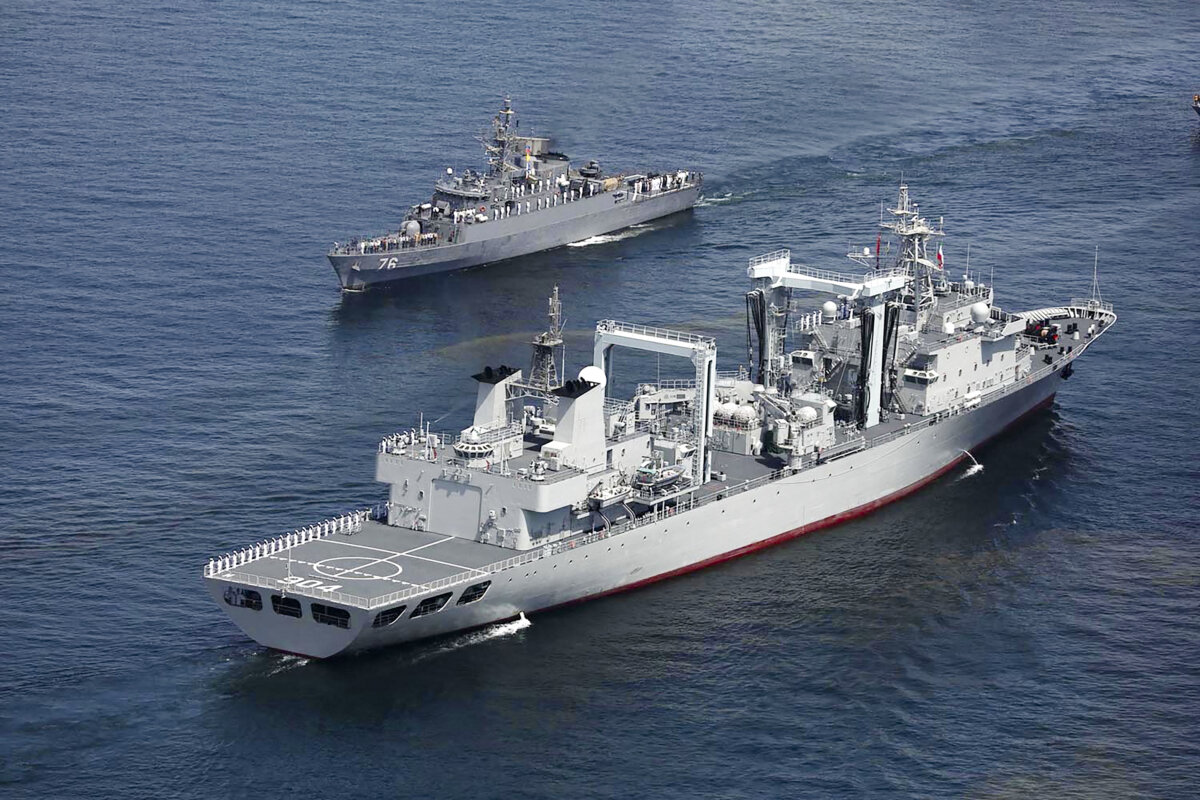
The drills followed reports from Feb. 17 that parts of the vital oil export route, the Strait of Hormuz, would close for a few hours because of “security precautions” while Iran’s elite Islamic Revolutionary Guard Corps conduct military drills.
Iran has in the past threatened to close the strait to commercial shipping if it is attacked, a move that would choke off a fifth of global oil flows and drive up prices.
Another drill was held on Feb. 16, which the state-affiliated Islamic Republic News Agency said was designed to test Iran’s intelligence and operational capabilities in the Strait of Hormuz, the Persian Gulf, and the Gulf of Oman.
This was preceded by Trump’s ordering an additional aircraft carrier to the region.
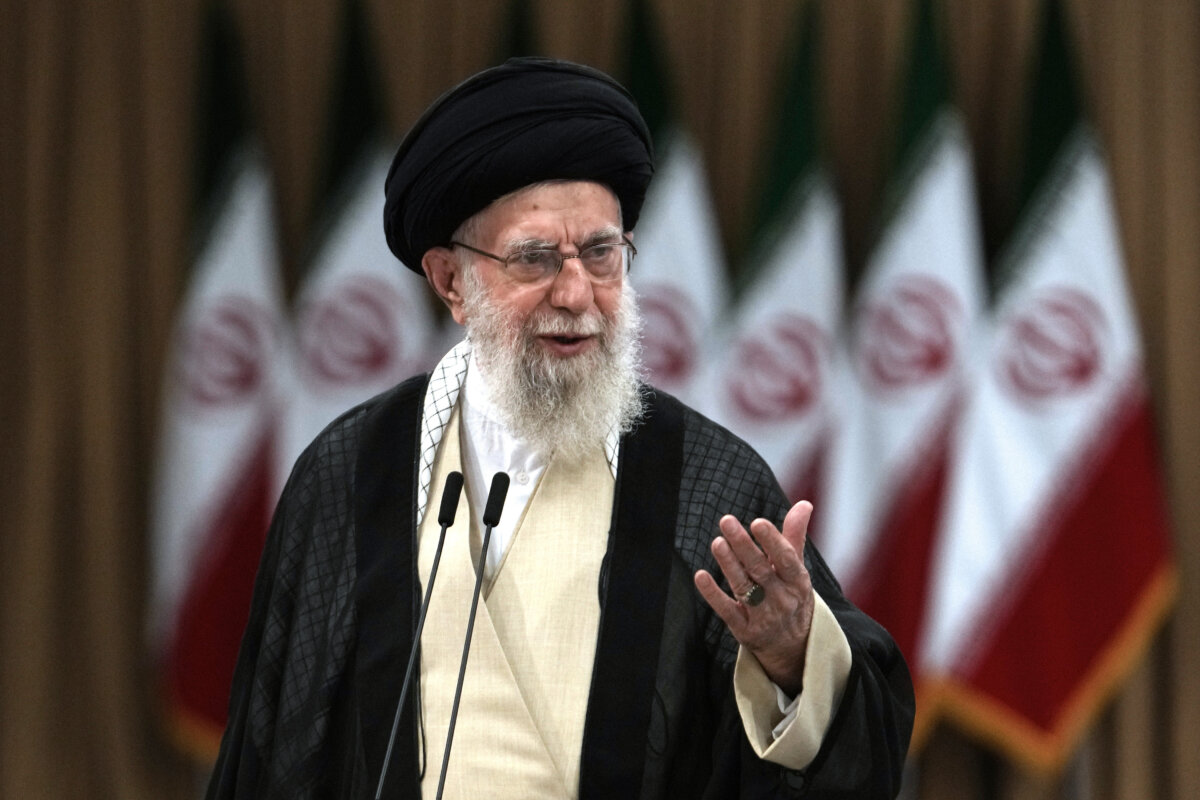
The increased U.S. Navy presence in the region prompted Iranian leader Ali Khamenei to address the issue on social media.
“The Americans constantly say that they’ve sent a warship toward Iran. Of course, a warship is a dangerous piece of military hardware,” he wrote in a Feb. 17 post on X. “However, more dangerous than that warship is the weapon that can send that warship to the bottom of the sea.”
 Friends Read Free
Copy
Facebook
Tweet
Friends Read Free
Copy
Facebook
Tweet