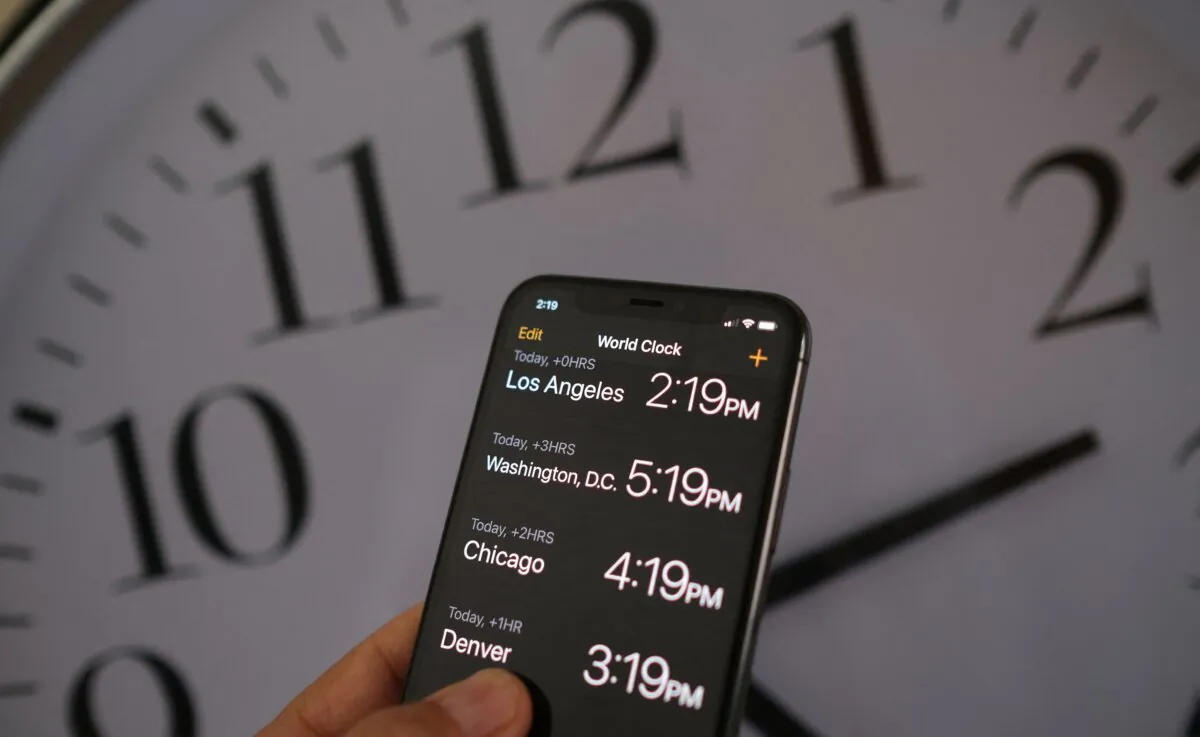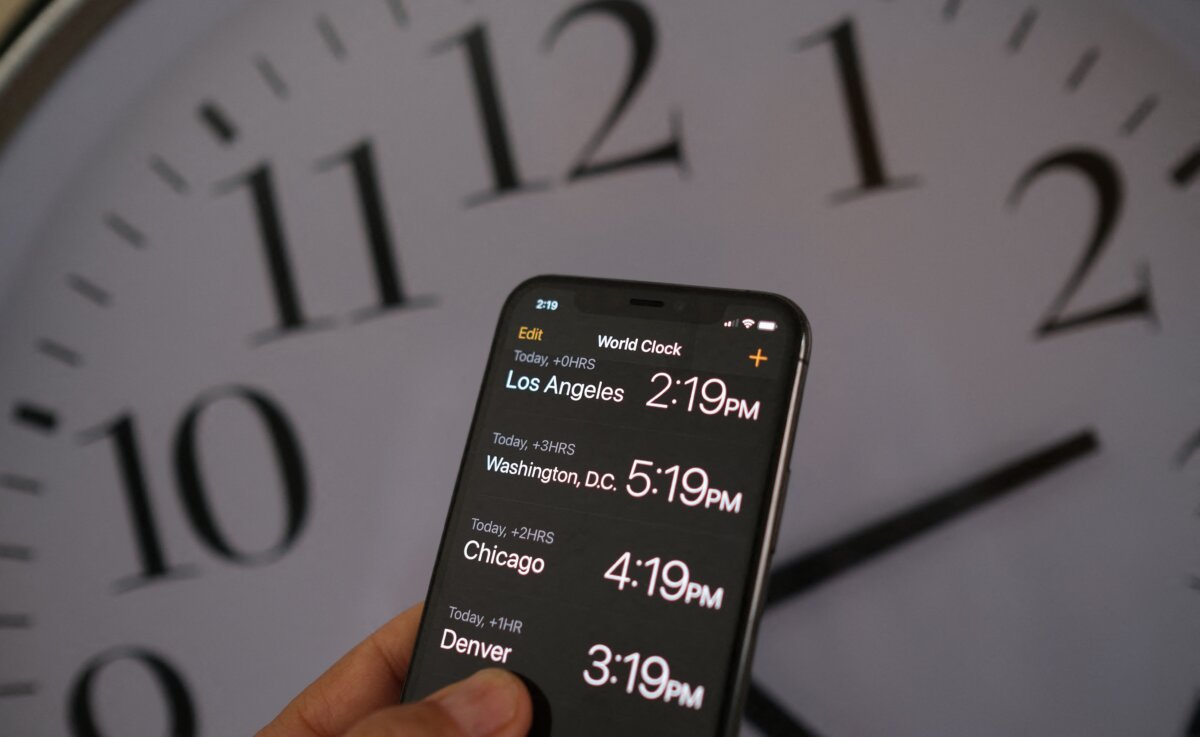

The House of Representatives will vote on the Sunshine Protection Act this week to make Daylight Saving Time the permanent year-round time.
Lawmakers have introduced bills to lock the clock on multiple occasions, but no effort has successfully shepherded legislation over the finish line.
The legislation advanced out of the House Energy and Commerce Committee with overwhelming support by a 48–1 vote in May.
Here’s what we know about the effort to end the twice-yearly clock change.
What the Sunshine Protection Act Would Do
The legislation was created to end the temporary period for Daylight Saving Time, which was enacted under Section 3 of the Uniform Time Act of 1966, effectively repealing the practice.
This means there would be no more “spring forward” or “fall back.” This particular bill would keep the clocks on the “spring forward” time year-round, which most of the nation is currently in.
States would still be allowed to opt out and remain on standard time year-round, however.
This would mean later sunsets in the winter, but also later sunrises, which has been of some concern to those opposing the change.
While this is a House bill, the Senate unanimously passed a similar piece of legislation in 2022, but the House never acted on it.
President Donald Trump has voiced his support for ending the clock switching, saying earlier this year that it was “time that people can stop worrying about the ‘Clock,’ not to mention all of the work and money that is spent on this ridiculous, twice-yearly production.”
If the legislation is passed, the Senate would need to consider it again.
Rep. Vern Buchanan (R-Fla.), the bill’s sponsor, said: “My Sunshine Protection Act will bring us one step closer to ending the outdated and unpopular practice of changing our clocks twice a year.
“Floridians and Americans across the country are tired of the biannual time change, and the evidence is clear that permanent daylight saving time can improve public health, reduce traffic accidents, lower crime and encourage more outdoor activity.”
Buchanan has introduced the Sunshine Protection Act in each Congress since 2018.
How the Clock Change Started
First adopted nationally during World War I to save energy, the practice ended, but was reintroduced during World War II.
However, the patchwork observance of the clock changes after the war caused confusion for industries like transportation and broadcasting.
A few years later, Congress passed the Uniform Time Act in 1966, establishing nationwide rules for Daylight Saving Time. That included when it would begin and end.
Initially observed from early February to late September, the 1966 legislation set it to begin on the last Sunday in April and end on the last Sunday in October.
However, Congress enacted earlier start dates citing an “energy crisis” on several occasions, including in 1974, when Daylight Saving Time began on Jan. 6 and in 1975, when it began on Feb. 23.
A 1986 law shifted the start date to the first Sunday in April, but the Energy Policy Act of 2005 changed the dates once again, so they are currently observed with Daylight Saving Time starting on the second Sunday in March and ending on the first Sunday in November.
States can opt out of changing their times entirely, but they cannot adopt permanent Daylight Saving Time without congressional approval.
Currently, Arizona and Hawaii both opt out of the biannual clock change.
American Samoa, Guam, Puerto Rico, and the Virgin Islands also do not observe Daylight Saving Time, but the Navajo Indian Reservation—which is partially in Arizona—does.
Controversy Over the Change
There has been bipartisan support for ending the clock changes. Supporters cite a few concerns, including sleep disruption, increased workplace injuries following time changes, and increased traffic accidents after the spring change.
Additionally, more evening daylight is thought to support more shopping, recreation, tourism, and time for sports.
Rep. Frank Pallone (D-N.J.) said permanent daylight saving time is “better for safety and will boost New Jersey’s tourism industry. Let’s stop changing the clocks twice a year.”
However, Sen. Tom Cotton (R-Ark.) believes it’s a bad idea, because it would result in much later winter sunrises, forcing children to go to school in the dark for part of the year.
The American Academy of Sleep Medicine has taken up the position that “permanent standard time is the optimal choice for health and safety.”
According to the group, “the United States should eliminate seasonal time changes in favor of permanent standard time (ST), which aligns best with human circadian biology.”
The academy says that evidence supports the benefits of standard time.
Practicing sleep medicine physician Dr. Karin Johnson also testified, citing evidence of the negative health effects of changing the clocks, including an increased risk of chronic disease, depression, and suicide.
“The sun is one of the most powerful drivers of health and well-being, but the timing of sunlight is what’s critically important,” Johnson said.
Johnson strongly advocates for permanent standard time, saying that daylight saving time would deprive Americans of critical morning light and that although the spring clock change is bad, “permanent daylight saving time is worse.”
“Permanent daylight saving time does not make days longer, nor is it the reason why people feel better in the summer,” Johnson said.
“Instead, permanent daylight saving time is a hidden mandate to wake Americans up an hour earlier, rather than their alarm clocks or the sun.
“If we called it the ‘Go to Work an Hour Earlier Act,’ rather than the ‘Sunshine Protection Act,’ no one would be voting for it.”
Aldgra Fredly contributed to this report.
 Friends Read Free
Copy
Facebook
Tweet
Friends Read Free
Copy
Facebook
Tweet