
News Analysis
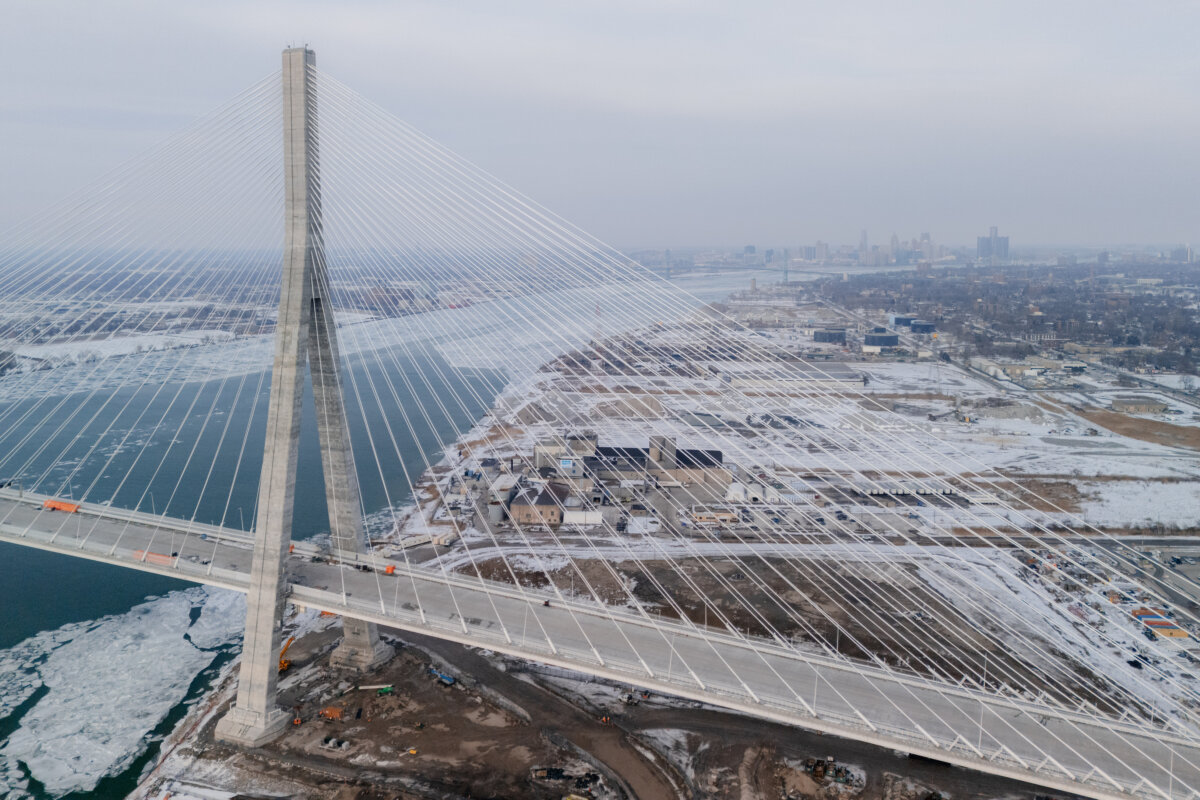
The Gordie Howe International Bridge is set to open on July 27, but under a different arrangement than the one Canada and the United States initially agreed to.
After Prime Minister Mark Carney confirmed in June that the opening of the bridge had been delayed at the request of the United States, the two countries agreed on July 10 to open the bridge at the end of the month under a new agreement. U.S. President Donald Trump said he had been able to secure a “much better deal for America.”
The Conservative Party has raised questions about the inner details of the agreement between Ottawa and Washington, what new authority the United States has over toll rates, how the toll revenues and profits will be divided, and what Canada received in return for the new arrangement.
It also remains to be seen if the new bridge deal will impact trade talks between Ottawa and Washington, which are ongoing after the Canada–United States–Mexico Agreement (CUSMA) was not renewed on July 1.
Here’s an overview of what the new agreement entails, and what questions still remain.
Modified Agreement
When the original agreement on the bridge was reached in 2012, it stipulated that 100 percent of the tolls collected from bridge users would go to the Canadian government, given that it had agreed to front the full construction costs for the bridge. After Canada had fully recouped the costs following a period of 36 years, half of the toll revenue would go to the state of Michigan.
Trump first threatened to delay the opening of the bridge connecting the cities of Windsor and Detroit in February, declaring on Truth Social that the United States should be compensated for the agreement signed by former Prime Minister Justin Trudeau and U.S. President Barack Obama.
Shortly after, Carney said he explained to Trump over a phone call that Canada paid for the construction of the bridge and that ownership is shared between Canada and the state of Michigan.
Months went by without Trump mentioning the bridge again, and Carney said on June 9 that the $6.4 billion project would be opening “by the end of the week.” But days later, Carney said the United States had requested that the bridge’s opening be delayed as they worked through “what issues they have.”
The two countries came to an agreement on July 10 that the bridge would open on July 27, with Canada’s Infrastructure Department announcing that a deal was reached on “toll governance and transparency, as well as investments in the region.”
According to government sources speaking with media outlets, under the new arrangement, Canada will receive just 50 percent of the bridge’s toll profits over the first 15 years, with the other 50 percent going toward a U.S-run economic development fund for the region. The Windsor-Detroit Bridge Authority will be required to consult the United States on any toll changes greater than 10 percent, or if it seeks to lower tolls below those of comparable regional averages.
Carney told reporters on July 12 that he was “happy” the bridge will soon open, and that it will benefit the Canadian economy. He also said the sharing of revenues with Canada will happen on a “net” basis, meaning that “we are sharing after Canada is paid back” for the bridge’s construction.
Carney also said the money that will be invested into the 15-year economic development fund will still end up benefitting Canada, and it will be “invested back in economic development in the region … which is going to help drive more traffic” to the Canadian side of the border.
“In the initial years of this bridge, traffic volumes are going to build up, so there’s not going to be a lot of net [revenue] to split. So look, it’s a good deal for Canada,” he said.
U.S. Ambassador to Canada Pete Hoekstra has defended his country’s move to revisit the deal, saying on the podcast “The Food Professor,” hosted by academic Sylvain Charlebois, that the bridge is drawing revenue away from the existing, privately owned Ambassador Bridge rather than generating entirely new revenue. He also said the project has been “significantly over budget” and delayed, changing the business model under which it was originally built and thereby justifying a review of the deal.
Questions Remain
The Conservative Party had a more pessimistic view of the bridge deal than the Liberals. A July 12 letter from six Conservative MPs to Canada-U.S. Trade Minister Dominic LeBlanc read that Carney made a “terrible deal for Canada,” given that “Canada paid 100% of the cost of building the bridge” in exchange for a promise that it would receive all toll revenue until the cost was repaid.
The MPs also asked in their letter what authority the United States has gained over toll rates, if the deal changed the bridge’s ownership or governance, if any bridge revenue will be placed into the economic development fund before Canadian taxpayers recoup the project’s full cost, and what Canada received in return for signing the deal, “beyond American agreement not to obstruct the opening of a bridge that Canada alone paid to build?”
Additionally, it is not known how the latest agreement will impact ongoing negotiations around CUSMA, which Canada and Mexico want to renew for another 16 years. With the United States wanting to work out issues it has with the agreement, CUSMA will remain in force with annual reviews for another 10 years and could be extended at any time until then, or a country could withdraw from it with six months’ notice.
The Canadian government has made several economic concessions to the United States since Trump became president in early 2025 and imposed a series of tariffs on Canada. Ottawa had imposed duties on a long list of U.S. goods in March 2025, such as oranges, alcohol, clothing, motorcycles, steel, aluminum, and automobiles in response to U.S. tariffs, but they were later fully removed or adjusted.
When Trump paused bilateral talks with Canada in June 2025 over its 3 percent Digital Services Tax on streaming platforms, Canada announced it would repeal the tax shortly after.
In May 2026, Hoekstra also called for Ottawa to repeal its law taxing major television streaming platforms, after the Canadian Radio-Television and Telecommunications Commission announced plans to triple its tax. Soon after, Ottawa directed the broadcasting regulator to review its decision to triple the tax.
The Canadian Press contributed to this report.
 Friends Read Free
Copy
Facebook
Tweet
Friends Read Free
Copy
Facebook
Tweet