

WASHINGTON—The White House on June 3 asked Congress to approve $9.4 billion in spending cuts that would primarily affect U.S. foreign aid and federally-funded media including PBS and NPR.
The rescissions package proposed by President Donald Trump would codify several cuts put forward by the Department of Government Efficiency (DOGE). It would mark the first time Congress has taken action on DOGE proposals.
A rescission is a retraction of funding that was previously delegated by Congress to be spent for a particular program or policy. The Impoundment Control Act of 1974 requires that the president submit such requests to Congress. The legislature then has 45 days to approve the cuts—or not—through a simple majority vote.
A total of $8.3 billion in the package’s cuts would come from the U.S. Agency for International Development (USAID) and the African Development Foundation. The remaining cuts, approximately $1.1 billion, would be rescinded from the Corporation for Public Broadcasting, which oversees NPR and PBS.
Several Republicans have already spoken positively on the proposed cuts and encouraged a quick vote.
Rep. Dan Meuser (R-Pa.) was among them.
“These packages will be a key step toward codifying President Trump’s agenda and delivering lasting spending reductions in government. With nearly $7 trillion in annual federal spending, we need to prioritize the ‘must-haves’ over the ‘nice-to-haves,’ to address our enormous national debt,” Meuser said in a post on social media platform X.
In a post on X, House Speaker Mike Johnson (R-La.) announced that the bill would be brought to the floor next week with leadership’s support.
“Now that this wasteful spending by the federal government has been identified by DOGE, quantified by the Administration, and sent to Congress, House Republicans will fulfill our mandate and continue codifying into law a more efficient federal government. This is exactly what the American people deserve,” Johnson wrote.
Johnson said he expects the cuts to be the first of many considered by the House Republican majority, including both additional rescissions packages and appropriations bills in the future.
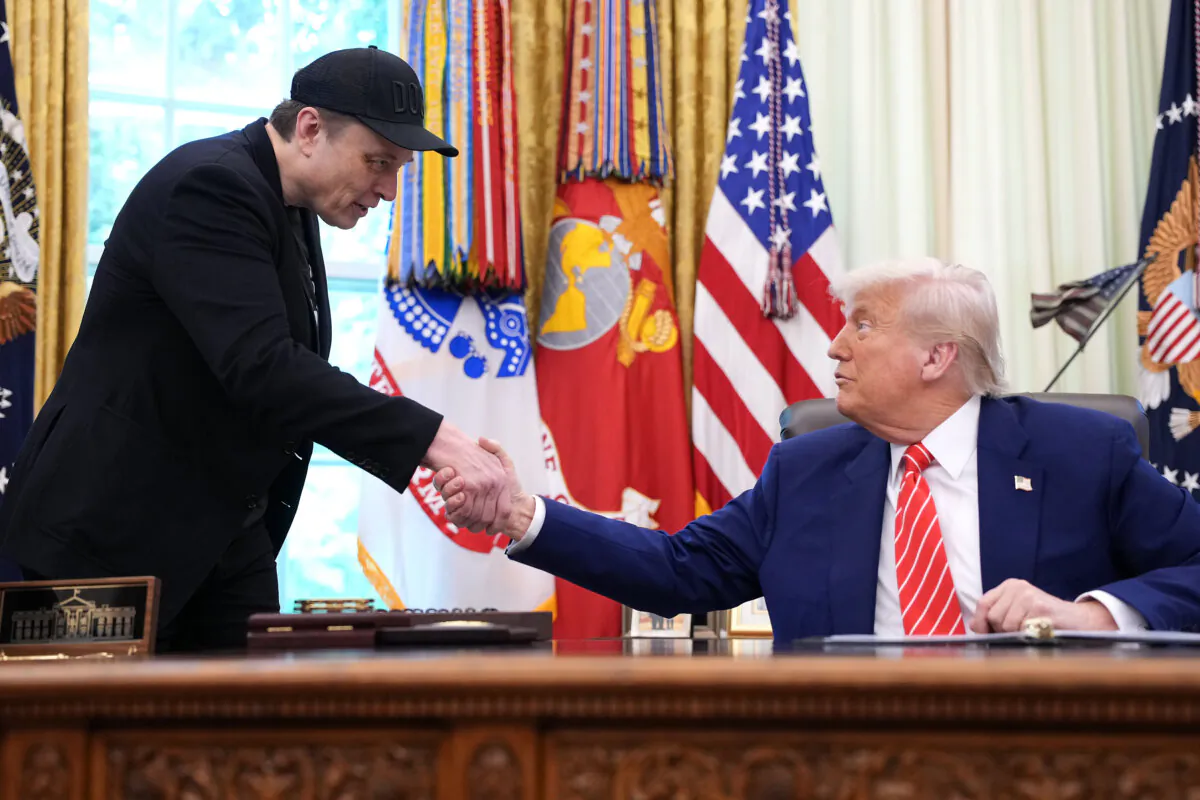
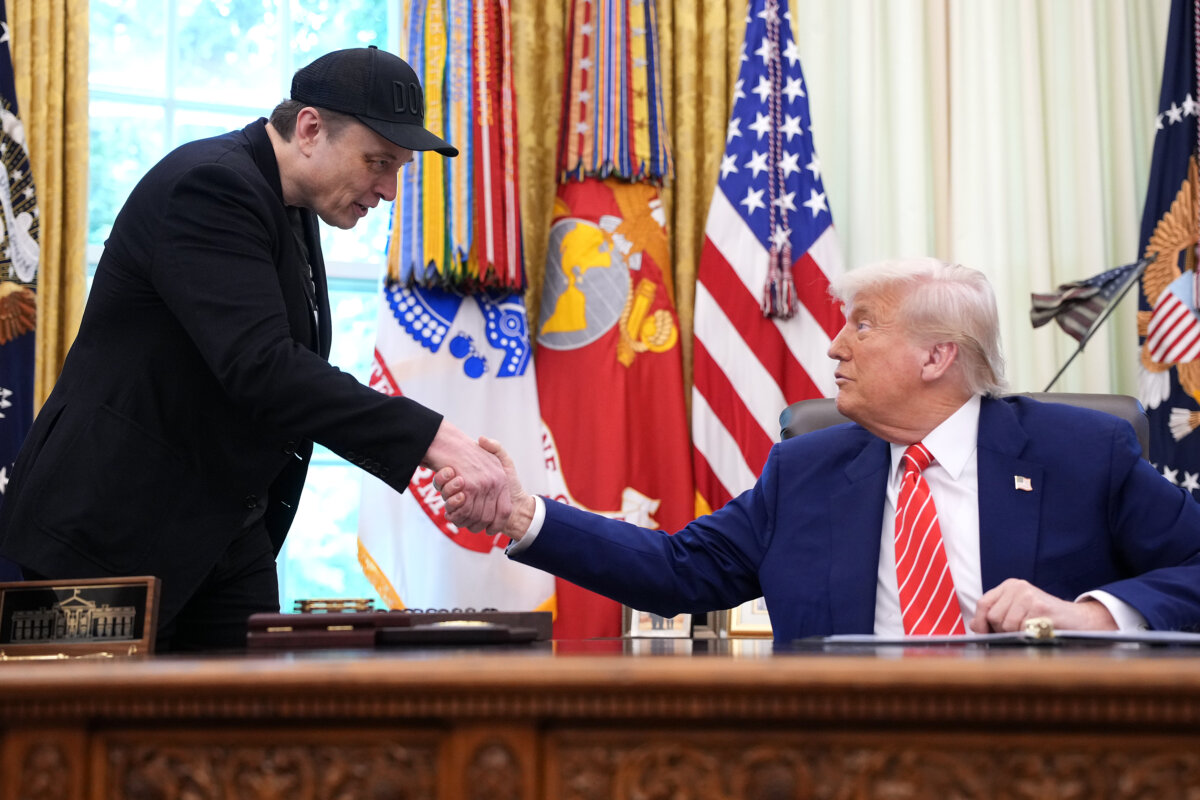
The White House request comes after a split between former DOGE chief Elon Musk and Trump over the One Big Beautiful Bill Act. Musk, and other critics, have argued that the bill would be bad for the deficit and doesn’t go far enough in instituting spending cuts.
If it’s passed by the House, the package will then go to the Senate. Unlike many bills in the upper chamber, it would need only a simple majority to pass.
Sen. Josh Hawley (R-Mo.) told The Epoch Times ahead of the package’s release that he wasn’t sure whether the cuts would face hurdles to passage in the upper chamber.
Sen. Thom Tillis (R-N.C.), often pegged as one of the Republican conference’s more moderate senators, expressed cautious support for some elements of the package.
“I haven’t seen the USAID rescissions to know exactly where they are, because … I don’t know what’s in the package to know what they’re exactly implementing rescissions on,” Tillis told The Epoch Times.
He indicated he is open to the proposed public broadcasting cuts, particularly referencing NPR.
“I have no concern with [NPR rescissions],” Tillis said. “I understand from my staff, it’s only about 1 percent of their funding today. I haven’t heard a lot of people reporting that consistently. But if, in fact, that’s the case, it seems like they should be able to manage that.
“And if that’s the President’s priority, we should move forward with it.”
However, most of the proposed cuts would affect USAID and foreign aid initiatives.
About $2.24 million of the cuts would affect programs intended to promote LGBT programs in the Caribbean, the Western Balkans, Uganda, and elsewhere.
Several environmental policy items are also included: $5 million for “green transportation and logistics,” $500,000 for electric buses in Rwanda, $6 million for ”Net Zero Cities“ in Mexico, $2.5 million to teach young children how to make environmentally friendly “reproductive health” decisions, and $614,700 for climate adaptations such as growing coral reefs in the Caribbean.
Several other six-figure budget items are also included: $1 million for voter ID in Haiti, $4 million for “legume systems research,” $3 million for Iraqi Sesame Street, $4 million for “sedentary migrants” in Colombia, $6 million for supporting the media organizations and civic life of Palestinians, and $1.2 million for the “Afrobarometer public opinion survey.”
The White House also requested the rescission of about $9 million in funding from the President’s Emergency Plan for AIDS Relief.
That includes $3 million for circumcisions and contraceptive measures in Zambia; $5.1 million for strengthening LGBT movements globally; and $833,000 to assist transgender people, sex workers, clients, and “sexual networks” in Nepal.
 Friends Read Free
Copy
Facebook
Tweet
Friends Read Free
Copy
Facebook
Tweet