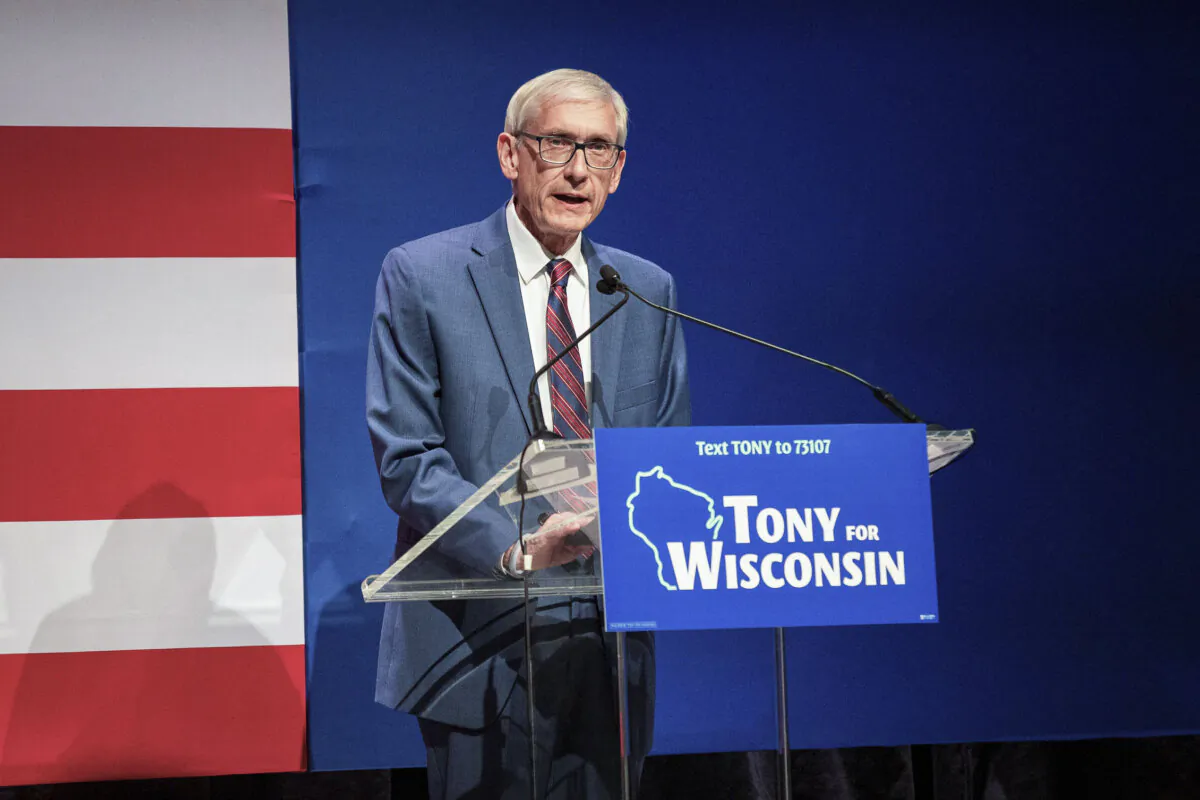

Wisconsin Gov. Tony Evers announced on Dec. 5 the direction of $10 million in pandemic-era funds to a grant program to help schools, police, local governments, and community groups prevent crime and violence across the state.
The money will be distributed through the Wisconsin Office of Violence Prevention, which Evers created earlier this year after a shooting at Abundant Life Christian School in Madison that killed two people and injured six others last December. The office is part of his “Year of the Kid” effort to focus state policy on children’s safety and well-being.
The Democratic governor said the money will back “commonsense and evidence-based solutions” to address what he called cycles of violence and trauma in communities across Wisconsin and to keep guns out of the hands of people who are a danger to themselves or others.
The Office of Violence Prevention works with state and local agencies, including law enforcement, supporting local intervention programs, running public education campaigns, and recommending policy changes. It will also run the new grant program, which is open to school districts, law enforcement agencies, domestic violence organizations, firearm retailers, nonprofits, and local and tribal governments.
Eligible projects include suicide prevention and safe firearm storage education, hospital- and community-based violence intervention programs, criminal justice initiatives, domestic violence prevention work, and school-based safety programs.
The state-level move comes as President Donald Trump’s administration has led federal crackdowns on crime in Democratic-run cities. In recent months, his administration launched large-scale immigration and crime operations in cities like New Orleans and Minneapolis and backed a multi-agency surge in and around Chicago known as Operation Midway Blitz.
Evers, by contrast, is emphasizing grants, prevention programs, and gun policy changes that need buy-in from the Republican-controlled legislature.
State Republican leaders have been wary of the Democratic governor’s approach, in particular to gun violence.
When Evers created the Office of Violence Prevention a month after the Abundant Life Christian School shooting, Assembly Speaker Robin Vos called the plan “not well thought out” and said it amounted to “a whole bunch of touchy feely bureaucrats that are going to go around wasting time, wasting money, and certainly not putting the effort where it’s deserved.”
“You know what the most effective violence prevention office is? The police,” he said.
Republicans have in the past rejected a series of gun measures backed by Evers, including universal background checks and a “red flag” law that would let judges temporarily take guns from people found to be a risk to themselves or others. Democrats have reintroduced those and more than two dozen other gun safety bills over the past six years, while GOP lawmakers have pushed proposals to expand access to firearms, such as allowing some guns on school grounds and in churches on private school property, which Evers vetoed.
Amanda Powers, director of the Office of Violence Prevention, said the $10 million will support “critical violence and gun violence prevention efforts in communities across Wisconsin” and that the office hopes to see a broad range of applicants who can make meaningful change over the next year.
The grant announcement builds on more than $100 million in pandemic-era American Rescue Plan Act funds that Evers has already directed to community safety and victim services. Those earlier investments included violence prevention grants, support for victim service providers facing federal cuts, money for Milwaukee’s violence-prevention office, statewide law enforcement grants, and funding to help reduce criminal court backlogs.
The governor’s office said the new program is a response to rising gun violence and record domestic violence deaths. According to the release, the rate of gun deaths in Wisconsin increased 54 percent between 2014 and 2023.
State officials say those trends make it more urgent to pair mental and behavioral health services, victim support, and local prevention work with targeted investments like the new grants to reduce violence and improve community safety.
The Associated Press contributed to this report.
 Friends Read Free
Copy
Facebook
Tweet
Friends Read Free
Copy
Facebook
Tweet