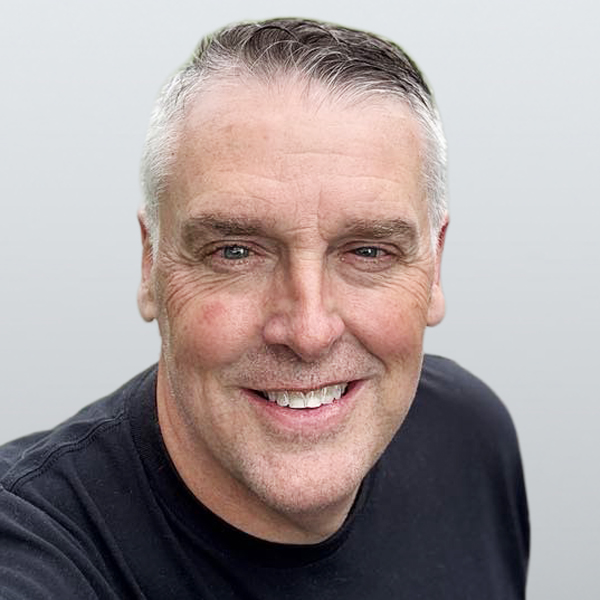
BELLE PLAINE, Iowa—Flying on a brisk morning 17,500 feet above western Iowa on the way home from a campaign stop in Sioux City, Zach Lahn faced an unexpected crisis.
The cabin pressure in his single engine Piper Meridian dropped, the air thinned, and a campaign staffer in the passenger seat began to feel dizzy.
Lahn, an entrepreneur and regenerative farmer who is one of five candidates running in a crowded Republican gubernatorial primary, took action and guided the airplane down for an emergency landing.
“He got a chance to see me truly fly that plane,” Lahn said, looking at his campaign staffer, Carter, at the kitchen table of Lahn’s family farm outside of Belle Plaine hours after the flight.
Lahn has criss-crossed his native state for much of the last six months.
He is one of five Iowa Republicans vying for the party’s nomination in the state’s gubernatorial race. He is joined by Adam Steen, former Iowa Department of Administrative Services director; Eddie Andrews, a state representative; Randy Feenstra, a U.S. representative; and Brad Sherman, a pastor.
The winner will face Iowa Auditor Rob Sand, a Democrat, in the general election.
Gov. Kim Reynolds, the Republican incumbent who has held the post since 2017, is not seeking reelection.
Lahn told The Epoch Times that his campaign centers around what he calls four key systemic issues. One is addressing the volume of young people who are leaving the state after graduation. Another is preserving and rebuilding family farms.
Lahn is also determined to pull Iowa out of the nation’s bottom half in education, and tackle what he calls the state’s cancer epidemic.
On the campaign trail, Lahn talks about how big agriculture and chemical manufacturers are attempting to shape state and federal policies to shield themselves from liability.
He rails against efforts tucked into state bills and farm legislation to provide blanket protection for glyphosate and other chemicals.

Over the last decade, Lahn stated, the top agriculture companies have made around $150 billion in profits while spending about $1.5 billion lobbying Congress.
Over the same stretch of time, hundreds of thousands of family farms have disappeared, swallowed into large operations or investment portfolios, he said.
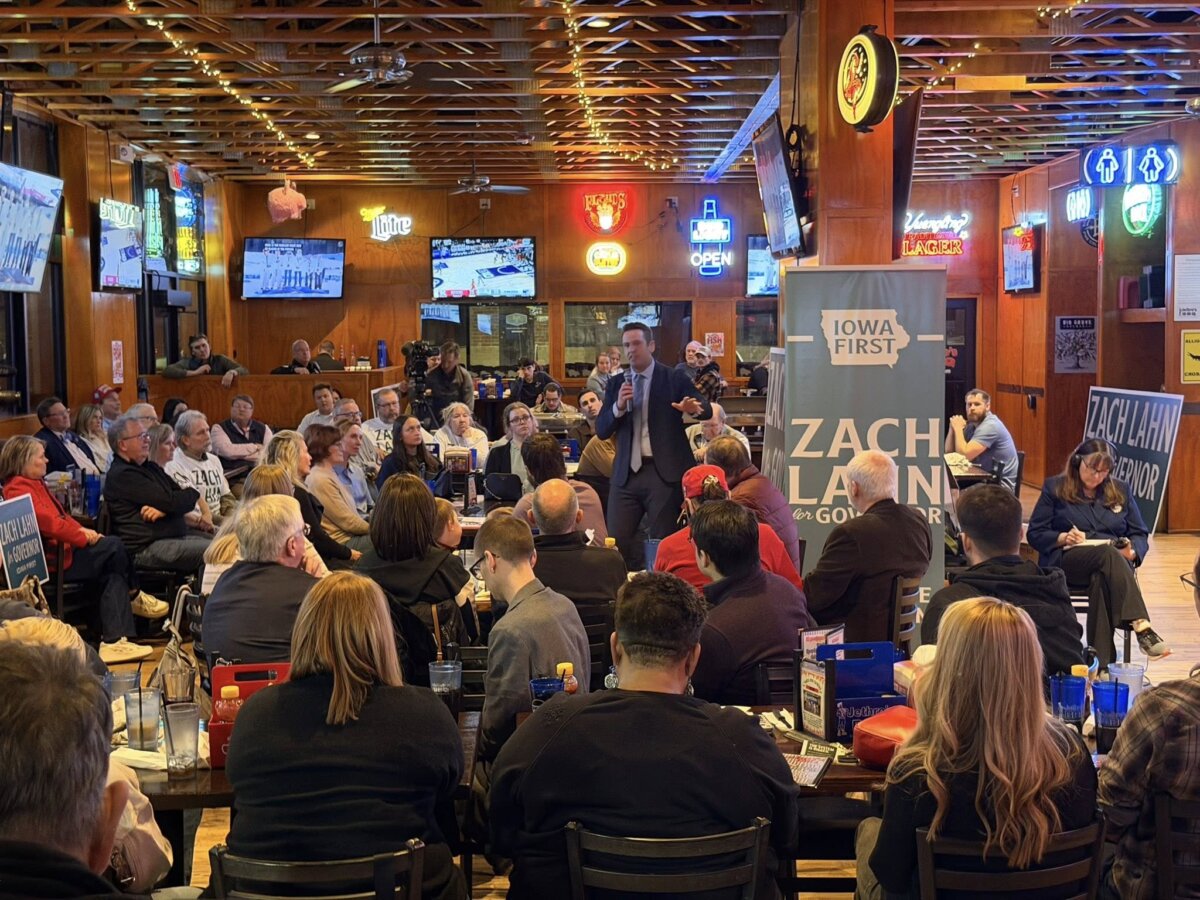
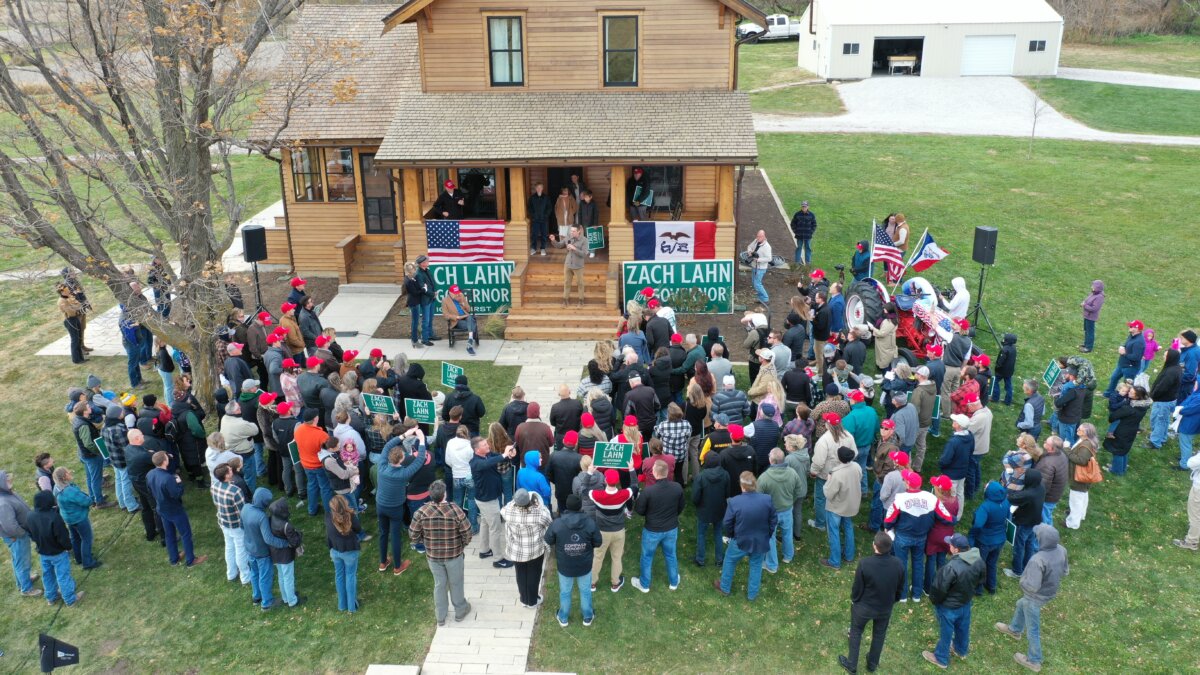
During his remarks at a town hall last week, Lahn proposed increasing property taxes on out-of-state agricultural land owners and data centers; having the state confiscate any farmland owned by foreign countries, and prohibiting the use of eminent domain for hazardous liquid pipelines.
“I could talk to nine out of 10 consultants about many of the things I told you here today, and they’d say, ‘Don’t say it,’” Lahn told the crowd. “But I’m saying it anyways because I’m tired of my people getting cancer. I’m tired of our schools being bad. I’m tired of Iowans leaving our state. It’s time for truth. That’s what it’s time for, no matter what the cost.”
Lahn advocates for food freedom laws that would let small farmers sell locally without being curtailed by “crippling” regulations that benefit massive companies. He would also like to see increased incentives for regenerative farming and family farms instead of “favorable deals” that benefit major agribusiness.
“I don’t know any farmer that wants to spend more money on inputs. They all want to spend less. Many of them don’t want to use these chemicals. They would rather have a better way,” Lahn said.
MAHA Action, a political advocacy group working to advance Health Secretary Robert F. Kennedy Jr.’s policies and the Make America Healthy Again (MAHA) movement, made its first state-level election endorsement in December when it backed Lahn.
The organization’s president, Tony Lyons, applauded Lahn’s intent to fight liability shields for pesticide manufacturers.
He stated that Lahn is committed to protecting Iowa farmers and ranchers from the encroachment of multinational agricultural corporations. This reflects a core MAHA value of prioritizing American communities over foreign interests, he said.
Lahn’s great-great-grandparents built the homestead that remained in the Lahn family for 105 years—the same homestead that Lahn bought and rebuilt in 2014.
Lahn’s father, Jim, studied agronomy and worked as a conservationist. He was also a pilot, and that is what led him to the Sioux City area, where Lahn was raised.
In 2005, a year after he graduated from high school, Lahn’s great-grandmother, Evelyn, died. Lahn had been asked if he wanted to purchase the farm then. He declined, and the property was sold outside of the family.
Lahn and his wife Annie own and operate Homeplace Ventures, an investment firm. They have also launched a nonprofit school.
Around a decade after the original homestead was sold, Lahn bought back the family property in 2014. Over the next five years, he reassembled the farmhouse and the entire farm, parcel by parcel.
He shifted away from the conventional farming that has defined much of Iowa’s agriculture for generations and embraced regenerative methods.
Lahn sits at a farm table in the dining room of the home his family built more than a century ago and sifts through black-and-white photos.
“This farm set holds 120 years of stories for our family. And so when it was sold and I had an opportunity to buy it back, I just couldn’t say no to it, because I grew up hearing these stories of this farm and my grandpa and his brothers and the family coming over from Germany,” he said.
Today, Lahn talks about the farm like it’s a beloved family member who has been sick for years and is now thriving. In the same conversation, he enthusiastically describes projects that include restoring a creek, planting a native prairie, and improving the water quality and habitat on his property.
Lahn leaves the farmhouse, climbs in his pickup truck, and offers a tour along the gravel roads that surround his 700-acre farm.
“This old house belonged to the Jantz family, and that one was owned by the Herrings,” Lahn said, pointing to the homes as he drives by.
“When I was growing up, I’d hear so many stories about these farms and these families. You knew who owned the land because they were family farms. Now there’s so much secrecy about ownership with shell companies buying property, and we have no idea who actually owns much of the land,” he said.
Lahn quickly notes who owns the Jantz and Herring farms. He bought them when the owners died.
“Dolores Jantz knew my great-grandma well. She was around 95 when I talked to her and said that I would like to know if she ever plans to sell the ground,” he said.
“When she passed away, I got a call from her son. He said they were going to sell, and that mom said to him three separate times that, if we’re going to sell, please sell it to Zach. They knew what I was trying to do in this community—to keep the farmland privately and locally owned and preserve our heritage.”
Lahn explained that a man at a town hall pointed out that out-of-state investors buying land “look at it as an asset, and how much money they can make, whether it’s data centers or solar farms or whatever.”
They don’t care about the land, or the impact on the community, the town hall attendee said. They are focused on their monetary return.
“Land is best stewarded when you’re living and tending and caring for it yourself, and you’re planning to pass it on to the next generation,” Lahn said.
“When you’re an out-of-state investor and you’re buying land, you don’t tend to care what’s on that land or how it affects your neighbors,” he added.
“We’re doing some soil tests to see what trees were historically here. And that way we can replant them, because in a lot of the waterways, there’ll be natural trees coming in,” Lahn said, continuing his drive around the farm.
“Right here we have beans, then corn,” he added while smiling, pointing out his kids’ four-wheeler race track that cuts through the crops.
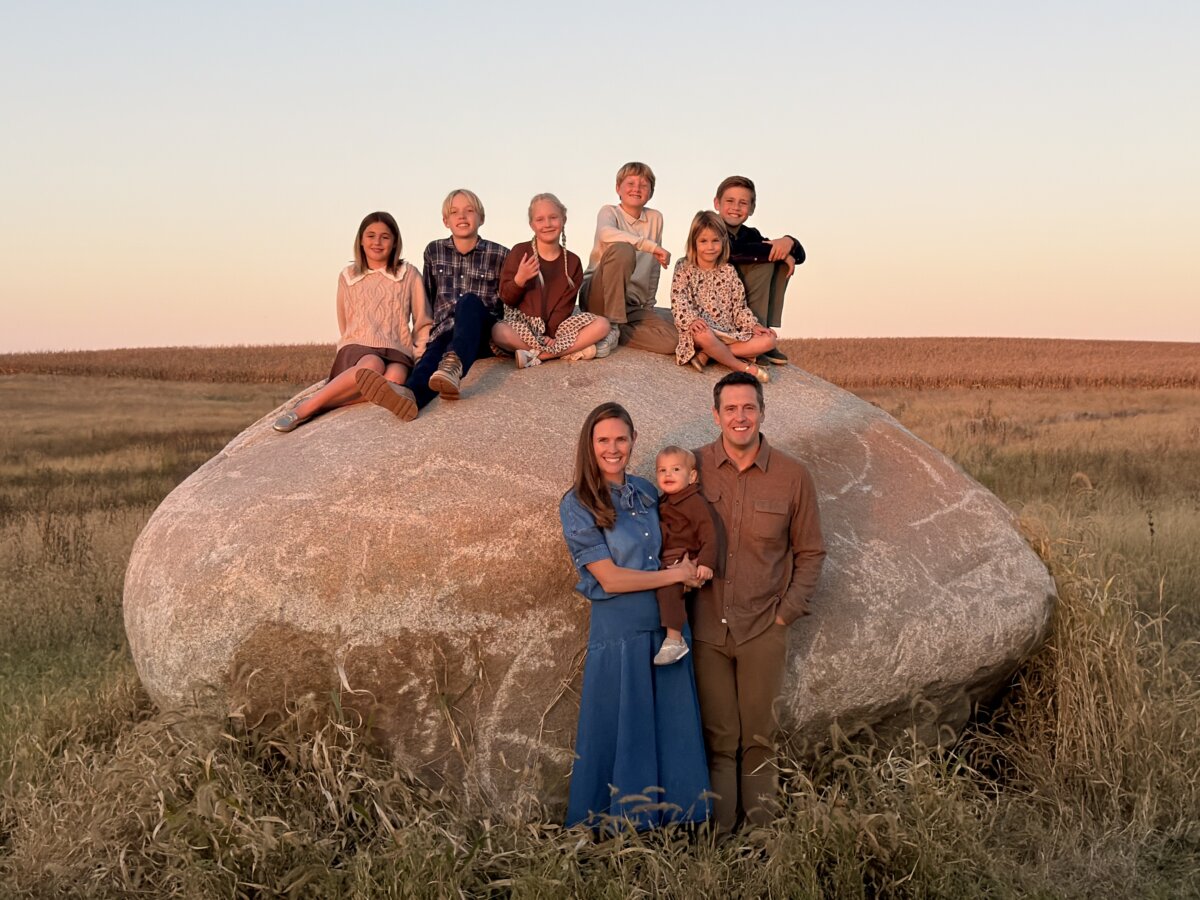
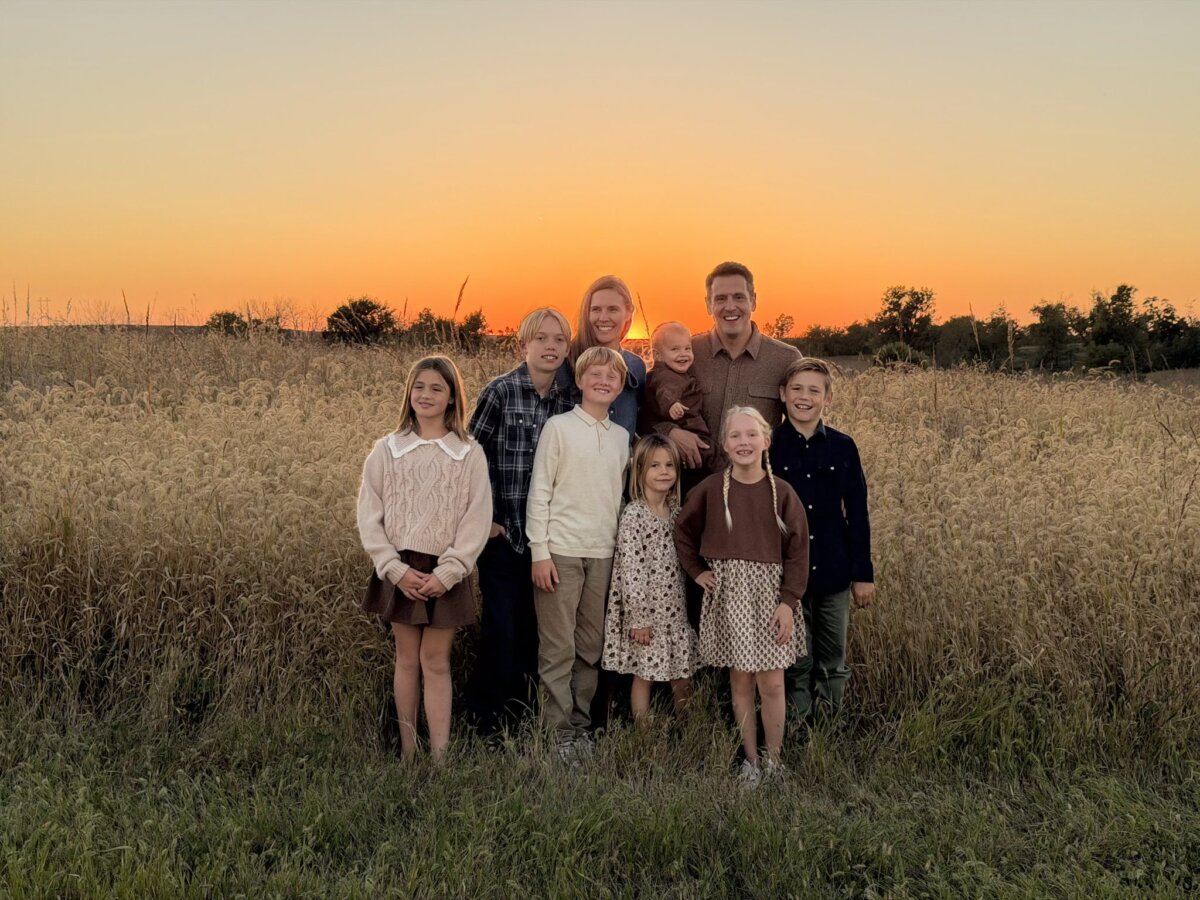
Lahn and his wife have seven children—four sons and three daughters. The youngest is 2 years old and the oldest is 14.
“We just planted organic oats. And this is all going to alfalfa here,” he added.
Lahn said that he advocates making state-owned land available for farming, and confiscating land that China owns, and making it available to veterans who want to start homesteads.
He has also said he believes in holding agricultural chemical production companies accountable for the health impacts their products have on farmers and Iowans, to which he attributes Iowa’s rising cancer rates.
Through its subsidiary Monsanto, Bayer is the only U.S. producer of glyphosate, which is the key ingredient in Roundup, the most widely used herbicide in history, according to the Global Glyphosate Study.
Today, 280 million pounds of glyphosate are sprayed on 285 million acres of U.S. farmland every year, according to the nonprofit Center for Food Safety, which advocates for organic and sustainable food.
Bayer has repeatedly said that glyphosate is safe, often citing a 2016 Environmental Protection Agency (EPA) review that determined that the pesticide ingredient was “not likely to be carcinogenic to humans.”
In 2015, the International Agency for Research on Cancer—part of the World Health Organization—classified glyphosate as a probable human carcinogen, a substance that can cause cancer.
In February, President Donald Trump signed an executive order to boost domestic production of glyphosate-based herbicides.
Last year, the Iowa Senate passed a bill to prevent lawsuits that claim a pesticide company is liable for injuries resulting from its failure to warn consumers of health risks, as long as the product has a federally approved label. The bill did not make it out of the Iowa House, but it remains alive for this year’s session.
“We can have the debate all day long about glyphosate and glyphosate-based herbicides. But a very basic point is that no product should have immunity from liability, period. If you make a product that harms other people, part of the free market is that the people that are harmed should have recourse,” Lahn said.
Lahn also favors assistance for promoting regenerative practices in farming, and helping farmers make that transition.
“So many of the incentives right now are geared towards the biggest producers. It should be the opposite way. We should help start family farms and keep as many family farms in the game as we possibly can and provide off ramps to different types of farming,” he said.
Three companies—Bayer, Corteva, and Syngenta—control more than 85 percent of the market, Lahn noted.
“At least 25 percent of Iowa’s land is now owned by out-of-state investors and funds that don’t live here, and our farmers are becoming tenants again. That must change,” he added.
Lahn said that the Big Ag businesses have a monopoly, and he intends to break them up.
His concern isn’t just the land; it’s the people leaving it.
He talks about Iowa’s “brain drain” where young people grow up in the state, earn degrees, and move out of state. Lahn understands. He was once one of these young people.
He left for the University of Colorado, where he earned a degree in political science. He was an Iowa native with strong rural roots, but he figured it was better to live somewhere else.
Then he returned.
“I thought something was better out there. I left. And then I eventually longed for home.”
Lahn said he lived in Colorado, Montana, and Kansas before returning to Iowa to take ownership of the family farm.
Keeping young people in the state and drawing others home to strengthen culture and tradition are among Lahn’s top priorities.
He favors financial incentives, down-payment assistance and other support for Iowa natives who return to their home state.
“I want to find a way to give bonuses to Iowa graduates of Iowa high schools who have moved away to come back home. Even if you have a remote job, I want you to come back home first. If you have been trained in the trades, I want you back home. We need you.”
 Friends Read Free
Copy
Facebook
Tweet
Friends Read Free
Copy
Facebook
Tweet