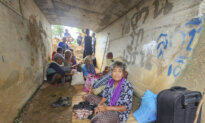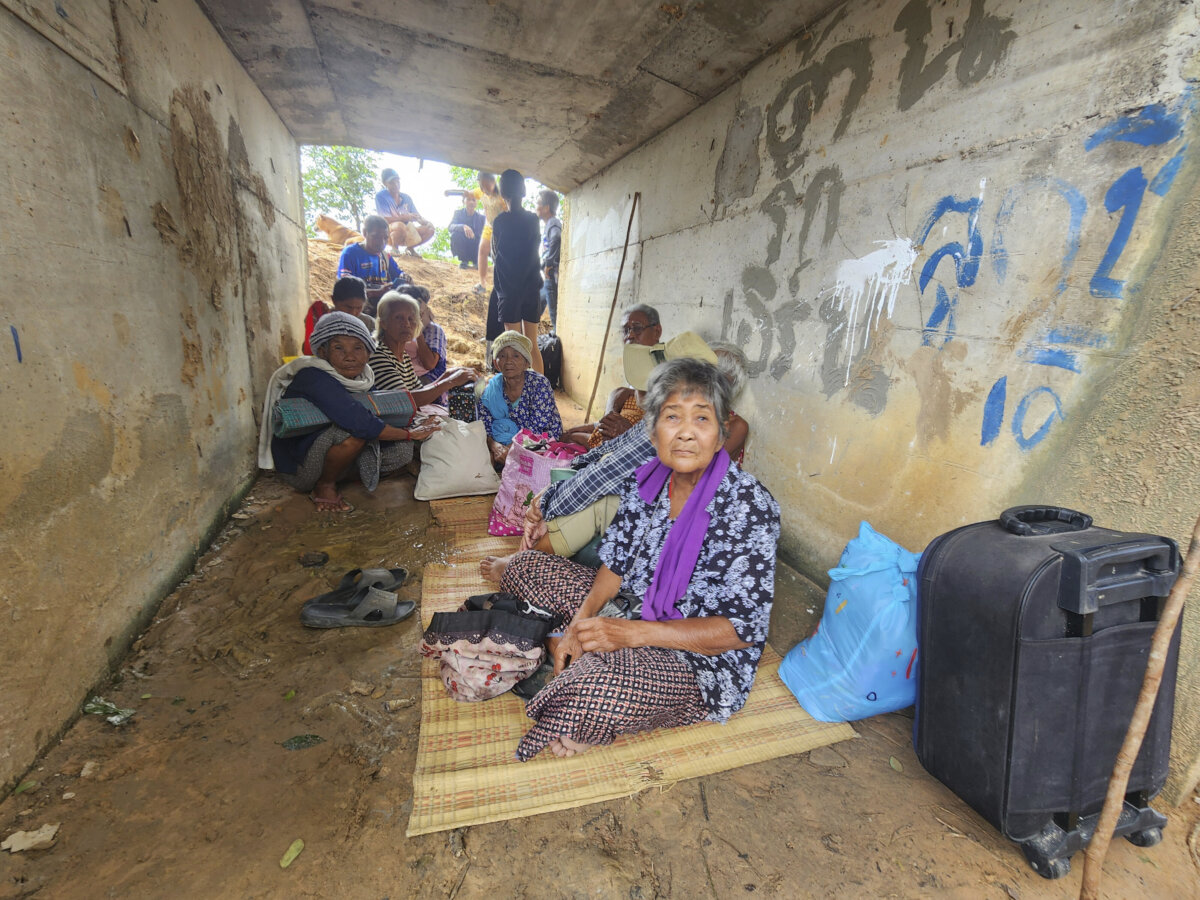
Eleven people were killed on July 24 when the armed forces of both Thailand and Cambodia exchanged fire during clashes along their shared border.
The governments of both countries have accused each other of starting the military clashes, and both downgraded diplomatic relations on July 23, after several Thai soldiers were injured by a land mine. Thailand sealed its entire 500-mile border with Cambodia, closing all crossings.
Thai acting Prime Minister Phumtham Wechayachai said 10 Thai civilians and one soldier were killed.
Six of those killed were at a gas station in Thailand’s Si Sa Ket Province, according to the Thai army, which noted that at least 14 people had been injured in three border provinces.
It is not immediately clear where the other fatalities took place.
The July 24 clashes appeared to have erupted after a land mine wounded five Thai soldiers on July 23, prompting Thailand to withdraw its ambassador from Cambodia and expel the Cambodian representative from the Thai capital, Bangkok.
In a statement, the Thai Ministry of Foreign Affairs said, “The Royal Thai government condemns in the strongest terms the violations of Thailand’s sovereignty and international law, following the laying of anti-personnel landmines within Thai territory that caused injuries to Thai military personnel while Thai soldiers were patrolling on 16 and 23 July 2025.”
The Cambodian Ministry of National Defense said Thai air force jets dropped bombs on a road near the ancient Preah Vihear temple, while Thailand stated that it had launched airstrikes on military targets.
On the morning of July 24, there were clashes near the ancient Hindu temple at Ta Muen Thom, on the border between Thailand’s Surin Province and Cambodia’s Oddar Meanchey Province.
“The Royal Thai Government urges Cambodia to cease its repeated act which constitutes a severe violation of international law. Such actions fundamentally contradict the principles of good neighborly relations and good faith, and will further undermine Cambodia’s reputation and credibility on the global stage,” the Thai Ministry of Foreign Affairs stated.
“The Royal Thai Government is prepared to intensify our self-defense measures if Cambodia persists in its armed attack and violations upon Thailand’s sovereignty in accordance with international law and principles.”
The Cambodian Defense Ministry stated that Thailand employed a drone before opening fire and that its forces “acted strictly within the bounds of self-defense, responding to an unprovoked incursion by Thai troops that violated our territorial integrity.”
The Thai Embassy in the Cambodian capital, Phnom Penh, posted on Facebook that Thai nationals in Cambodia were advised to leave the country.
The latest clashes are the second armed confrontation between the two countries this year. In May, a Cambodian soldier was shot dead during a skirmish in a small area claimed by both countries.
Leaked Phone Call Scandal
Shortly after that incident, then-Thai Prime Minister Paetongtarn Shinawatra spoke to former Cambodian leader Hun Sen in June, and the phone call was leaked.
Thailand’s Constitutional Court suspended Shinawatra on July 1, after 36 senators filed a petition seeking her removal, accusing her of dishonesty and ethical violations under the constitution.
During the phone call, Paetongtarn—whose father, Thaksin Shinawatra, is a former prime minister—criticized a Thai army commander and referred to Hun Sen as “uncle.” Hun Sen’s son, Hun Manet, is the current Cambodian prime minister.
Cambodia is one of Beijing’s closest allies in the region. In April, the Chinese Communist Party (CCP) completed the inauguration of its upgraded naval base at Ream, Cambodia, which is large enough to dock an aircraft carrier.
Thailand and Cambodia have long disputed their border, with much of the tension stemming from a map drawn in 1907, when Cambodia was under French colonial rule.
Cambodia has been using the map as a reference to claim territory, while Thailand has argued that the map is inaccurate.
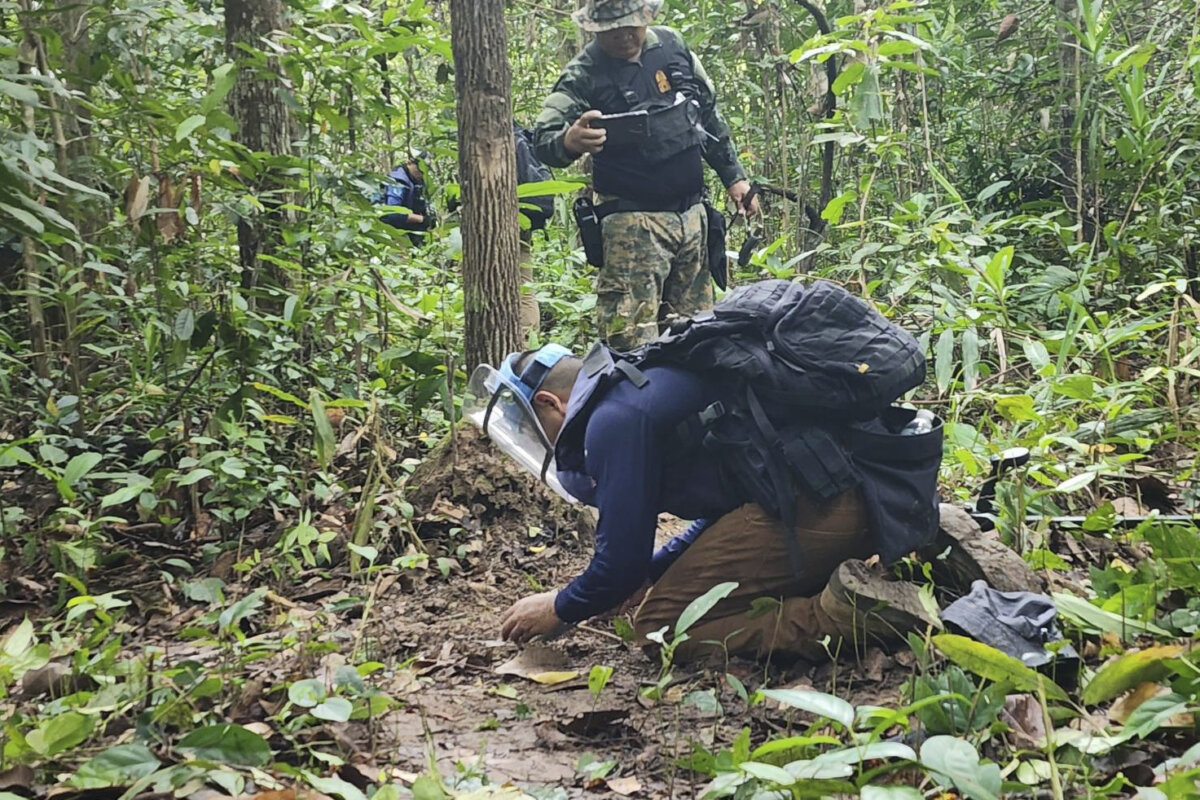
The main conflict between Thailand and Cambodia has been over land surrounding the 1,000-year-old Preah Vihear temple.
In 1962, the International Court of Justice (ICJ) in The Hague, Netherlands, recognized Cambodian sovereignty over the temple, and the court reaffirmed its ruling in 2013.
Cambodia has asked the ICJ to resolve the border disputes, but Thailand has rejected the court’s jurisdiction.
The Associated Press contributed to this report.
 Friends Read Free
Copy
Facebook
Tweet
Friends Read Free
Copy
Facebook
Tweet