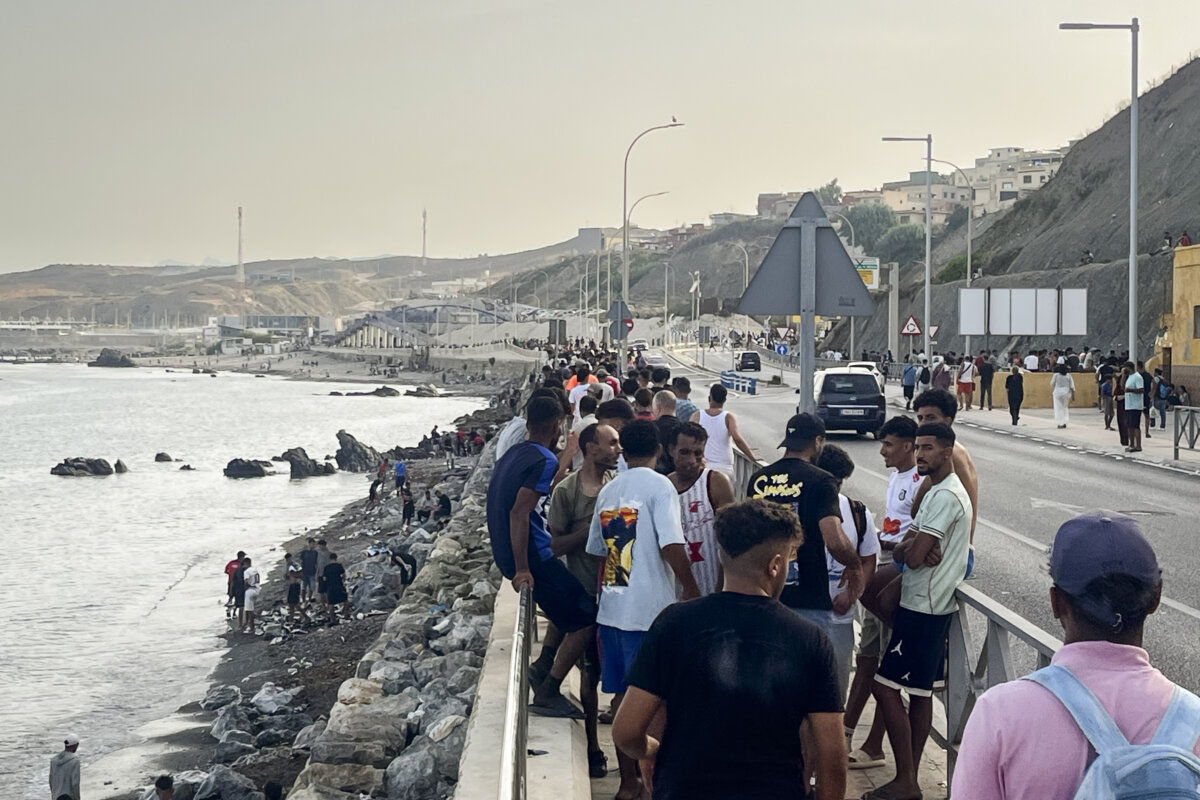

CEUTA, Spain—The road to the Tarajal border crossing no longer leads into Europe. On Friday, it led out. For kilometers along the southern edge of this Spanish enclave in North Africa, columns of young men trudged through the summer heat toward Morocco, past soldiers and armored vehicles, retracing on foot a journey many had begun by swimming barely a day earlier.
Spain’s Interior Ministry said around 50,000 people had crossed the border since Thursday morning, and estimated that 48,300 of them had already returned to Morocco by 6 p.m. on Friday.
Yet after that hour, The Epoch Times observed columns of migrants, overwhelmingly young men, still stretching for roughly three kilometers along Avenida Martínez Catena, the long road leading to the Tarajal crossing.
Others, though in much smaller numbers than at the height of the influx, were still swimming across the maritime border into the city without being stopped.
Still others stayed at the border and, at least for now, did not appear willing to leave Spanish territory.
The scale of the crisis is without precedent in Spain. Migrants swam around the border breakwater, crossed the frontier on foot, and scaled the fences of an industrial estate abutting it; in a city of 80,000, the arrivals, which the regional government puts at 60,000, were equal to well over half the population.
Ceuta and its sister enclave Melilla form the European Union’s only land borders with Africa, and both have long been pressure points for illegal immigration. Even so, nothing in their history compares to this week: The influx exceeded that of the May 2021 crisis, until now the benchmark, several times over.
A City Behind Its Shutters
By Friday, the city center had gone quiet. In streets that should be crowded at the height of the tourist season, most storefronts kept their metal shutters down, and the few businesses that opened let customers in a handful at a time.
Groups of migrants, meanwhile, remained visible throughout the city, gathered in plazas, at roundabouts, and along the seafront.
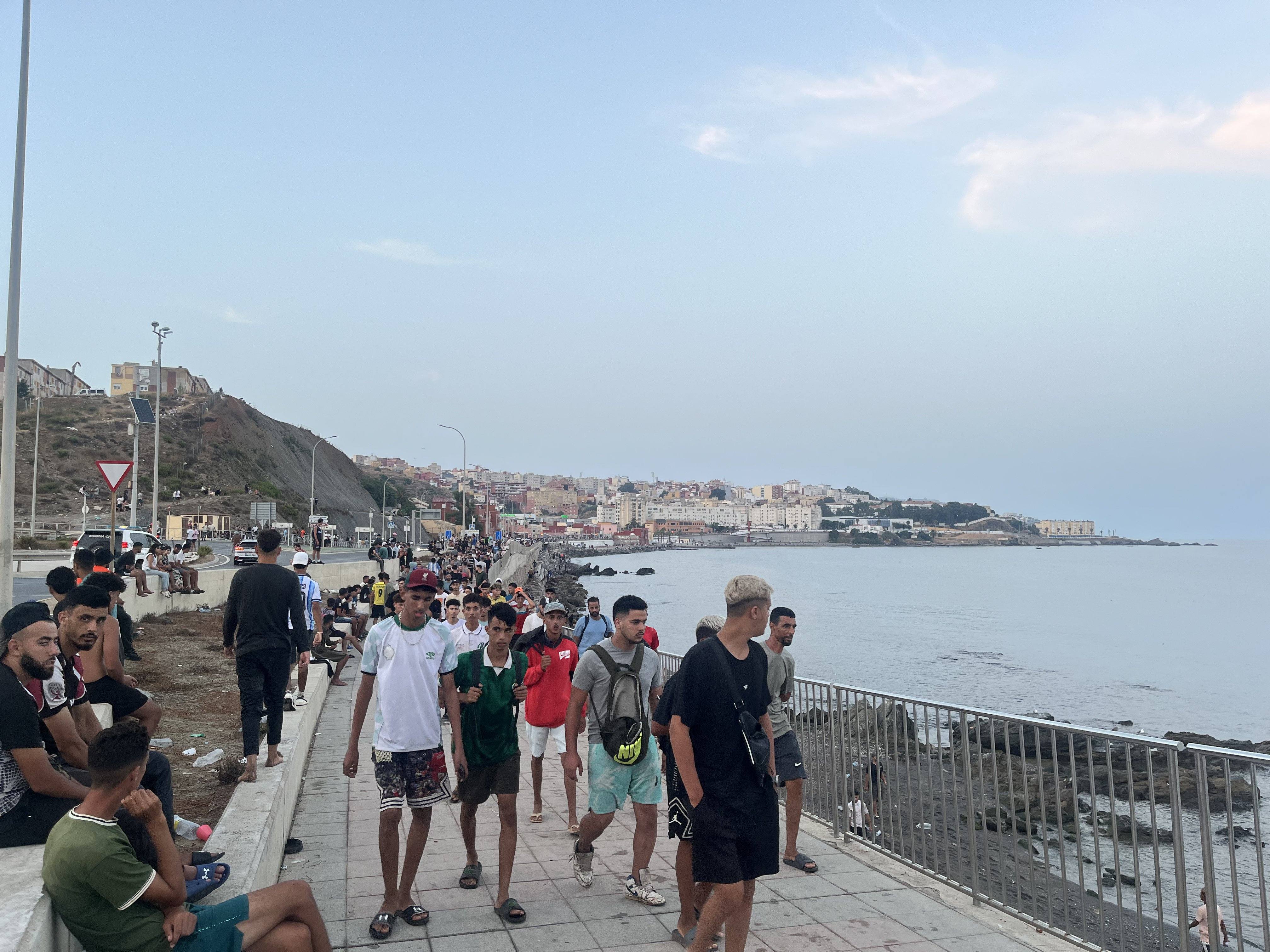 Moroccan migrants walk along Avenida Martínez Catena in Ceuta toward the border area on July 31, 2026, at 9:34 p.m. local time. (Etienne Fauchaire/The Epoch Times)
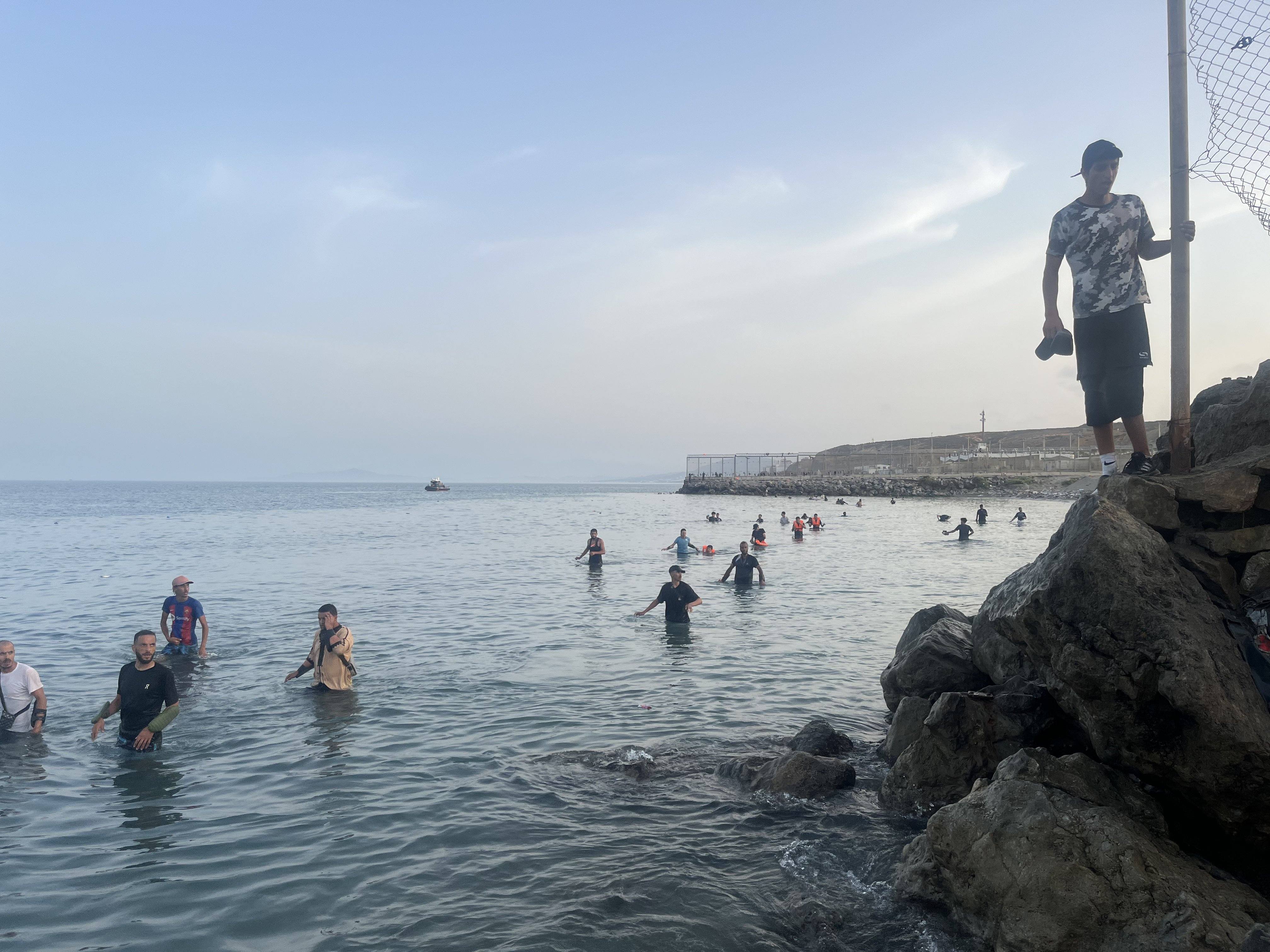 Moroccan migrants swim across the sea border into Ceuta near Avenida Martínez Catena, July 31, 2026 at 8:42 p.m. local time. (Etienne Fauchaire/The Epoch Times)
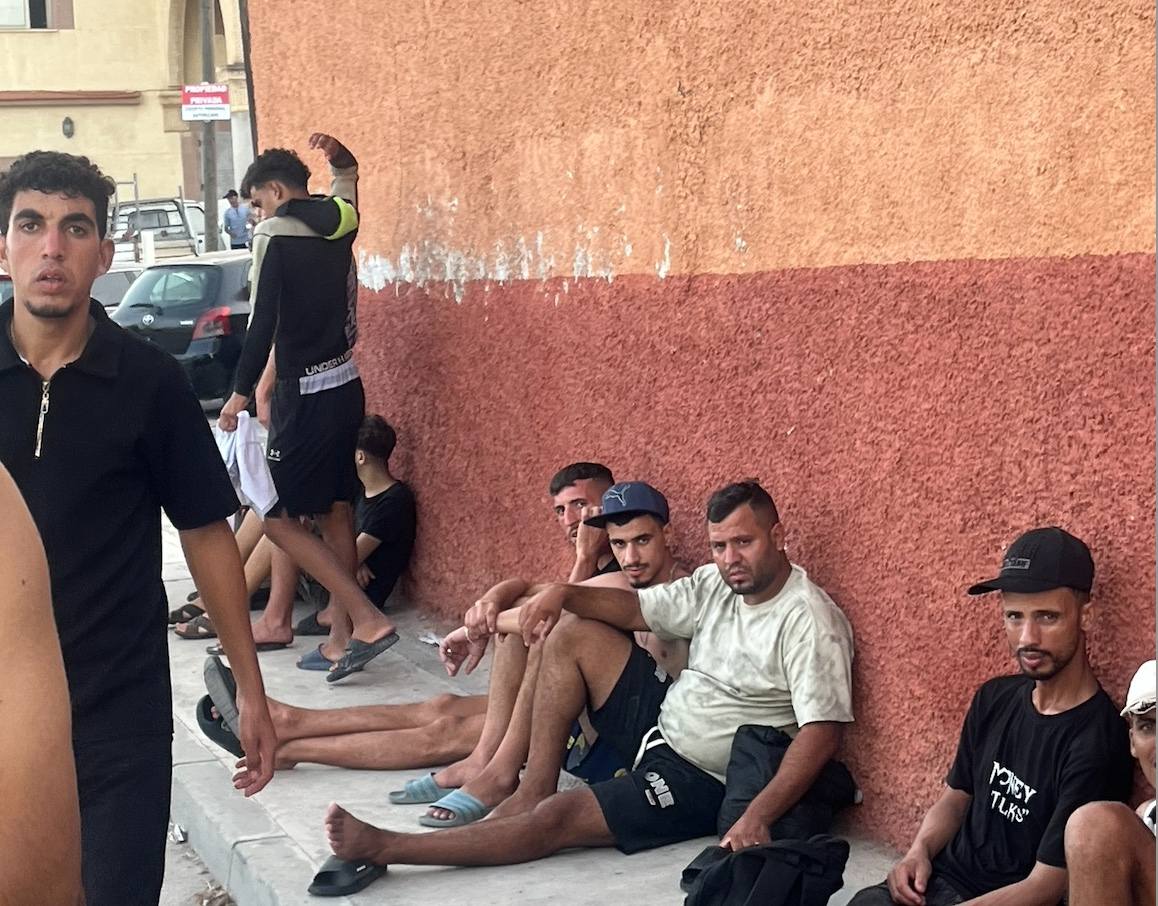 Moroccan migrants rest after arriving from Morocco along a sidewalk against a wall in Ceuta, July 31, 2026. (Etienne Fauhaire/The Epoch Times)
In one neighborhood off Avenida Martínez Catena, residents had set up large trash containers and railings to keep migrants out.
 Trash containers are lined up as makeshift barriers on a residential street to restrict access to a residential neighborhood in Ceuta on July 31, 2026. (Etienne Fauchaire/The Epoch Times)
‘To Become an MMA Fighter’
Among those still in town, several migrants told The Epoch Times they had crossed in search of better economic prospects in Europe.
Mohammed, 21, said he swam around the maritime border in less than half an hour. His plan, he said, was to make his way through Spain and on to France “to become an MMA fighter.”
Socialist Prime Minister Pedro Sánchez flew in on Friday morning with Interior Minister Fernando Grande-Marlaska to review the deployment at the Tarajal crossing, and was met by crowds chanting for his resignation.
In a brief statement, Sánchez called the mass entry “an attack on the integrity of Spain,” pointed to the smuggling networks, and pledged the full backing of the state, though he declined to declare a national emergency.
Echoes of 2021
Residents who spoke with The Epoch Times expressed exasperation more than surprise. Several blamed Sánchez personally for the crisis, and nearly all reached for the same comparison: May 2021, when Ceuta lived through what was then Spain’s worst border emergency. If it could happen again on this scale, they argued, the problem was never resolved.
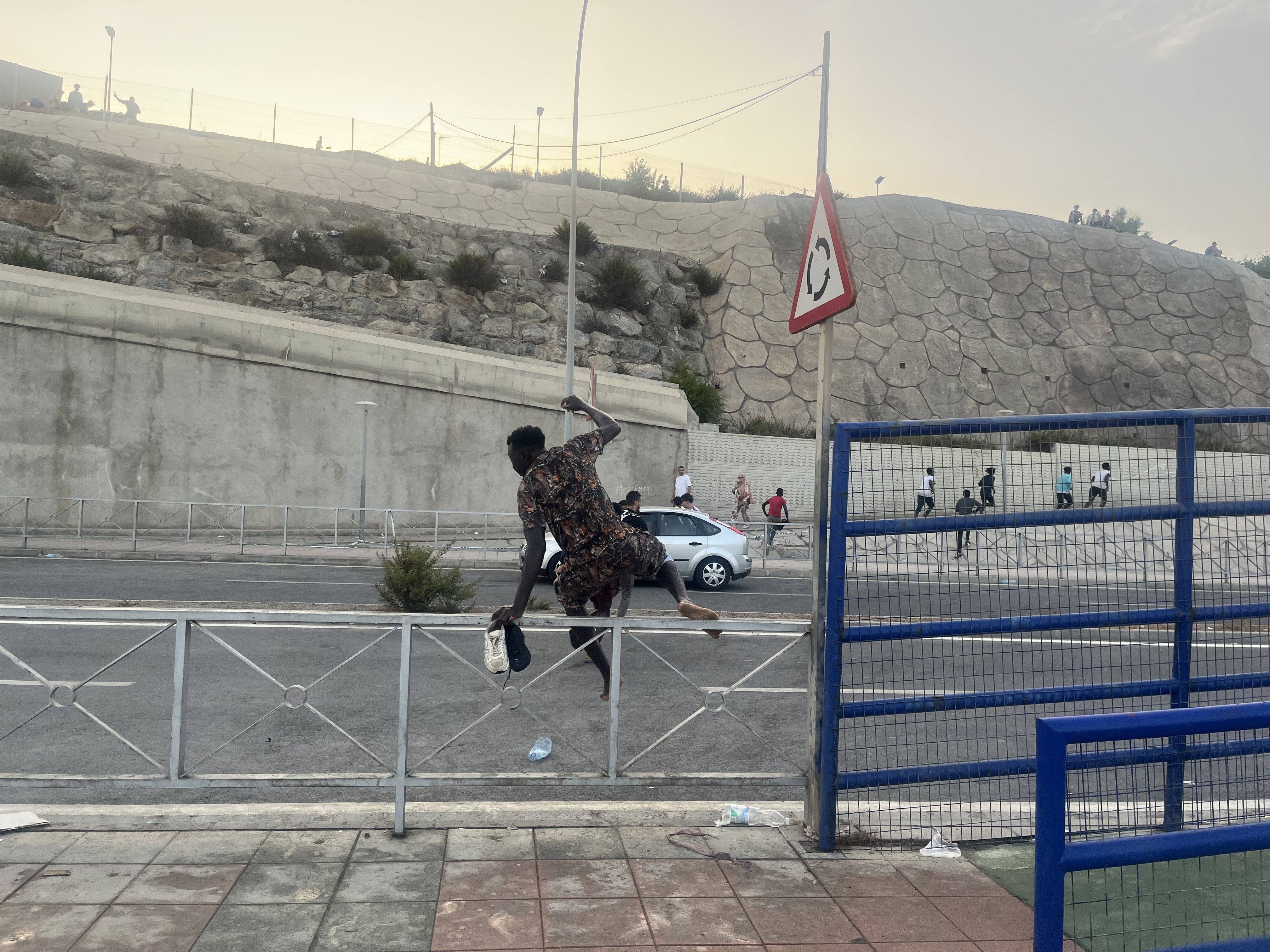 An African migrant climbs over a roadside barrier while running toward the city of Ceuta on July 31, 2026. (Etienne Fauchaire/The Epoch Times)
Madrid ultimately bought calm at a price. In March 2022, Sánchez abandoned Spain’s decades-long neutrality on Western Sahara and endorsed Morocco’s autonomy plan for the territory, a reversal he defended as the foundation of renewed cooperation on migration control.
Four years later, the crowds returned.
The Long Walk Back
By Friday afternoon, the dominant movement was nonetheless one of departure. Members of the Spanish armed forces posted near the border told The Epoch Times they had already observed “large numbers of migrants returning to Morocco.”
In their assessment, many of those who crossed had discovered that no opportunities awaited them on the other side of the border.
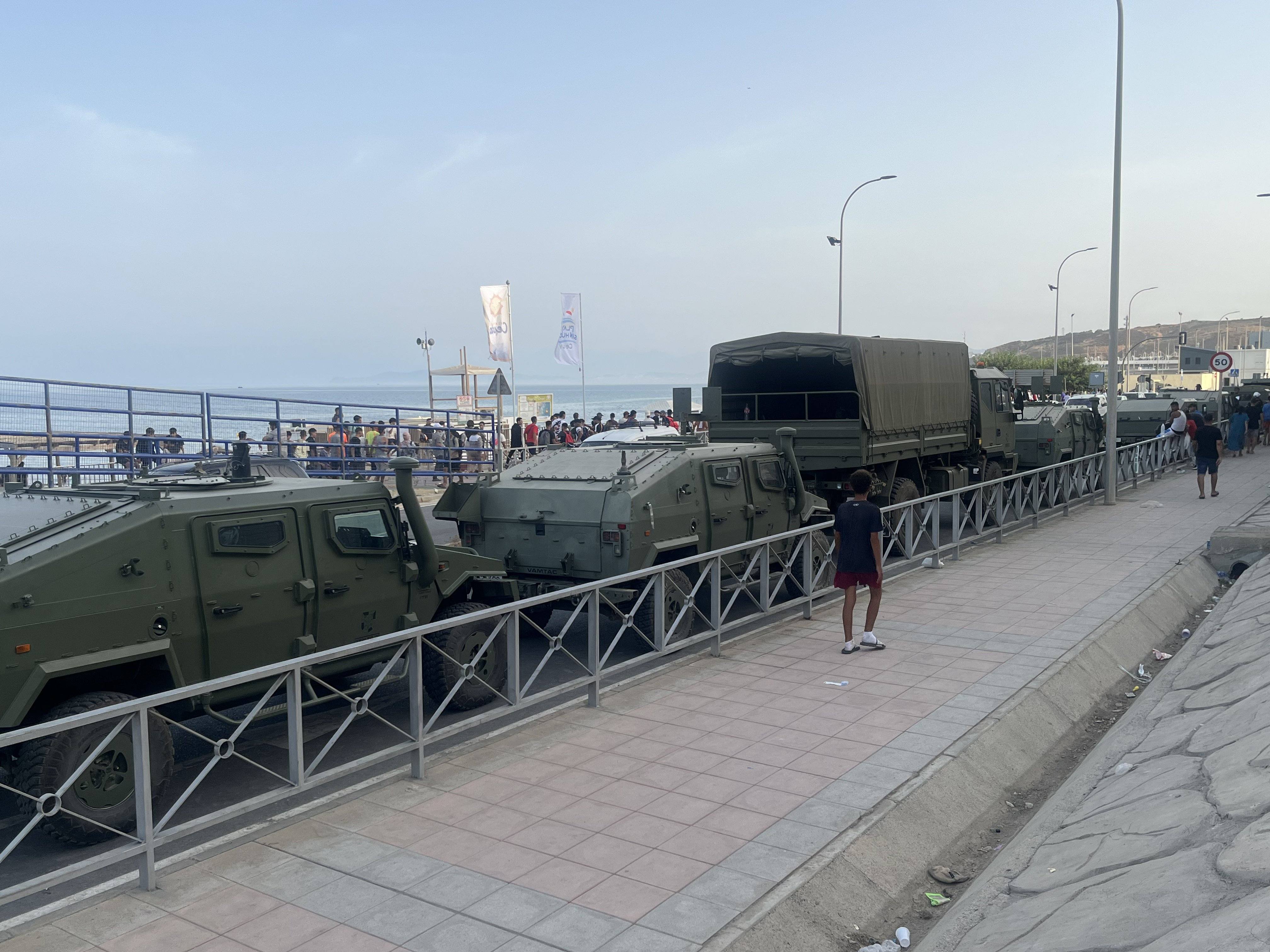 Spanish Army vehicles are positioned along the coastal road near the border as part of the response to the migrant influx in Ceuta, on July 31, 2026. (Etienne Fauchaire/The Epoch Times)
Another group of migrants told The Epoch Times they were leaving, accusing Spaniards of “racism.”
The political costs may prove slower to recede. Italy announced it was suspending Schengen free-movement arrangements with Spain, closing its air and sea borders to arrivals from the country for a month, a call backed by Finland and Denmark, while France said it was multiplying controls at its Spanish border fivefold.
Well into the evening, the column on Avenida Martínez Catena stretched on toward the border. In the water beside the crossing, a dwindling stream of swimmers kept coming.
 Friends Read Free
Copy
Facebook
Tweet
Friends Read Free
Copy
Facebook
Tweet