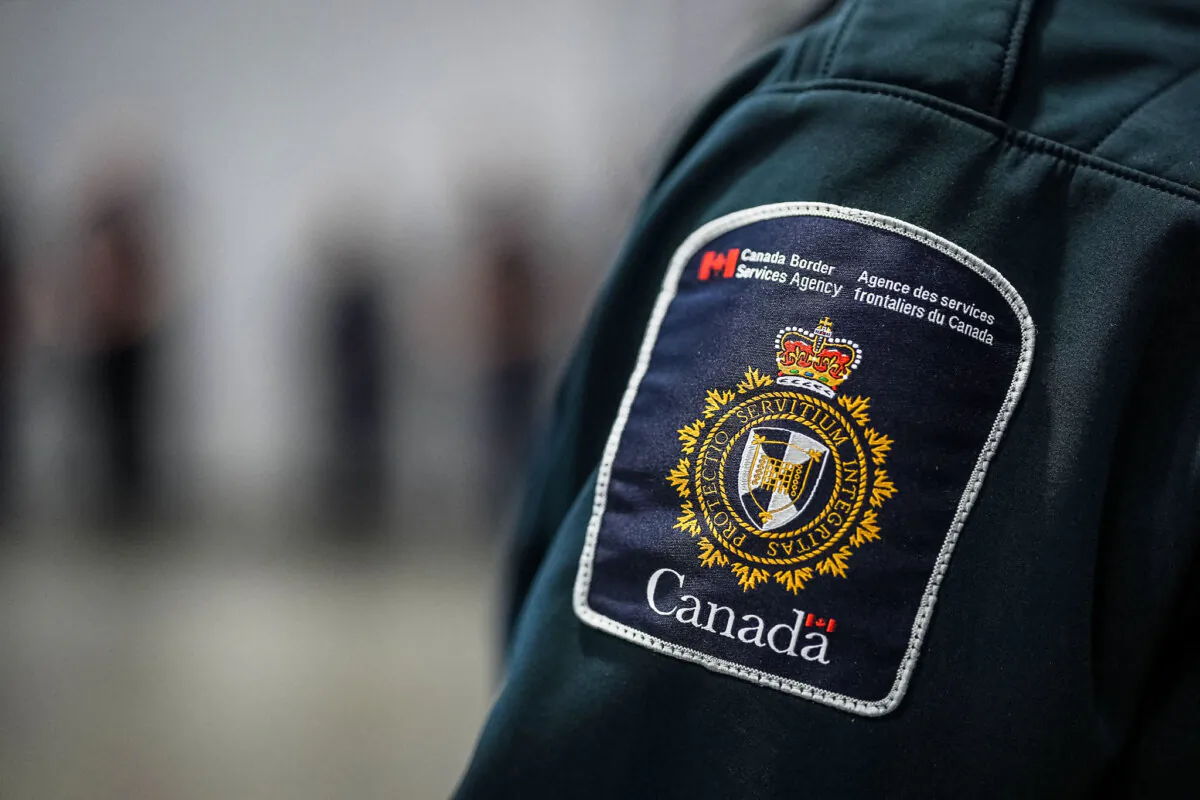

Thousands of shipments of fentanyl, methamphetamine, cocaine, and other narcotics have been confiscated by federal authorities after a month-long operation designed to curb the flow of illegal drugs across the Canada-U.S. border.
More than 2,600 suspected narcotics and precursor seizures were documented by the Canada Border Service Agency (CBSA) as part of “Operation Blizzard,” with 67.5 percent of the intercepted drugs entering the country from the United States, the agency said in a May 28 press release. The remaining 17.5 percent were narcotics being smuggled across Canada’s southern border.
“Launched as part of Canada’s Border Plan, Operation Blizzard was a month-long, cross-country surge operation to intercept fentanyl and other illegal drugs in postal, air cargo and marine containers,” the CBSA said.
“During the operation, border services officers examined shipments, with a special focus on mail, air freight and sea containers going to the United States.”
Fentanyl seizures accounted for 116 of the drug busts made between Feb. 12 and March 13, the agency said. Of the 1.73 kilograms intercepted by border officers, more than 1.4 kilograms were intended for the United States. The majority of the fentanyl was discovered in British Columbia, Alberta, and Quebec.
Officers also stopped shipments containing cocaine, heroin, opium, methamphetamine, and MDMA, which is also known as ecstasy.
In total, border officers made 17 meth seizures, 24 cocaine seizures, 26 heroin seizures, 17 opium seizures, and 48 MDMA seizures during the month-long operation, the agency said. Cannabis and cannabis-related products accounted for 249 seizures.
Operation Blizzard is a joint mission between the CBSA and the RCMP to stop cross-border drug trafficking. It’s part of Ottawa’s response to concerns from U.S. President Donald Trump, who said Canada needed to do more to stop the flow of fentanyl into the United States.
2025 Drug Busts
Hundreds of kilograms of suspected narcotics were stopped from crossing Canadian borders so far this year, according to CBSA data.
The agency highlighted several large-scale seizures conducted throughout its ongoing campaign including 800 bottles of 1,4-butanediol confiscated by border officers in Vancouver. The bottles accounted for 400 litres of the chemical that turns into GHB (gamma hydroxybutyrate), commonly referred to as the ‘date rape drug,’ after it is ingested.
Other notable seizures include 142 kilograms of cocaine worth $3.5 million confiscated in March after Quebec border officers found the drugs in rail containers containing new vehicles from Mexico and 154 kilograms of ketamine worth an estimated $4.6 million confiscated at the Toronto Pearson International Airport.
Officers also seized a total of 148 kilograms of methamphetamine with an estimated street value of $500,000 at Vancouver International Airport this year during six different drug busts. The drugs were concealed in passengers’ suitcases bound for Hong Kong, Australia, and New Zealand. In all six instances, the travellers were arrested and taken into custody by the RCMP’s Federal Police Pacific Region unit, the border agency said.
More than 400 kilograms of cocaine with an estimated street value of $11 million was intercepted at the Blue Water Bridge in Ontario in February and 100 kilograms of the drug was confiscated at the Coutts port of entry in Alberta in March.
Public Safety Minister Gary Anandasangaree described Operation Blizzard as evidence of “the tireless work of border services officers who defend our borders and our communities every day from dangerous drugs and organized crime groups.”
CBSA President Erin O’Gorman said the border agency will continue its crackdown on cross-border and international drug trafficking.
“CBSA personnel work day in and day out to prevent criminal organizations from exploiting our borders,” she said in the press release. “With Operation Blizzard, we stopped narcotics, synthetic opioids and fentanyl from reaching communities both at home and across the world.”
Operation Blizzard is part of Ottawa’s $1.3 billion commitment to enhancing border security, which includes beefing up border screening and combating cross-border fentanyl trafficking. The move was made after Trump accused Canada of having lax border security, saying fentanyl is flowing into his country as a result.
Trump has since slapped 10 percent tariffs on Canadian oil and gas, as well as 25 percent tax imposed on all other imported products not covered by the United States-Mexico-Canada trade agreement.
White House senior counsellor Peter Navarro has said the tariffs were put in place because the “president is fighting a drug war,” not a trade war. He said the tariffs would stay in place until Trump is satisfied with the progress made on curbing fentanyl smuggling across the shared northern border.
The Prime Minister’s Office said in a January press release that less than 0.2 percent of fentanyl seized by U.S. Customs and Border Protection comes from Canada.
 Friends Read Free
Copy
Facebook
Tweet
Friends Read Free
Copy
Facebook
Tweet