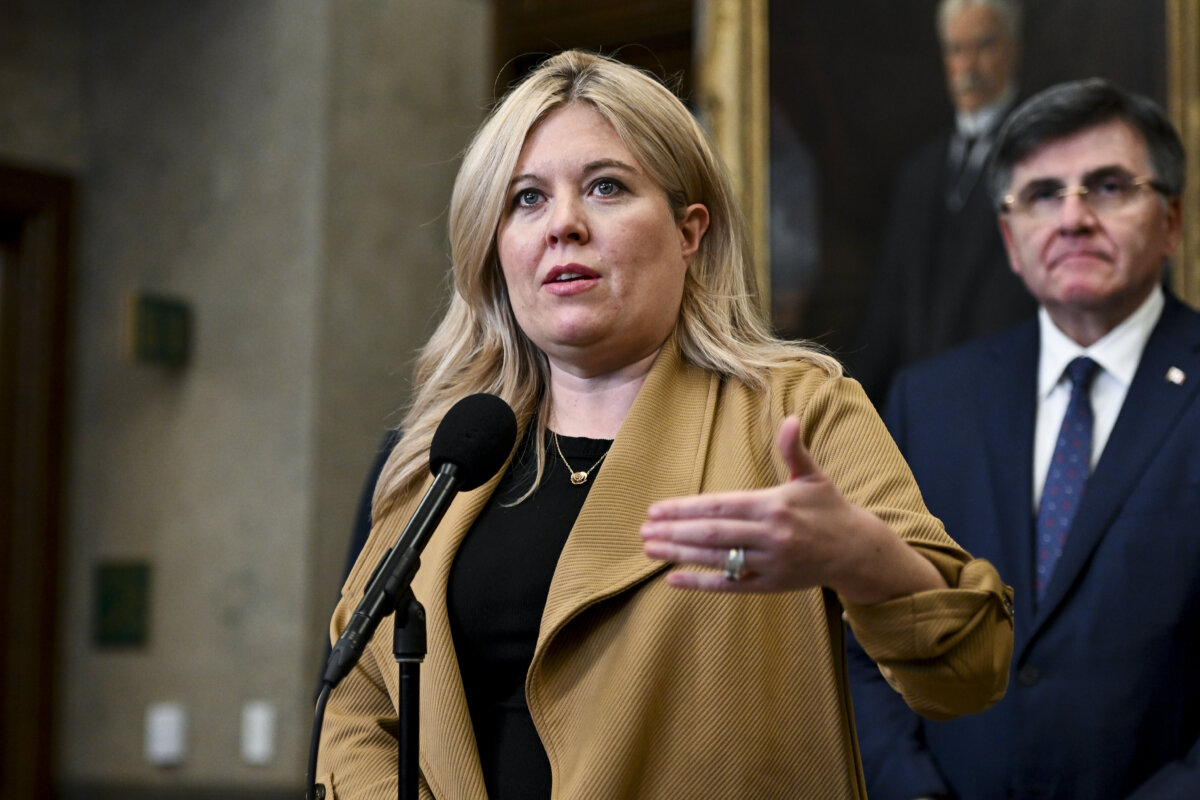

Four Conservative criminal justice bills were defeated in the House of Commons on March 25, including a proposal that would have prevented courts from considering an offender’s immigration status when sentencing non-citizens.
“The government’s decision to reject these reforms is irresponsible at a time when Canadians are facing crime and disorder on our streets. It also undermines our deeply-held ideal of equality under the law,” Conservative MP and shadow immigration minister Michelle Rempel Garner said in a statement.
Bill C-220 would have amended the Criminal Code to state that, when issuing a sentence, a judge should not take into consideration any potential impact on the immigration status of a convicted non-citizen offender, or that of their family members.
Rempel Garner, who sponsored the bill, said non-citizens have been given lighter sentences in “numerous cases” because of their immigration status. She cited examples including a permanent resident receiving a conditional sentence after being convicted of trying to purchase sexual services from a 15-year-old, and a former international student who received just a 5.5-month sentence for spying on and filming female housemates as they used the bathroom.
The bill failed in the House of Commons with 171 “Nay” votes and 158 “Yay” votes, with the Liberals voting against it.
The Conservative Party’s “Jail Not Bail” Act was also voted down, with 193 “Nay” votes and 136 “Yay” votes. Bill C-242, sponsored by Conservative MP Arpan Khanna, would have eliminated the requirement for judges to release people accused of crimes at the “earliest reasonable opportunity and on the least onerous conditions possible.” Judges would have been required to consider the full criminal history of the accused before granting them bail.
The bill would have also introduced a “Major Offences” category that would shift the burden onto those accused of serious crimes—such as firearms, sexual, kidnapping, human trafficking, home invasion, robbery, extortion, arson, and assault—to show why they should be granted bail, a standard known as “reverse onus.”
The Liberal government recently passed Bill C-48, which created a reverse onus provision for individuals charged with a serious violent offence involving a weapon, if they have been convicted of a similar offence within the past five years.
The Liberals have also introduced Bill C-14, the Bail and Sentencing Reform Act, which proposes more than 80 changes in a bid to strengthen the bail and sentencing framework to address auto theft and organized crime, and includes new reverse-onus bail provisions for repeat and violent offenders.
Bill C-246, a private member’s bill introduced by Conservative MP Rachael Thomas, also narrowly failed, with 169 “Nay” votes and 157 “Yay” votes, with the Bloc Québécois voting to support the legislation.
The bill proposed amending the Criminal Code to mandate consecutive sentences for individuals convicted of multiple sexual offences. This would have meant the accused would serve their sentences one after another, rather than concurrently.
As Liberal MPs stood to vote against Bill C-246, some Conservative MPs yelled out “shame on you all” and “say it to the victims.”
Bill C-243, introduced by Conservative MP Kerry Diotte, would have ensured that offenders serving a sentence for first- or second-degree murder have parole reviewed in accordance with the statutory time frames—and not when the offender applies—after the Parole Board has denied, cancelled, or terminated their parole.
Bill C-243 was defeated with 192 “Nay” votes and 136 “Yay” votes.
Diotte said in a statement that, if passed, the legislation would have ended the practice of convicted murderers applying for annual parole hearings, instead making them eligible to reapply only at five-year intervals.
He said this would have lessened the “profound trauma endured by their victims’ families,” who must currently go through parole hearings year after year.
“We must never forget the loved ones left behind after a murder. I’ll continue to push the Liberal government on parole reform until they start listening to Canadians,” he said.
 Friends Read Free
Copy
Facebook
Tweet
Friends Read Free
Copy
Facebook
Tweet