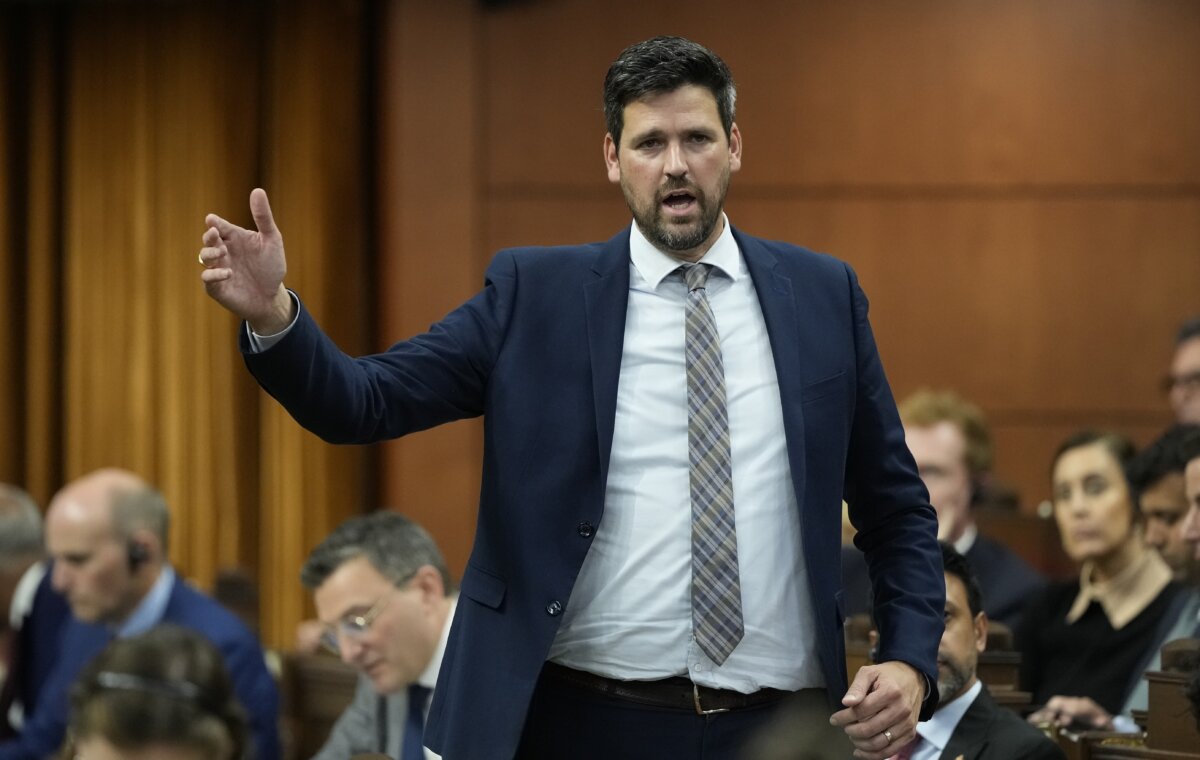

The Liberal government says its new legislation that aims to strengthen bail and sentencing laws will help reduce automobile thefts, which rose by 25 percent in 2023.
“We’ve seen a troubling spike when it comes to auto theft and home invasions, including incidents of violence that we absolutely have to address in Canada,” Justice Minister Sean Fraser said during an Oct. 24 press conference in Brampton, Ont. “We don’t need to accept this as a fact of life. We can take action to promote safer communities when it comes to these significant crimes.”
Bill C-14, also known as the Bail and Sentencing Reform Act, would amend the Criminal Code with with over 80 changes in a bid to strengthen the bail and sentencing framework to help address auto theft and organized crime.
The legislation creates a new reverse onus for major crimes such as auto theft, breaking and entering, human smuggling, and sexual assault, meaning the accused will be required to prove why they should be released from detention, rather than prosecutors needing to prove they should be detained.
Sentencing laws for repeat and violent crime, including car theft and extortion, would also be toughened. Consecutive sentences will be imposed for crimes like auto theft, meaning those found guilty will serve one sentence after another instead of serving for multiple offences at once.
“When it comes to home invasions and auto theft in particular, we want to send a signal, not only to the individual perpetrator, but to would-be criminals in the future, that this kind of behaviour absolutely will not be tolerated as a matter of Canadian law,” Fraser said.
The legislation would make it more difficult for those involved in organized crime or guilty of home invasion, human trafficking, and violent extortion to get bail. New aggravating factors will also apply to crimes against first responders, theft that harms essential infrastructure, or retail theft.
The Canada Border Services Agency (CBSA) said it intercepted 2,277 stolen vehicles from railyards and ports in 2024, which was a 25 percent increase compared to the previous year. It also said there have been 1,185 stolen vehicles intercepted in 2025.
The federal government has invested $15 million to boost law enforcement efforts going after auto theft since the start of 2024. The CBSA was also given $28 million from Ottawa to enlarge its capacity to search shipping containers for stolen vehicles, share intelligence, and collaborate with domestic partners to recover the stolen vehicles.
Conservative Leader Pierre Poilievre said during an Oct. 23 press conference that Bill C-14 does not get rid of the principle of restraint, which requires judges to “release the arrested individual at the earliest opportunity under the least onerous conditions.”
“Today’s bill does not get rid of Liberal bail, and that means that there will be a lot of very serious and rampant offenders who will once again be released into our streets, often within hours of their most recent arrest,” he said.
Conservative MP and Shadow Justice Minister Larry Brock said the Liberal government’s Bill C-75, which directed judges in focus on releasing the accused on bail as quickly as possible and under the least restrictive conditions, has led to the “violent repeat criminals that we read about every day terrorizing communities right across our country.”
Brock said the reverse onus provisions in Bill C-14 would not be enough to keep Canadians safe. “Every day we see and hear example after example of violent, repeat offenders across this country obtaining bail even when facing reverse onus charges,” Brock said.
Brock called for the Liberals to support the Tories’ “Jail Not Bail Act” that would eliminate the requirement for judges to release those accused of crimes under the least onerous conditions. It would also introduce a new major offences category that made it more difficult for those accused of major crimes to receive bail, and require judges to consider the full criminal history of a person before granting them bail.
 Friends Read Free
Copy
Facebook
Tweet
Friends Read Free
Copy
Facebook
Tweet