
Oil prices rose to their highest levels in more than a month on July 23 after Yemen’s Iran-aligned Houthis claimed attacks on two Saudi oil tankers in the Red Sea, opening a second front in a conflict that has already disrupted shipping through the Strait of Hormuz and now seems poised to spread more widely.
Brent crude futures rose $3.80, or 4 percent, to $97.87 a barrel by 5:02 a.m. ET, their highest level since June 3. U.S. West Texas Intermediate crude climbed $2.80, or 3.2 percent, to $89.63 after touching its highest level since June 11.
Both benchmarks rose for a fifth consecutive session as traders weighed the risk of simultaneous disruptions at the Strait of Hormuz and the Bab el-Mandeb Strait, two critical routes for global oil and fuel shipments.
“The immediate outlook for crude oil remains supportive as markets price a worrying probability of supply interruptions in a second chokepoint,” Pepperstone research strategist Ahmad Assiri said.
The Houthis’ recent announcement of a maritime blockade of Saudi Arabia has made shipping companies nervous, analysts at ING wrote in a recent note. They said that tankers wanting to avoid the risk of attack in the Bab el-Mandeb Strait may instead opt to enter and exit the Red Sea via the Suez Canal, an alternative route that would add significant time and expense to voyages to Asia.
Supply risks have also increased outside the Middle East after renewed attacks disrupted operations at the Caspian Pipeline Consortium terminal on Russia’s Black Sea coast, a major export route for crude from Kazakhstan.
“Factoring in the renewed disruptions from the Persian Gulf, risks to Saudi crude exports from the Red Sea, and developments in the Black Sea, one may argue that Brent at just over $91 [per barrel] is undervalued,” ING analysts wrote. “Particularly if these disruptions persist into August.”
Tankers Attacked in Red Sea
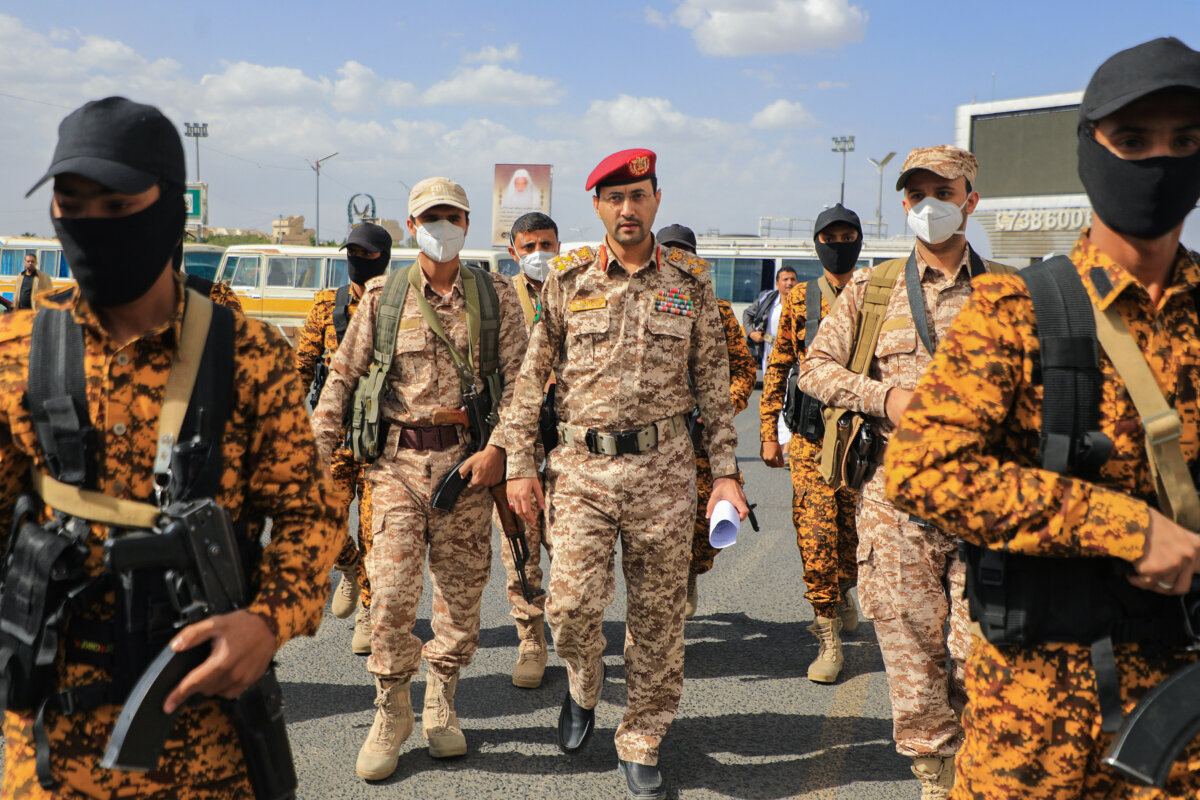
Houthi spokesman Brig. Gen. Yahya Saree said in a July 23 post on X that the Houthis had used several ballistic and cruise missiles as well as drones to strike two Saudi oil tankers—the Encelia and the Layla—as part of a naval blockade imposed against Saudi Arabia.
The group claimed in a statement posted by Saree that both vessels caught fire and that about 10 other ships were forced to turn back. Those assertions could not be independently verified.
The UK Maritime Trade Operations said a tanker caught fire off Saudi Arabia’s Red Sea coast after being struck by an unknown projectile, leaving its crew fighting the blaze. The incident was reported around the same time as the Houthi announcement.
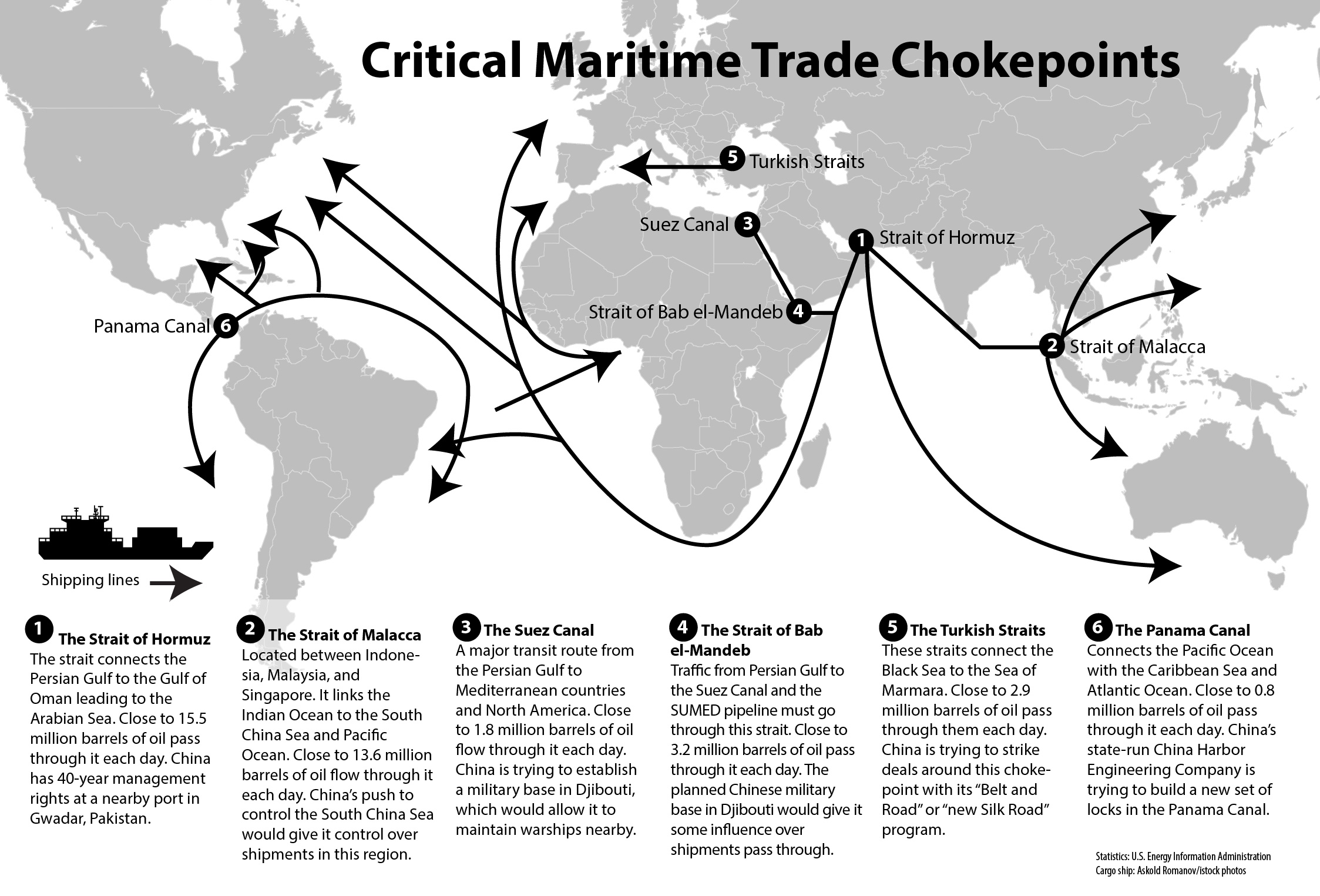 Crossings through the Strait of Hormuz declined by 31 percent on July 21 from the previous day to nine vessels, while traffic through Bab el-Mandeb fell by 34 percent to 29 vessels, according to shipping analytics firm Kpler. (The Epoch Times)
Shipping traffic was already falling sharply. Crossings through the Strait of Hormuz declined by 31 percent on July 21 from the previous day to nine vessels, while traffic through Bab el-Mandeb fell by 34 percent to 29 vessels, according to shipping analytics firm Kpler.
Although ships continued to use both waterways, operational confidence remained under pressure, Kpler said.
“Houthi threats against Saudi-linked shipping are already prompting selective tanker rerouting, increasing voyage uncertainty and raising the risk of logistical bottlenecks,” Kpler said. “If disruption extends beyond maritime traffic to Saudi refining or export infrastructure, the impact on global crude and refined product markets could become significantly more pronounced.”
Lloyd’s List reported Thursday that a Chinese-flagged tanker secured Houthi clearance to pass through the Bab el-Mandeb Strait after making two U-turns, in what the group said was an “apparent sign that Chinese-linked vessels retain a measure of safe passage through the Red Sea.”
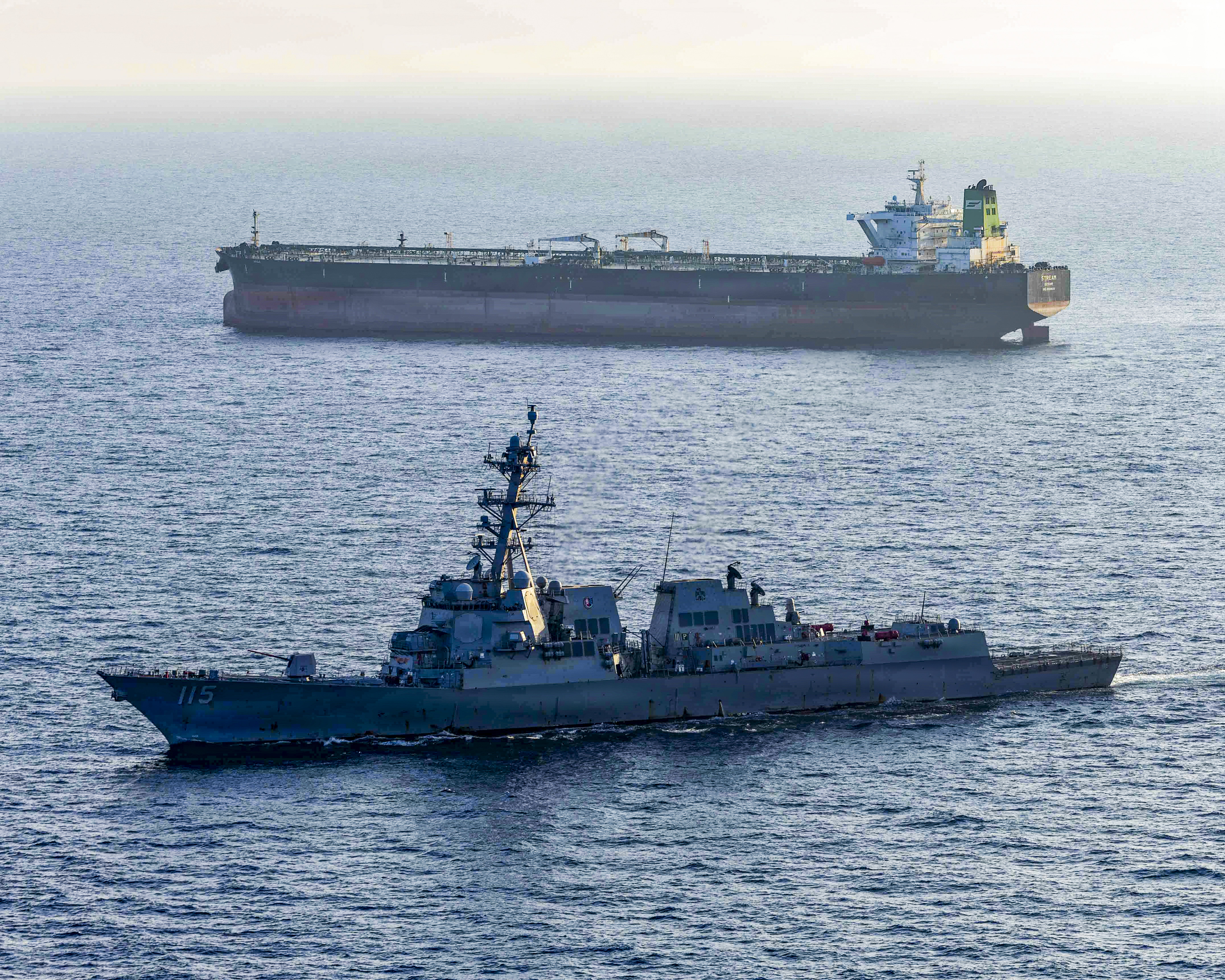 Ships in the Strait of Hormuz, on April 26, 2026. (U.S. Navy via Getty Images)
U.S.-Iran Conflict Continues
Tensions also intensified at the Strait of Hormuz after Iran’s Islamic Revolutionary Guard Corps said one oil tanker caught fire in an explosion while trying to navigate what it described as a mined route near Oman. Two other tankers turned back, according to the IRGC, Iran’s state-run media outlet IRNA reported.
The IRGC said the strait remained under its control and would stay completely closed while U.S. military operations continued. It warned that no tanker would be permitted to enter or leave without coordinating with Tehran.
U.S. Central Command rejected that claim, saying Iran does not control the international waterway and that commercial vessels continued to transit with U.S. military support.
The command said that U.S. forces had helped more than 900 ships carrying about 450 million barrels of crude oil pass through the strait since early May.
Thursday’s rally in oil prices followed a 12th consecutive night of U.S. strikes against Iran. The U.S. military said the latest operation targeted Iranian maritime capabilities, missile and drone storage facilities, coastal surveillance sites, and air defense assets.
President Donald Trump issued a stark warning to Iranian officials on Wednesday, writing on Truth Social that any time Tehran shoots at a ship in Hormuz, U.S. forces would destroy one bridge or power plant inside Iran.
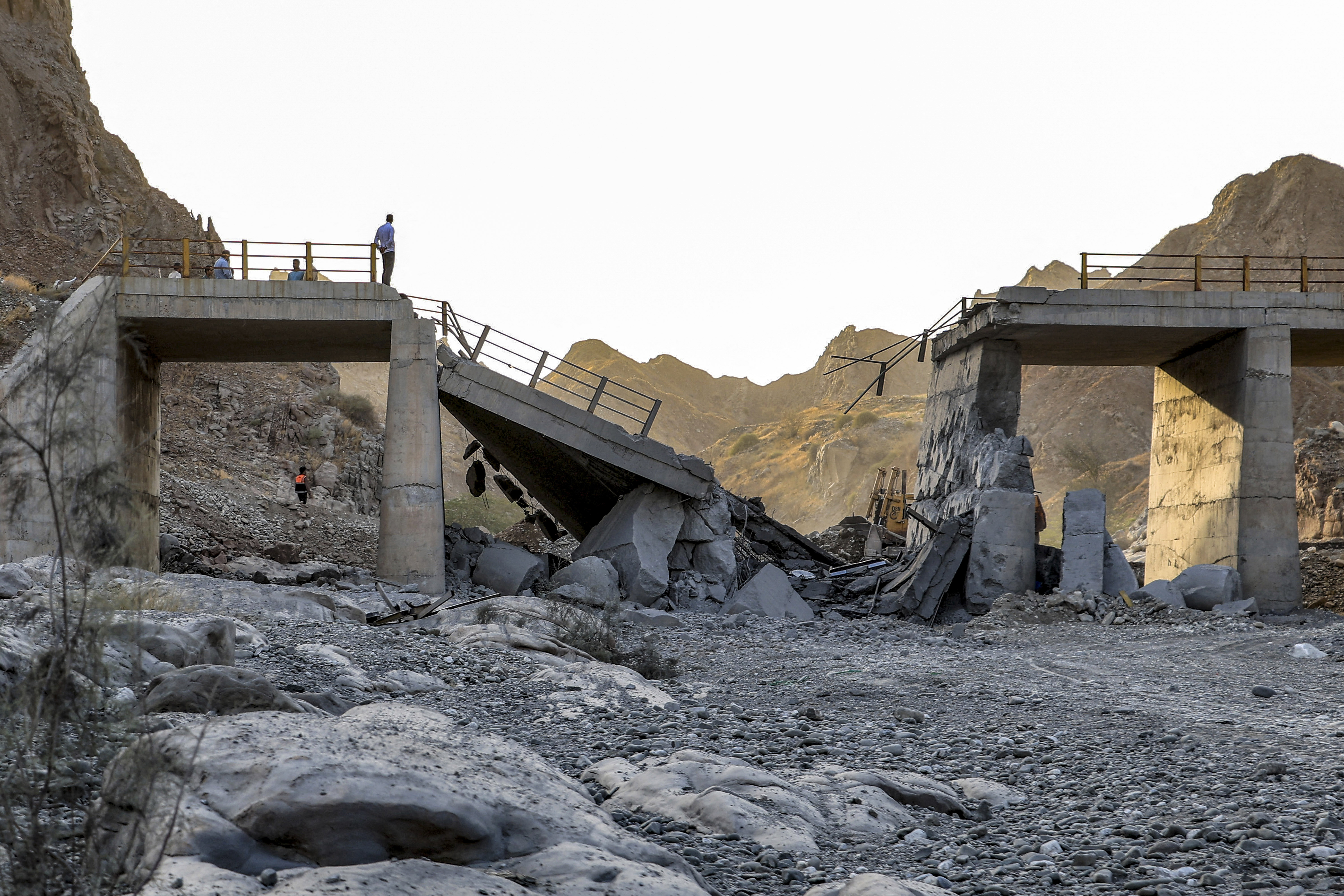 A heavily damaged bridge which was hit by a U.S. strike along the road connecting Roudan and Bandar Abbas in southern Iran, on July 18, 2026. (Amir Hossein Khorgooei/ISNA/AFP via Getty Images)
Iran’s Khatam al-Anbiya Central Headquarters warned that any U.S. attack on Iranian infrastructure would trigger strikes against energy and economic installations across the region.
“Such reckless American threats will only serve to widen the conflict across the region and beyond,” IRNA said, citing the Iranian military.
 Friends Read Free
Copy
Facebook
Tweet
Friends Read Free
Copy
Facebook
Tweet