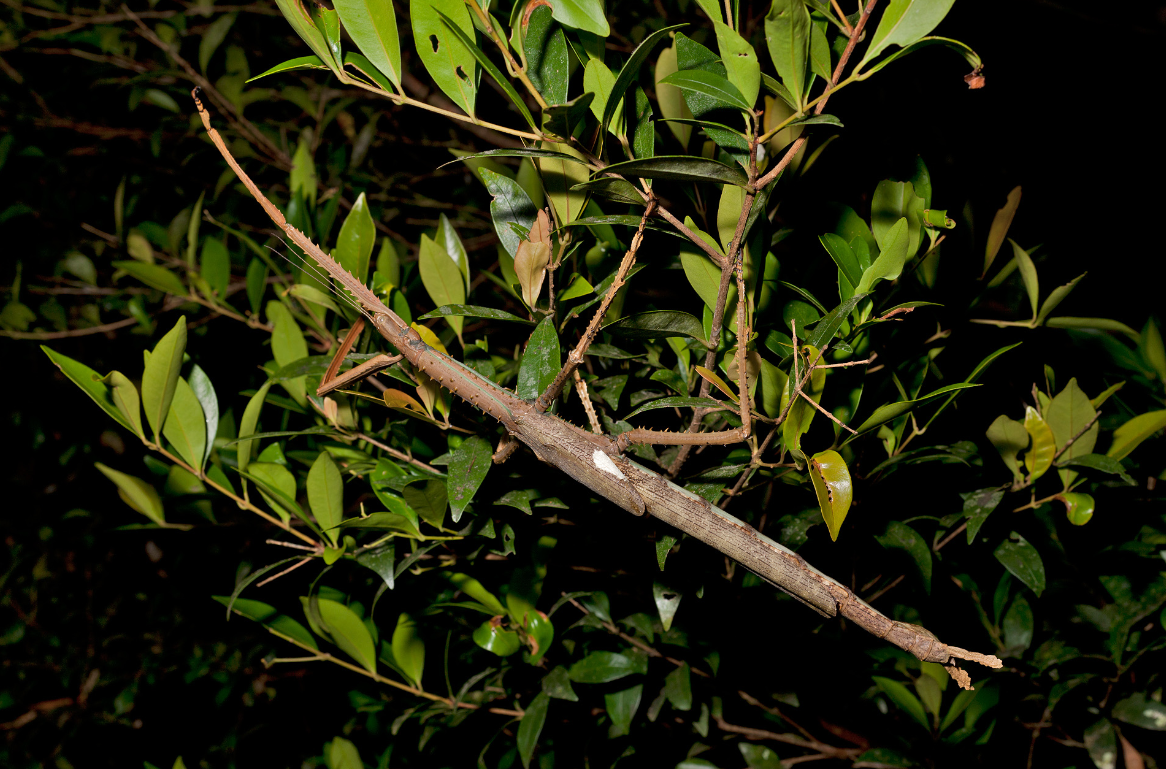
Australia is known for many “big” things—the Big Pineapple, the Big Prawn, and the Big Merino to name but a few—but they’ve now been joined by the big stick insect. And unlike the other examples, this one is alive and in no way man-made.
Two researchers, Ross Coupland and Angus Emmott, have discovered a new species of stick insect, called Acrophylla alta, which weighs in at around 44 grams, or slightly less than a golf ball.
“There are longer stick insects out there, but they’re fairly light-bodied,” Emmott said. “From what we know to date, this is Australia’s heaviest insect.”
The discovery was made in the Atherton Tablelands in a small area of high-altitude rainforest, where it lives high in the canopy, with trees as tall as 30 metres.
“So, unless you get a cyclone or a bird bringing one down, very few people get to see them,” he said.
Until recently, it was unknown to science, although locals had been aware of it for many years, Coupland told The Epoch Times. Sightings had also been noted on the iNaturalist “citizen science” platform.
“So, I went searching at night, at one of the known localities, and after some intensive looking around, I managed to locate [a] female. They are extremely well camouflaged in nature, despite their massive size,” he explained.
“I [didn’t discover] the species, I just named it, just for the record.”
The name “alta” refers to the “high” altitude habitat in which it occurs. Coupland also chose the common name “Highlands Giant Acrophyll,” though he says, “in a scientific context, this is rather arbitrary. As far as I’m concerned, people can call it what they wish with a common name of their choosing.”
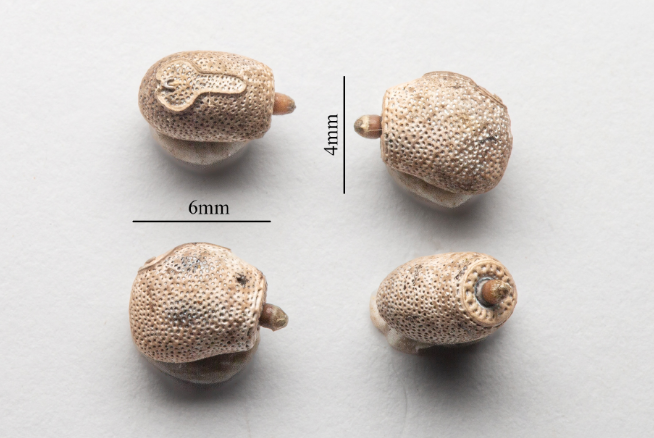
The eggs of the roughly 40-centimetre-long insects were also important for identifying them as a new species, as no two species’ eggs are the same.
Despite its size, the creature is harmless.
“Like all phasmids (stick insects), they’re strictly vegan,” Coupland says.
“They seem to feed on Lilly pilly. We kept the [first captured] female alive for a while, to try and collect some eggs, and she readily accepted guava leaves in captivity. This is a widely accepted food plant for stick insects kept as pets.”
The rainforest environment is often characterised by relatively cool temperatures, consistently high humidity with a low dew point, resulting in persistent, heavy fog.
That could explain their size, Emmot said, “Their body mass likely helps them survive the colder conditions.”
The longest known species of stick insect in Australia, Ctenomorpha gargantua, is also found in the same region.
Two specimens of the new species have now been included in the Queensland Museum for use by other scientists to aid in species identification, with broader implications for ecosystem conservation.
Far outweighing the thrill of naming a new species, Coupland says, is what the inclusion of Acrophylla alta in scientific annals means.
“The most important thing for me is that this species is viewed as an ambassador for conservation. The habitat in which it occurs is fragmented and threatened,” he said.
“Being a cloud forest, it may have long-term impacts from climate change, and wind farms are expanding on the Atherton Tablelands, on exposed mountain tops. There is also the constant pressure of urban expansion and agricultural practices.
“The take-home message is, if wonderful animals like this are only just being found and described now, in relatively recent times, then what else is out there awaiting discovery in these remote forests? We can’t be so arrogant as to simply destroy them without knowing.”
Acrophylla alta may be big, but it’s not the biggest—the Malayan Jungle Nymph can reach 65 grams.