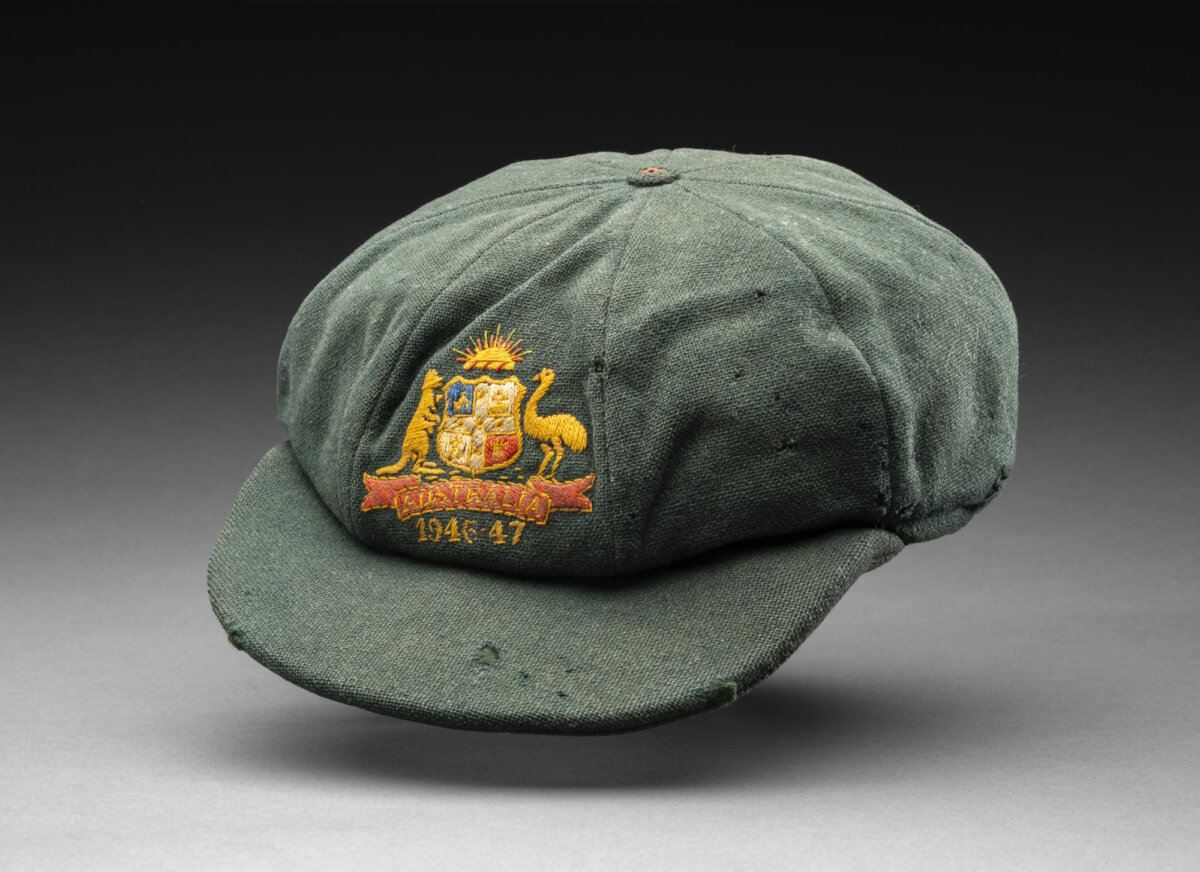

A baggy green cap that once sat atop the head of the man considered by many to be the world’s greatest cricket batsman has been acquired by Australia’s National Museum in Canberra at a price that would make a milliner’s eyes water—$438,550.
It was worn by Sir Donald Bradman when he captained the Australian side during the historic 1946-47 Ashes tour of Australia, which was the first to be played against England after the Second World War.
The test series helped mark a return to normality and ushered in a period of cricketing dominance for the Australian team.
Throughout the 1930s and 40s, “The Don” was probably the world’s best-known cricketer.
In 1930, he scored 974 runs in the Ashes series, 309 of them in one day, and played a total of seven test series against England.
Australia lost the Ashes in 1932-33 when England bowled using a notorious technique called Bodyline, which ultimately forced administrators to change the rules. Bodyline involved aiming the ball at the body of the batsman in the expectation that, when he defended himself with his bat, a deflection could be caught by one of several fielders deliberately placed nearby on the leg side (left of the batsmen).
Nevertheless, in that series Bradman still averaged 56 runs per innings.
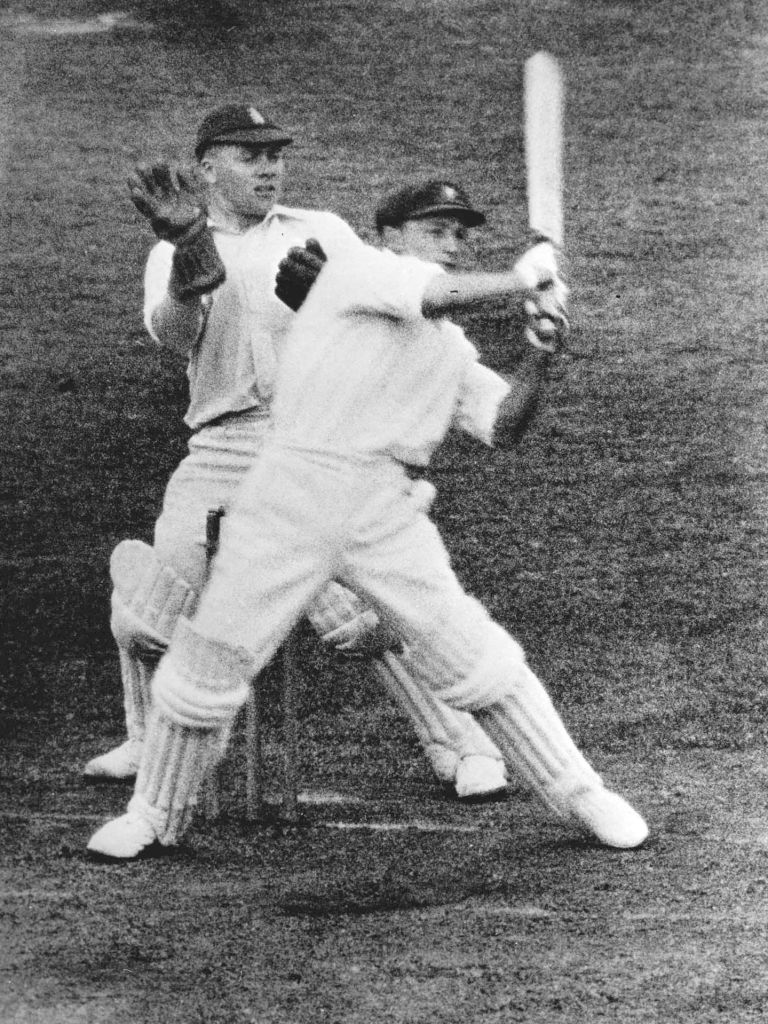
During his playing career, he went to the crease 80 times in tests and scored 29 centuries.
He needed just four in his last innings, at The Oval in 1948, to secure an average of 100, but was out second ball for a duck, in what Cricinfo calls “a rare moment of human failing that only added to his everlasting appeal.”
He ended with an unbeaten 99.94 average in test matches that still stands today.
Bradman’s cap was bought by the National Museum with the support of the Australian government through the National Cultural Heritage Account, which contributed half the cost.
Minister for the Arts Tony Burke said the purchase safeguards an important piece of Australia’s national history for future generations.
“You’d be hard-pressed to meet an Australian that hasn’t heard of the great Donald Bradman, arguably the greatest cricketer of all time,” Burke said. “Now to have one of his iconic baggy greens in the National Museum of Australia means visitors will have the opportunity to get up close and connect with our sporting and cultural history.”
National Museum director Katherine McMahon said the baggy green “marks the life of Australia’s most celebrated batsman and reflects a time when sporting heroes gave Australians hope, following the heartbreak and hardship of the Second World War.”
The cap—which is one of just 11 Bradman baggy greens known to exist—will be added to the Museum’s National Historical Collection and displayed in its recently reopened Landmarks gallery, which explores the moments and objects that helped define the nation’s history from 1770 to the present day.
It will sit alongside other Bradman memorabilia at the museum, including an autographed bat from the first Test at Trent Bridge, Nottingham, during the 1934 Ashes series won by Australia, and the ball bowled by Aboriginal cricketer Eddie Gilbert when he dismissed Bradman for a duck in a Sheffield Shield match in 1931.
 Friends Read Free
Copy
Facebook
Tweet
Friends Read Free
Copy
Facebook
Tweet