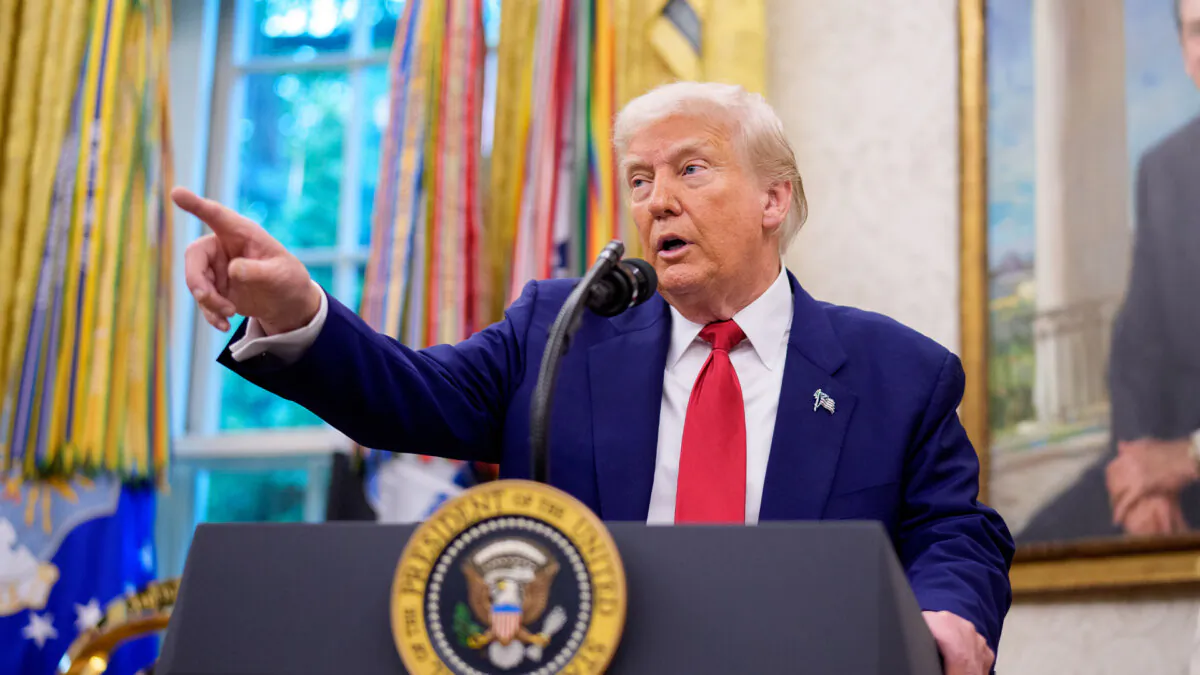

U.S. President Donald Trump’s decision to double tariffs on Australia’s steel exports is an act of “economic self harm,” Prime Minister Anthony Albanese says ahead of an expected face-to-face meeting between the two leaders.
The U.S. president plans to increase tariffs on foreign steel from 25 to 50 percent to “further secure” the domestic industry.
The move could impact 100,000 Australian jobs, with the sector exporting more than $414 million (US$265 million) worth of products to the United States in 2024.
The prime minister will attend the G7 summit in Canada in mid-June, where he might hold talks with Mr Trump on the sidelines.
But a meeting is yet to be confirmed.
Albanese is under pressure to secure an exemption for Australia’s products.
“This is an act of economic self-harm by the United States that will increase the cost for consumers in the United States,” he told reporters in Hobart on Sunday.
“This is something that will just increase the cost for consumers in the United States.
“Which is why it is an inappropriate action by the Trump administration.”
Opposition finance spokesman James Paterson said Australia needed to “robustly defend” the international free trade system which it benefits from.
Albanese must make the case to Trump that the tariffs are particularly unjustifiable on Australia due to the trade surplus the United States has, he added.
“It’s very important the prime minister does that in a way that is respectful but assertive,” Paterson said.
Trade Minister Don Farrell reiterated the call for the Trump administration to reverse the decision and drop all tariffs on Australian steel and aluminium.
He said the government doesn’t believe retaliation is the “right way to go here.”
Opposition trade spokesman Kevin Hogan said Trump’s move was concerning for Australian jobs.
“This is why it is imperative that the Australian prime minister personally meets with President Trump … to develop a personal rapport with the United States president and protect Australian industries,” he said.
The industry’s peak body says it will continue to work with the federal government to push for an exemption from the Trump administration.
“The subsequent disruptions to global steel trade could see Australia become a dumping ground for imported steel,” Australian Steel Institute chief executive Mark Cain said.
It took Australia nine months of lobbying before it secured a tariff exemption during Trump’s first administration.
The U.S. imported 289 product categories in 2024, costing US$147 billion (A$229 billion), with nearly two-thirds of those aluminium and one-third steel, according to Census Bureau data from the U.S. International Trade Commission.
The 25 percent tariffs on steel and aluminium were among the earliest implemented following Trump’s return to the White House in January and came into effect in March.
Goods from Australia are subject to a 10 percent baseline tariff, while all steel and aluminium imports to the United States face 25 percent tariffs before Trump’s latest announcement.
The New York-based Court of International Trade found the U.S. president had overstepped his authority by imposing the tariffs.
The administration launched an appeal, saying unelected judges should not decide how to address a national emergency.
 Friends Read Free
Copy
Facebook
Tweet
Friends Read Free
Copy
Facebook
Tweet