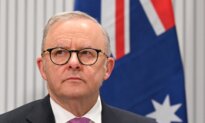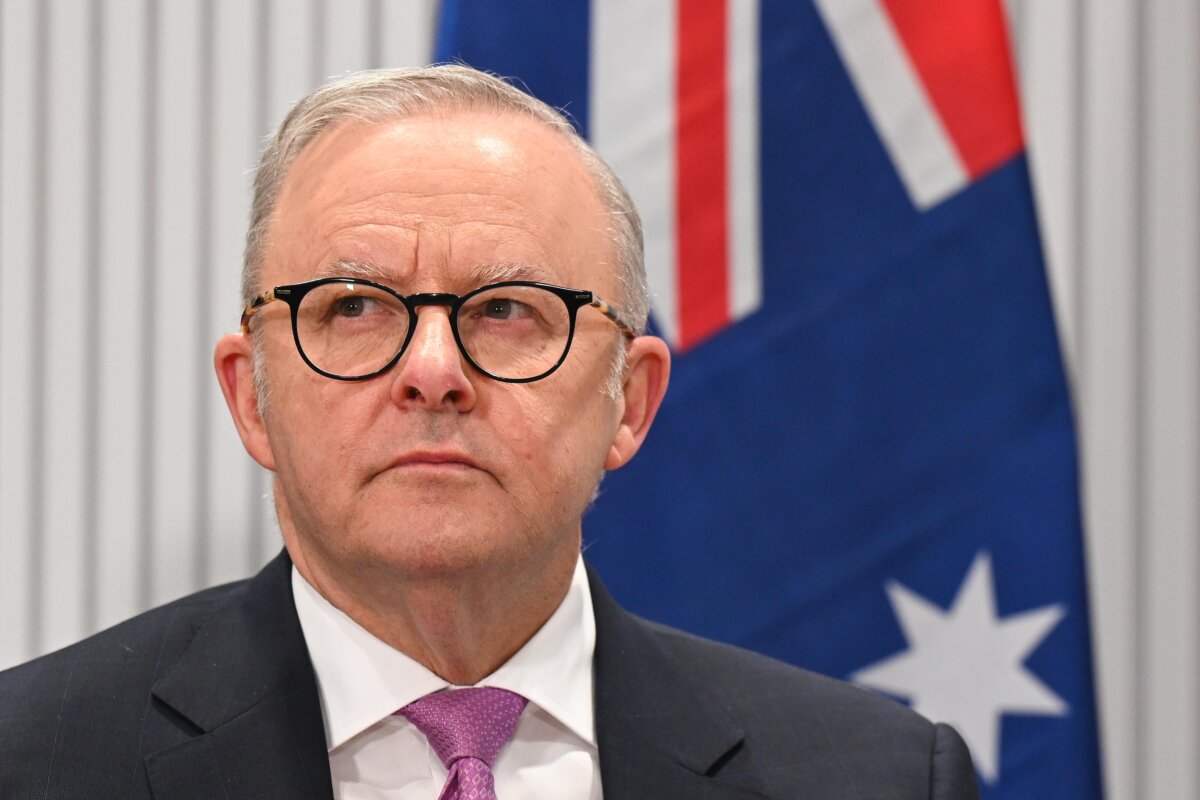

Prime Minister Anthony Albanese is continuing to pitch Australia’s tourism opportunities during his China tour amid probing questions from the Trump administration over his support for the democratically elected Taiwan.
Albanese’s latest comments on X on July 13 saw the prime minister praise Australia’s “beautiful beaches,” “cute koalas,” and “incredible food” in a move to increase the volume of Chinese tourists down under—part of a new campaign launched during his trip.
The prime minister will soon need to contend with questions from U.S. Under Secretary of Defence Elbridge Colby who has called for clarity on what Australia and Japan would do if war broke out between the United States and Chinese Communist Party over the democratically elected island.
Colby’s comments come in response to Sean Parnell, spokesperson for the Pentagon, who quoted a Financial Times article saying the U.S. Defense Department was “pressing Japan and Australia to make clear what role they would play if the U.S. and China went to war over Taiwan.”
A move that has allegedly “frustrated” Australian and Japanese officials.
“Elbridge Colby, under-secretary of defence for policy, has been pushing the issue in meetings with Japanese and Australian defence officials in recent months, said five people familiar with the discussions,” the article said.
Parnell subsequently wrote that deterrence requires strength.
“But it is a simple fact that our allies must also do their part. We do not seek war. What we are doing is ensuring the United States and its allies have the military strength to underwrite diplomacy and guarantee peace,” he wrote on X.
Colby in turn, said the U.S. Defense Department was focused on “implementing the President’s America First, common sense agenda of restoring deterrence and achieving peace through strength.”
“That includes by urging allies to step up their defence spending and other efforts related to our collective defence.
“This has been a hallmark of President [Donald] Trump’s strategy—in Asia as in Europe where it has already been tremendously successful.”
Colby also said some U.S. allies may not welcome “frank discussions.”
“But many, now led by NATO after the historic Hague Summit, are seeing the urgent need to step up and are doing so,” he said.
Australia has so far sidestepped pressure from both the Trump administration and NATO to raise defence spending quickly.
In June, Defence Minister Richard Marles, who attended the most recent NATO summit, said Australia would not change its current plans on defence spending.
The government is expected to raise defence spending from 2 percent of GDP to 2.3 percent by 2033-34, falling well short of the U.S. suggestion of 3.5 percent as soon as possible.
Albanese’s China Trip
While Albanese has failed to secure a meeting with Trump, he is currently in China on one of his longest diplomatic visits and is expected to meet with CCP leader Xi Jinping on July 15.
Albanese has not commented in detail on the U.S. request.
“I have discussions with people which are private and I keep it private,” he said.
The United States is Australia’s largest defence ally, but Beijing remains the nation’s largest trading partner for exports and imports. Australia’s largest two-way investment relationship is with the United States.
 Friends Read Free
Copy
Facebook
Tweet
Friends Read Free
Copy
Facebook
Tweet