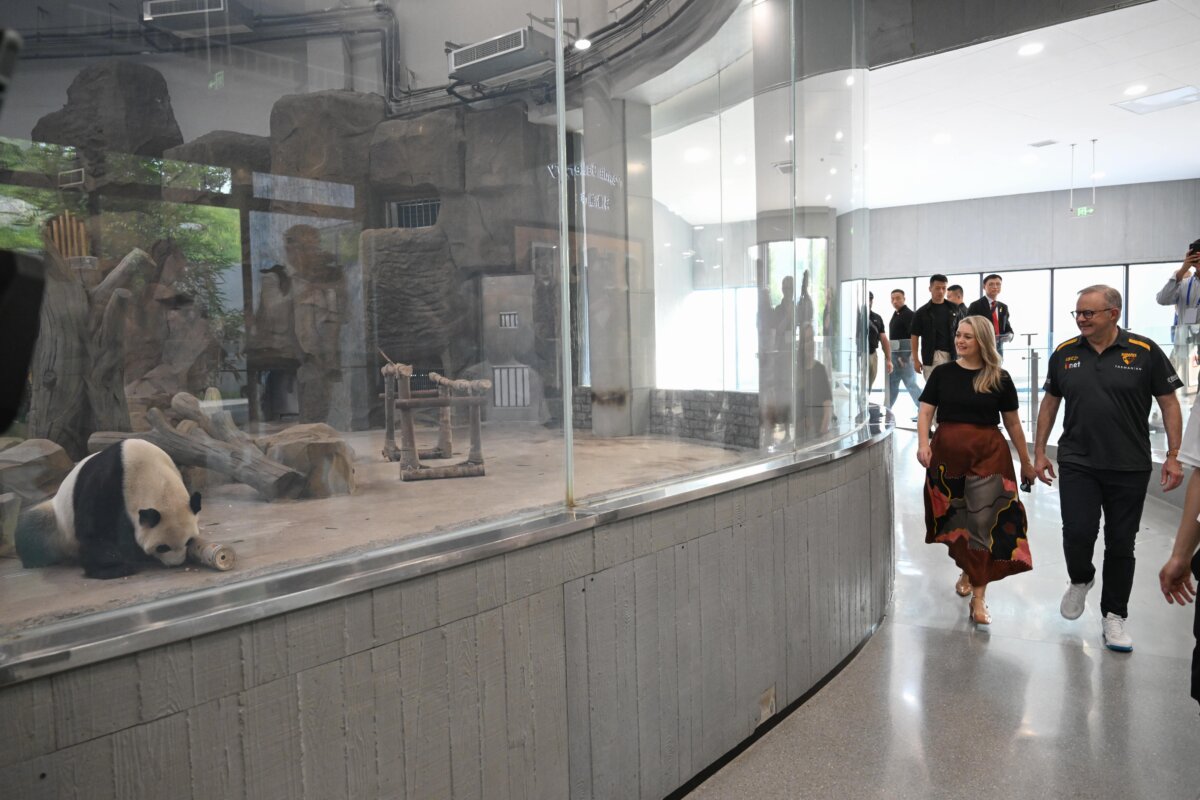

Australian Prime Minister Anthony Albanese is wrapping up his six-day trip to China with a visit to a panda conservation centre in the city of Chengdu on July 17.
This comes after a visit to the Great Wall one day earlier, where Albanese retraced the steps of then-Labor Prime Minister Gough Whitlam.
Whitlam’s 1972 visit as opposition leader and subsequent return in 1973 as prime minister laid the foundation for Australia’s formal diplomatic recognition of the People’s Republic of China in 1972.
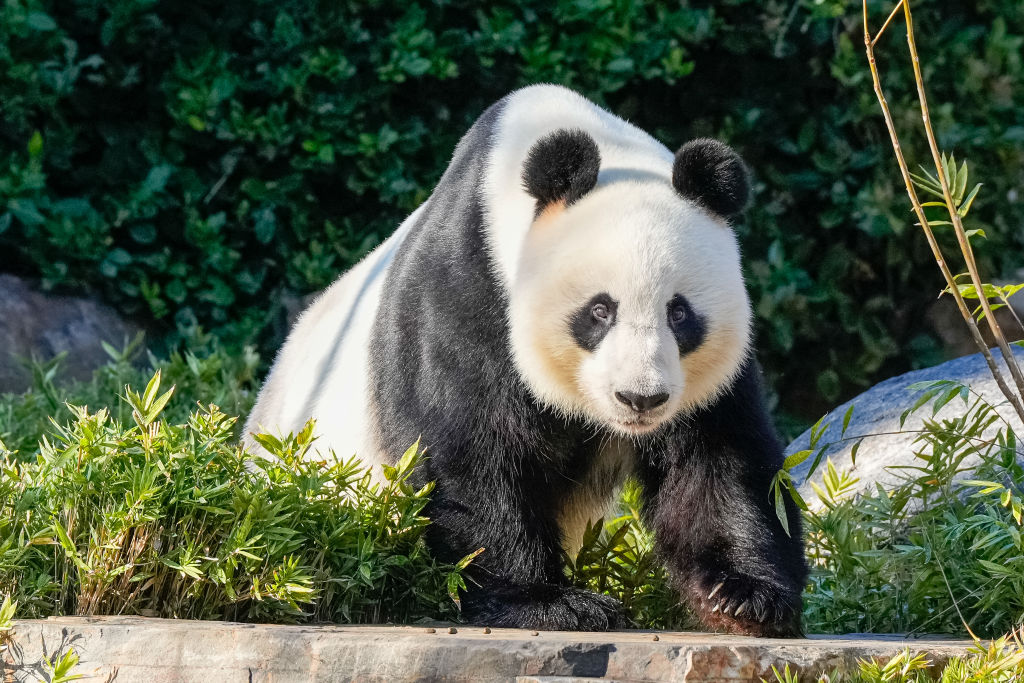
At the conservation centre, Albanese reunited with Fu Ni, one of two pandas that had lived at Adelaide Zoo for 15 years before returning to China in 2024.
Recalling their earlier encounter in Adelaide, he called the panda a “friend” and praised its role as an “ambassador.”
Albanese also light-heartedly admitted to being a fan of panda videos on social media, a comment confirmed by his fiancée, Jodie Haydon.
The prime minister will depart China on July 18, concluding a six-day visit, longer than his 2023 trip and past visits by former Australian prime ministers, which typically lasted three to four days.
CCP’s Panda Diplomacy
Due to their adorable images, pandas are well-loved by families and children, but they have also long played a role in the Communist Party of China’s diplomatic strategy.
The CCP has long viewed pandas as a political tool to exert its influence on global politics.
Panda diplomacy began in 1972 when former U.S. President Richard Nixon visited China to establish a relationship with the communist regime amid the intense conflict between the CCP and the Soviet Union.
At the time, the CCP leadership gifted a pair of pandas to the United States to express its goodwill.
In the 1980s, the practice shifted from gifting to leasing pandas under expensive contracts to other countries, thereby strengthening its relationships with them.
Over the years, there have been times when the communist regime recalled its pandas or declined to renew leases as a form of diplomatic protest.
In 2010, two U.S.-born pandas were returned to China following then-U.S. President Barack Obama’s meeting with the Dalai Lama.
During the escalated trade war in 2019, the CCP took back two pandas from the United States, leaving the country with only four pandas.
Meanwhile, during his 2024 visit to Australia, Chinese Premier Li Qiang offered to send a new pair of pandas to replace those previously on loan—a gesture signalling improved relations between the two countries.
Deputy PM Reconfirms Australia’s Stance on Darwin Port
At his meeting with CCP Leader Xi Jinping on July 15, Albanese did not discuss the issue of the Port of Darwin, which was leased to a Chinese company for 99 years.
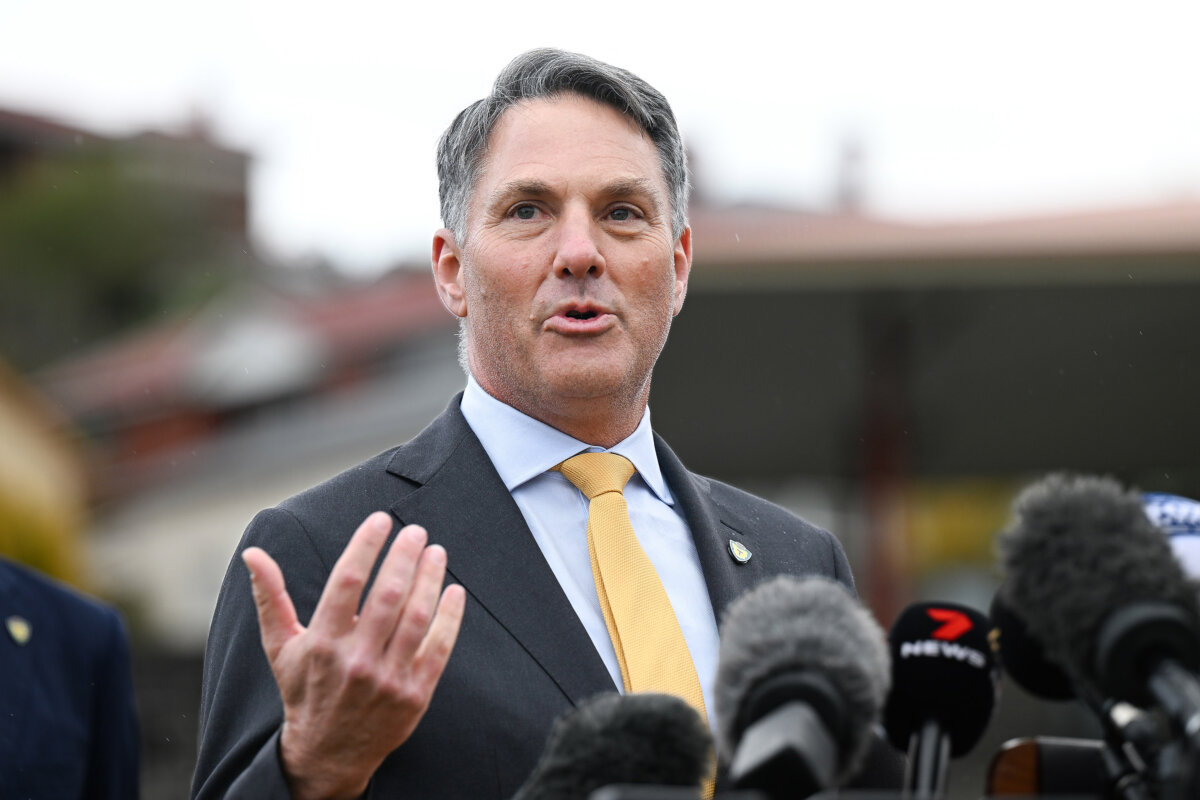
While Deputy Prime Minister Richard Marles did not comment on the content of the meeting, he reconfirmed the Labor government’s stance that the port should return to Australia’s ownership.
“In terms of the Port of Darwin, we have consistently said that it shouldn’t have been sold to that interest when it was by the former Coalition government, and that we want to see the Port of Darwin return to Australian hands, and that’s the course that we are pursuing now,” he told ABC Radio.
Marles also revealed that Albanese had raised the case of jailed Chinese-Australian academic Yang Hengjun with the CCP leadership.
“The prime minister made clear that he raised Dr. Yang’s case in his meeting with President Xi,” he said.
“It’s important that we have consistency in terms of continuing to raise this case, but it’s also important that we are prudent in the way in which we talk about this, and what we want to see, obviously, is an outcome in terms of this consular case.
“These matters are delicate, but you can look at what the government has done over the last few years in terms of how we have been able to manage other consular cases.”
Opposition Calls for Refocus on US-Australia Relationship
Meanwhile, Shadow Foreign Minister Michaelia Cash has raised concerns about the lack of tangible outcomes from Albanese’s trip to China.
“They need to be more substantial than a review of the China-Australia Free Trade agreement,” she told Sky News.
Cash also called on the Labor government to refocus on the U.S.-Australia relationship amid the looming threats of tariffs.
“Where is our trade deal with the United States? Mr. Albanese, you’ve had your six-day extended visit with our greatest trading partner, you now need to prioritise the relationship, the bedrock of our security, with the leader of the free world, the United States of America,” she said.
“Long live the Australia-United States alliance. That is what provides us with our security.”
 Friends Read Free
Copy
Facebook
Tweet
Friends Read Free
Copy
Facebook
Tweet