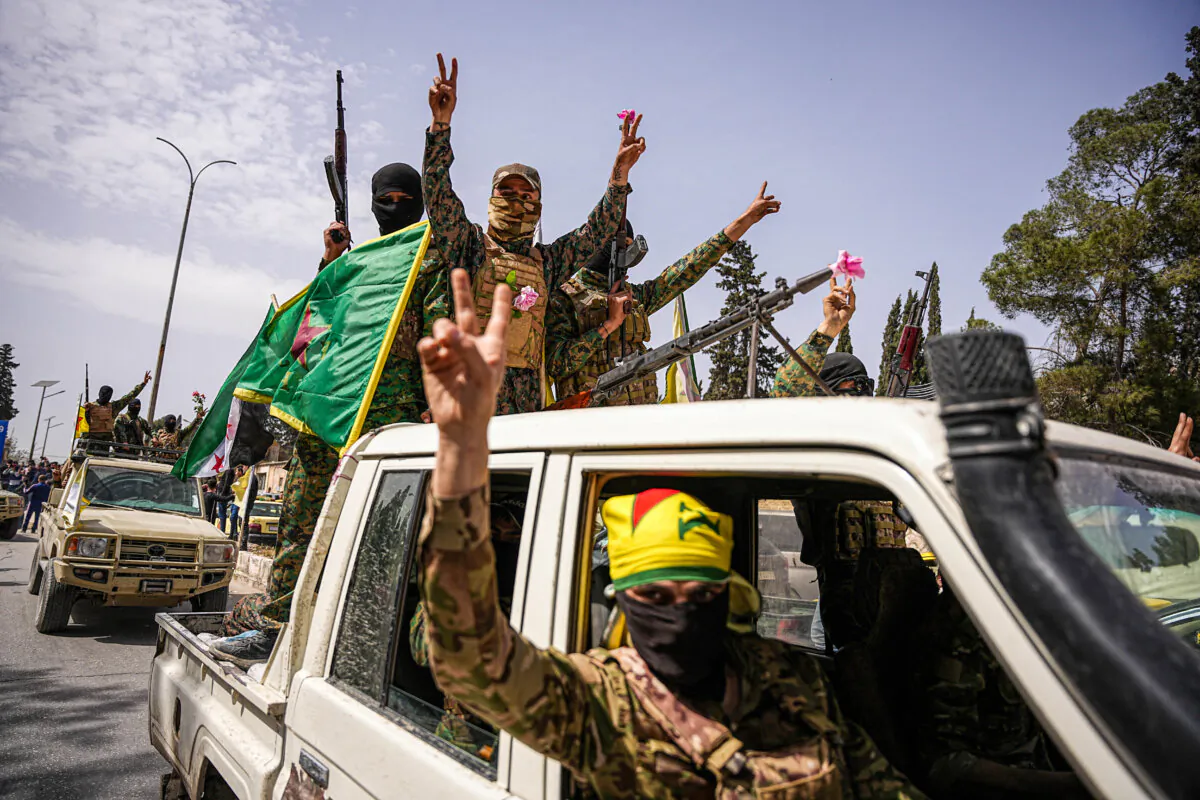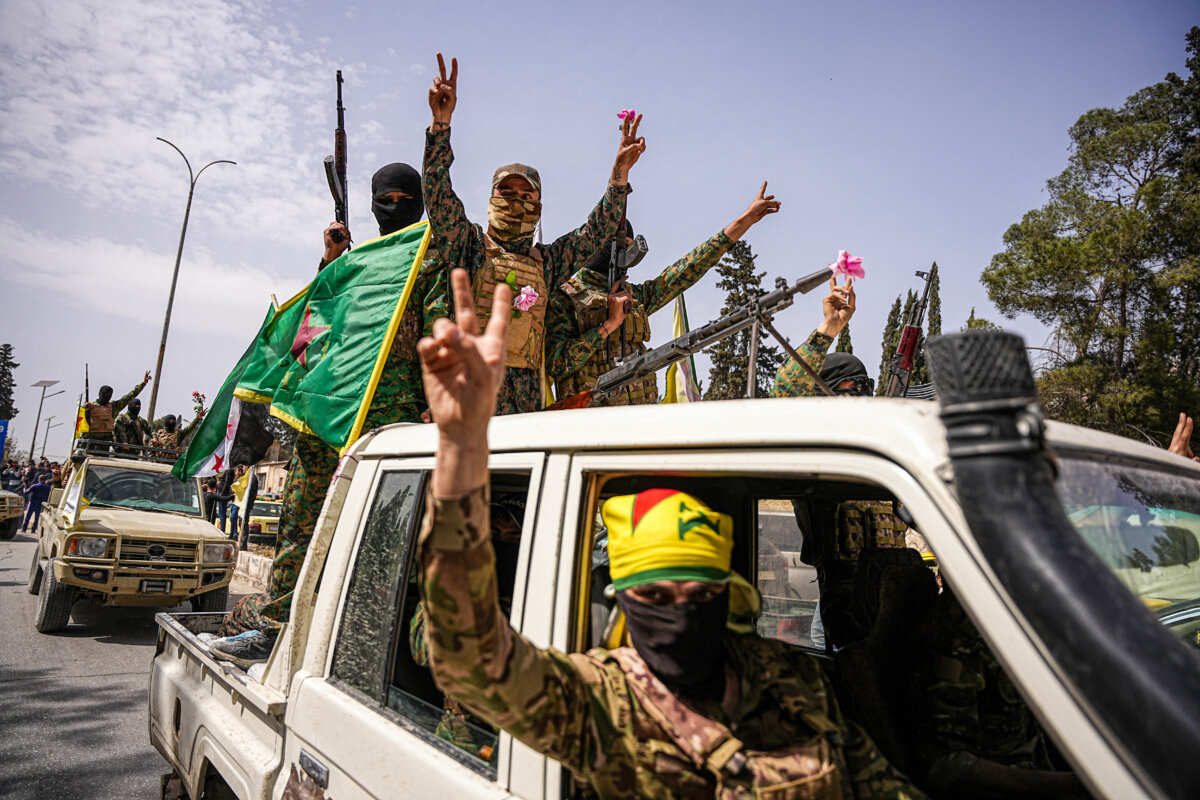
Syrian government forces and the Kurdish-led Syrian Democratic Forces (SDF) have agreed to halt fighting after deadly clashes erupted in two Kurdish-majority quarters of Aleppo, the country’s second-largest city.
The Syrian Defense Ministry stated on Dec. 22 that government forces had been ordered to “halt targeting sources of fire” linked to the SDF in Aleppo, according to state news agency SANA.
The SDF later stated that it had issued instructions to stop responding to attacks by Syrian government forces following deescalation contacts.
The clashes broke out in the densely populated neighborhoods of Sheikh Maqsoud and Ashrafiyeh, which local Kurdish forces have long secured. The areas retained a degree of autonomy throughout much of Syria’s nearly 14-year civil war, which culminated in the fall of the Assad regime in December 2024.
After rebel forces toppled the government and formed a transitional government in Damascus, Sheikh Maqsoud and Ashrafiyeh remained under the control of local Kurdish security forces. Under earlier understandings, the two neighborhoods were expected to integrate into the wider, Arab-majority city of Aleppo.
In March, SDF leader Mazloum Abdi met with Syrian rebel leader-turned-President Ahmed al-Sharaa to discuss integrating the SDF into national security forces under Damascus’s supervision by the end of 2025. Sheikh Maqsoud and Ashrafiyeh were envisioned as models for how such integration might work at the local level.
Violence Erupts in Aleppo
However, the latest violence has cast doubt on that process, with both sides accusing the other of violating the peace agreement.
Nour Eddin al-Baba, a spokesperson for the Syrian Interior Ministry, said that the Dec. 21 clashes began after government forces detected what he described as “suspicious hostile activity” from SDF positions toward their sites. He said government forces neutralized the threat, after which SDF fighters withdrew from joint checkpoints and opened fire on several Aleppo neighborhoods, including a hospital.
Damascus said four civilians were killed and at least nine others were wounded in the SDF shelling.
Despite the violence, al-Baba said the government remained committed to dialogue and peaceful solutions, noting that recent diplomatic gains, which included lifting some sanctions, had strengthened the state’s legitimacy.
The SDF disputed the government’s account of the event, accusing Damascus of spreading false claims and blaming “factions affiliated with the Damascus government” for shelling the two neighborhoods with mortars and heavy weapons. The SDF stated that five civilians were wounded, including a young girl.
In a statement on its official Telegram channel, the SDF questioned the transitional government’s ability to control its various groups.
“Responsibility lies with the fragmented factions affiliated with the Damascus government, which have been deliberately creating crises over the past four months by besieging the Sheikh Maqsoud and Ashrafiyeh neighborhoods, and by repeatedly carrying out provocations and attacks against civilians, while the government has failed to take any action,” it reads.
Washington Backs Integration
The clashes come as Syria’s new administration has gained increasing regional and international backing. The United States, in particular, has grown friendly with Damascus in recent months, with U.S. President Donald Trump hosting al-Sharaa at the White House.
The United States also trained and armed the SDF during the fight against ISIS. The SDF is largely composed of fighters from the People’s Defense Units, the Syrian affiliate of the Kurdistan Workers’ Party (PKK). The PKK originated as a Kurdish separatist movement with a Marxist-Leninist ideology, seeking to establish an independent Kurdistan spanning Kurdish-populated regions of Turkey, Syria, Iraq, and Iran.
Now that the Syrian civil war has come to an end, Washington officials have made it clear that they support the group’s integration into the Syrian state rather than its long-held goal of creating a separate Kurdish state or semi-autonomous Kurdish entity.
“We don’t owe [the SDF] the ability to have their own independent government within a government,” Trump’s special envoy to Syria, Tom Barrack, said in July in Turkey.
“We owe them to usher in an on-ramp to a new regime in which there’s going to be reasonableness in how they integrate with one Syrian Government.
“Syria has taken the position that you can’t have a Syria under federalism. You can’t have a separate Druze force dressed like Druze; a separate Alawite force dressed like Alawites; a separate Kurd force dressed like Kurds, and on and on and on. There’s going to be one entity.
“They’ve been in power now [for] seven months trying to align these interests. It’s a very difficult issue for SDF, but we understand that.”
 Friends Read Free
Copy
Facebook
Tweet
Friends Read Free
Copy
Facebook
Tweet