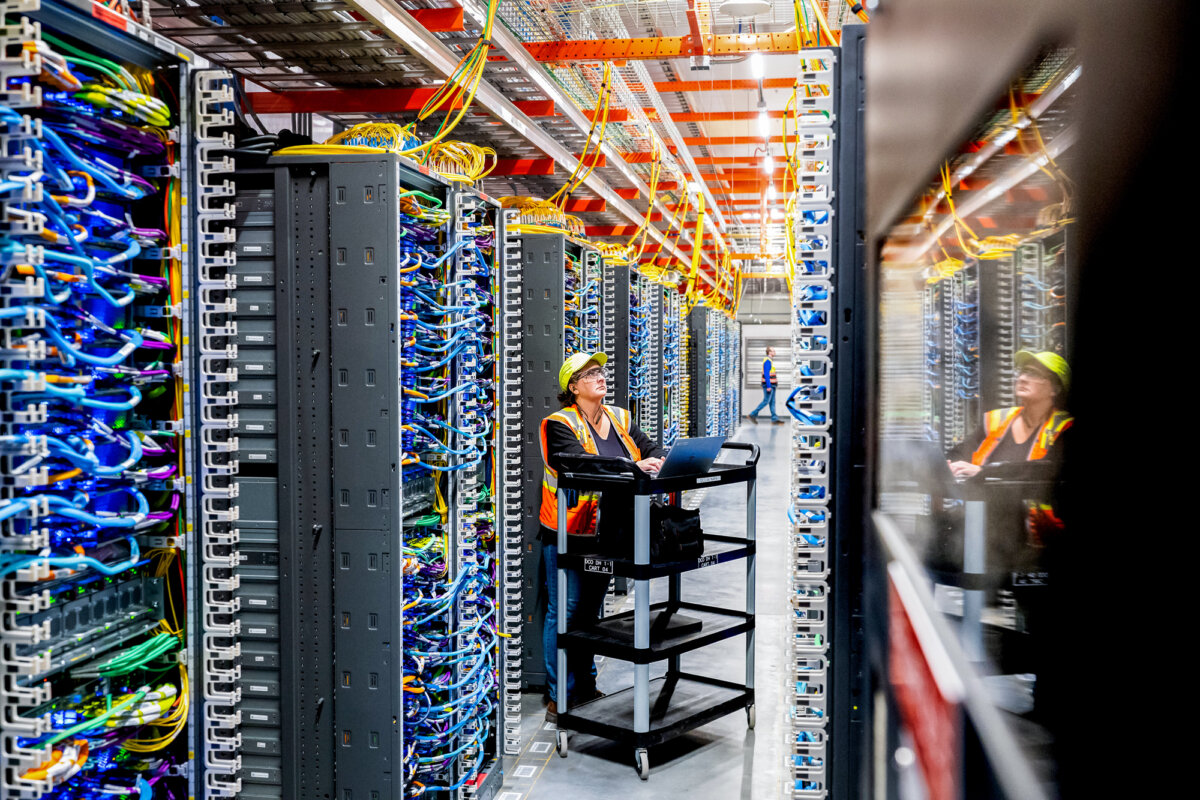

E-commerce and tech giant Amazon is expanding its investments in renewable energy in Australia to help meet the energy demand and offset carbon emissions from its data centres across the country.
The company said it had signed nine additional renewable energy purchase agreements. Including earlier contracts, Amazon has now invested in 20 projects with a combined capacity of 990 megawatts.
Last year, Amazon became the biggest corporate buyer of carbon-free energy in Australia after investing an estimated $2.8 billion (US$2 billion) in regional renewable energy projects since 2020.
Matt O’Rourke, head of infrastructure and energy policy at Amazon Web Services, said the new agreements would help facilitate the company’s decarbonisation process.
“The motivation stems from our commitment to achieving net zero carbon by 2040, and that’s really our North Star,” he said. “Everything we’re doing works back from that, and our involvement in renewable energy is part of that.”
The projects include a deal to buy power from stage two of the Golden Plains Wind Farm, set to become the Southern Hemisphere’s largest wind farm when completed in mid-2027.
In addition, Amazon will invest in three utility-scale solar and battery hybrid projects, four distributed solar-battery projects, and a new battery storage project currently under construction in Winton, Victoria.
Under the agreements, Amazon will lock in electricity prices over a 15-year period, which the company said would help reduce risk for project developers.
The deals came after Amazon announced last year that it would invest a total of $20 billion to expand its data centre infrastructure in Australia by 2029 following Prime Minister Anthony Albanese’s visit to the company’s headquarters in Seattle.
The tech giant launched its first cloud infrastructure hub in Sydney in 2012, followed by two cloud infrastructure hubs in Melbourne and Perth in 2023.
One year later, the Labor government announced a $2 billion partnership with Amazon Web Services to build a “Top Secret” cloud for national security and defence agencies.
While Amazon has claimed its data centres are highly efficient in electricity and water use, a report by the International Energy Agency found that some large hyperscale facilities can require 100 megawatts of electricity or more per year—equivalent to the consumption of 350,000 to 400,000 electric cars.
Recently, the Water Services Association of Australia, the nation’s peak water body, warned that data centre operators could use 5 to 40 million litres of water per day to cool their facilities, which is equal to the demand of 70,000–80,000 households.
 Friends Read Free
Copy
Facebook
Tweet
Friends Read Free
Copy
Facebook
Tweet