

The recent arrest of two suspected Chinese Communist Party (CCP) spies in Germany reveals a small part of a long-running global campaign by the regime to “obtain sensitive technologies through theft,” Lin Tsung-nan, a professor of electrical engineering at National Taiwan University, told The Epoch Times.
Key sectors of the European economy are at risk of being hollowed out by the operation.
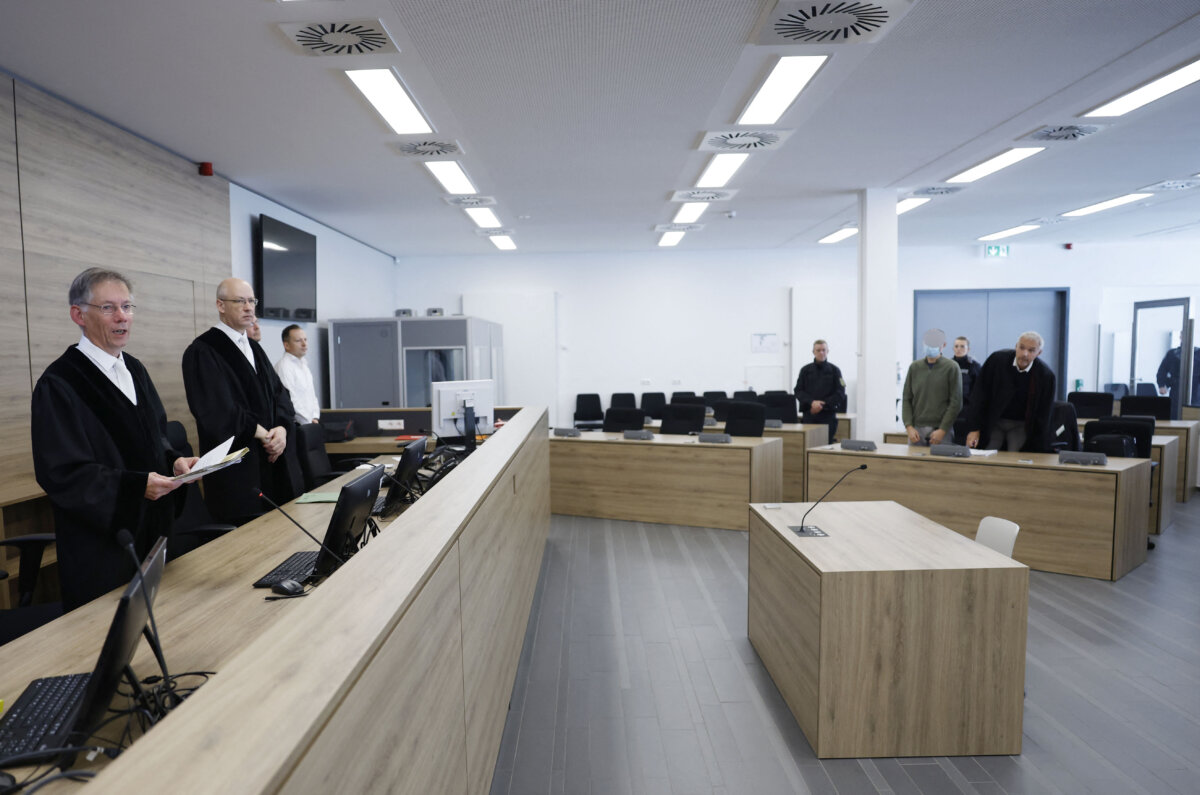
German police arrested a married couple in Munich on May 20 on charges of spying for China, accusing them of collecting sophisticated technology suited for military purposes, according to a May 20 statement by the German Federal Prosecutor’s Office.
Xuejun C. and Hua S., both German nationals, are alleged to “work for a Chinese intelligence service,” the statement said.
The two are alleged to have forged connections with numerous scholars at German universities and research institutions, notably chairs specializing in aerospace engineering, computer science, and artificial intelligence (AI).
To do so, the two posed as interpreters or automobile industry workers.
Some of those researchers were lured to travel to China under the guise of giving paid lectures to a civilian audience, only to find themselves speaking before employees of “state-owned defense companies,” prosecutors said.
The Munich case is not Germany’s first encounter with Chinese espionage.
In February, a German Court sentenced a U.S. citizen to two years and eight months for offering to pass sensitive U.S. military information to a Chinese intelligence service.
In September 2025, a German court handed a four-year, nine-month sentence to a former aide to Maximilian Krah, a German lawmaker and then-member of the European Parliament, for acting as an agent for China’s intelligence service.
The CCP has rejected allegations of espionage.
‘Coordinated Espionage Campaign’
The cases are indicative of a broader Beijing-directed operation rather than isolated civilian activities, said William Chih-tung Chung, an assistant research fellow at Taiwan’s Institute for National Defense and Security Research.
“It’s a coordinated espionage campaign driven by the entire state apparatus in tandem with the private sector,” he told The Epoch Times.
Chung said the two suspects’ German nationality indicates that the CCP is deploying local proxies to harvest intelligence through academic and commercial fronts, validating the European Union’s defensive posture.
“Because these tactics often exploit legal gray areas, securing a conviction remains extremely difficult without definitive evidence,” he said.
“This incident further highlights why the EU sees China as a systemic rival.”
“Systemic rival” is one of three labels the bloc has applied to the Chinese regime since 2019, the other two being “partner for cooperation” and “economic competitor.”
Lin concurred, saying the arrests likely represent just a fraction of Beijing’s long-standing global espionage reach.
“Beyond Germany, Chinese operatives have been actively targeting Western nations such as the United States and the United Kingdom, suggesting a top-down operation,” Lin told The Epoch Times.
“It is no secret that Beijing has methodically weaponized its intelligence networks to orchestrate industrial and technological theft abroad.”
In April, the White House said in an internal memo that foreign entities, principally based in China, are engaged in “deliberate, industrial-scale campaigns to distill U.S. frontier AI systems.”
A Flawed Shortcut
Lin warned that such theft could enable China to make rapid gains in its defense and military capabilities.
“Independent innovation requires constant trial and error, but extracting dual-use technologies such as AI allows the regime to bypass much of that process,” Lin said.
“Beijing is willing to use any means necessary to accelerate its rise, pursuing what it calls ‘overtaking on a curve’ in the competition with the U.S.”
Dual-use technologies refer to materials, software, or systems with both civilian and military applications.
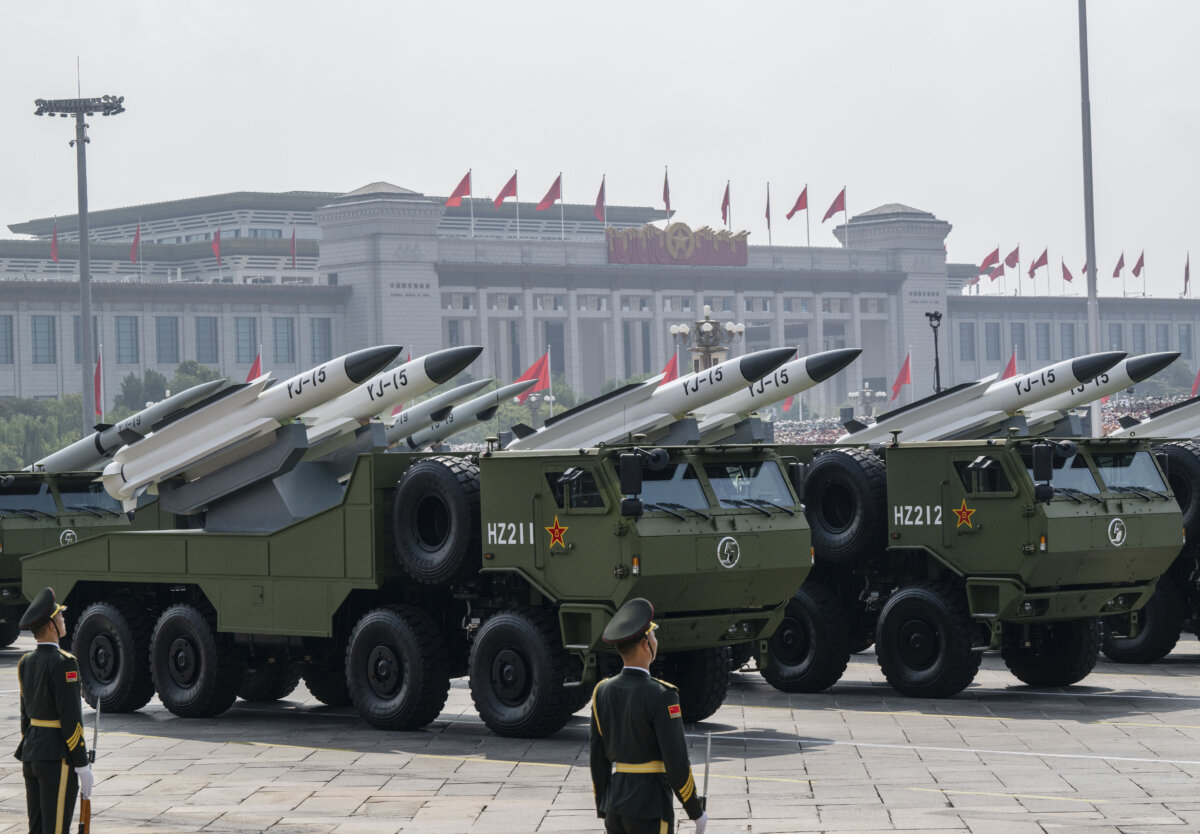
Echoing Lin’s assessment, Chung said China is resorting to covert and illegal methods to fuel its push to dominate AI and quantum technology.
“The CCP is leveraging ‘military-civil fusion’ to expand intelligence-gathering and infiltration operations, moves that could significantly accelerate weapons modernization and bolster its military buildup,” Chung said.
Military-civil fusion is a strategy under which the Chinese regime acquires civilian technologies that also serve military purposes.
However, Chung said Beijing’s institutional flaws are too severe for stolen know-how to compensate for a lack of genuine innovation.
“China faces deep-rooted corruption, while its rigid political system lacks the flexibility and dynamism seen in Western democracies,” he said.
“As a result, intellectual property theft alone is unlikely to turn China into a technological powerhouse overnight, and it still has a long way to go.”
Economic Hollowing
Lin warned that Europe has been less vigilant toward China’s technological plundering and that if left unchecked, it could eventually hollow out key sectors of the European economy.
“Europe has been less vigilant toward China, allowing the regime to acquire struggling Western companies and obtain sensitive technologies through theft,” he said.
“That could further erode Europe’s technological edge and cast doubt over its long-term economic outlook.”

Chung said this exploitation poses risks to national security, technological sovereignty, democratic systems, and the competitiveness of the broader defense industry in the EU.
“The most critical concern is the loss of advanced and dual-use technologies from European countries,” he said.
“That allows China to strengthen its military capabilities in a relatively short period of time and at a lower cost.”
Chung cautioned that such activities could undermine the bloc’s policy autonomy and deepen distrust toward the CCP across the region over time.
“Chinese leader Xi Jinping just met with Russian President Vladimir Putin in May, even as Moscow remains Europe’s primary security threat,” he said.
“China’s technology espionage and authoritarian ambitions to challenge the West have further intensified the EU’s suspicions.”
 Friends Read Free
Copy
Facebook
Tweet
Friends Read Free
Copy
Facebook
Tweet